Augustin Pajou
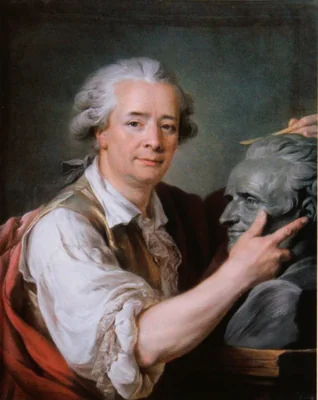
Augustin Pajou (1730-1809) stands as one of the definitive French sculptors of the late 18th century, yet his extensive surviving oeuvre of preparatory drawings provides critical insight into the aesthetic transitions between the Rococo and early Neoclassical styles. Born in Paris, his extraordinary talent was recognized swiftly; he secured the prestigious Prix de Rome at the remarkably young age of eighteen. This early academic achievement, earned through the successful completion of challenging historical subjects, immediately established his position within the framework of the Royal Academy.
Pajou’s subsequent training in Italy solidified his commitment to classical forms, though these were frequently tempered by the expressive grace and lightness of the prevailing court fashion. He debuted monumental sculpture at the Salon upon his return to Paris, notably exhibiting the ambitious marble study Pluton tenant Cerbère enchaîné (Pluto holding the chained Cerberus) when he was only thirty.
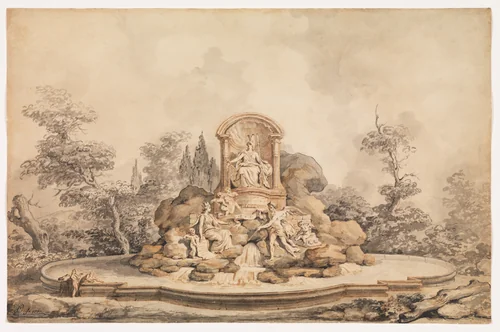
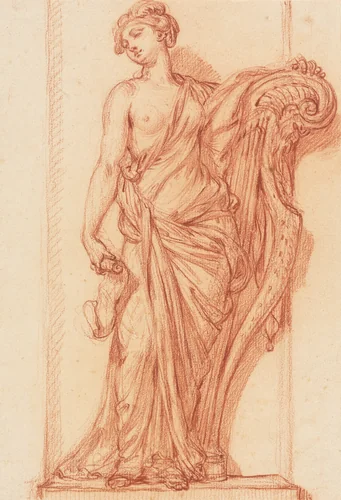
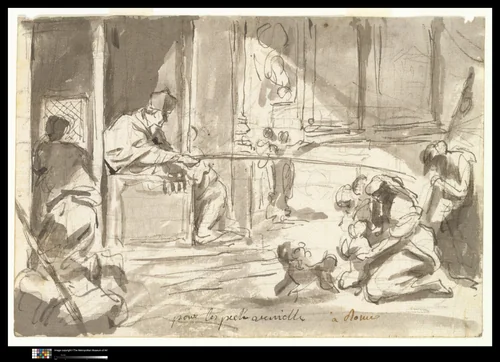
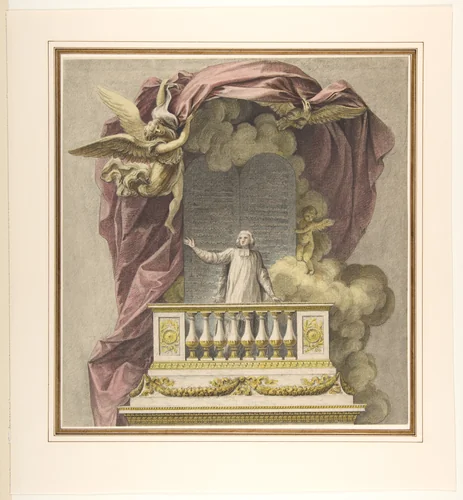
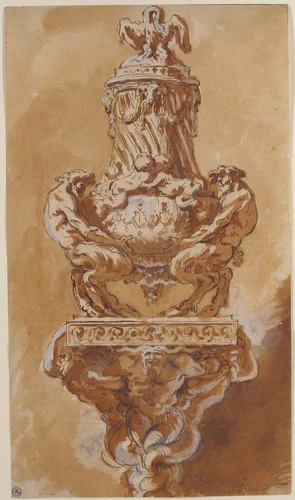
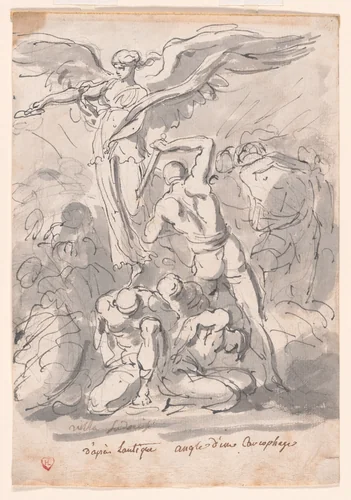
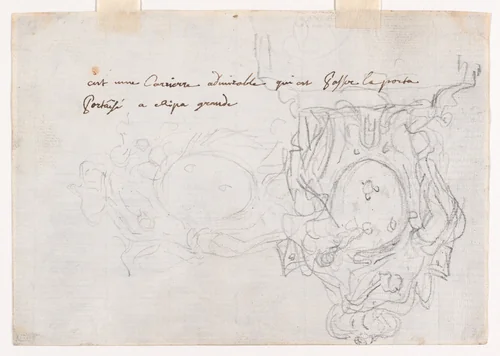
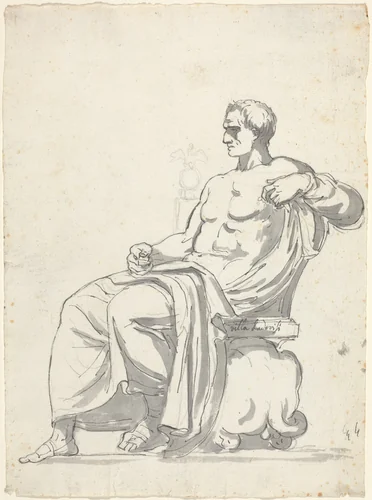
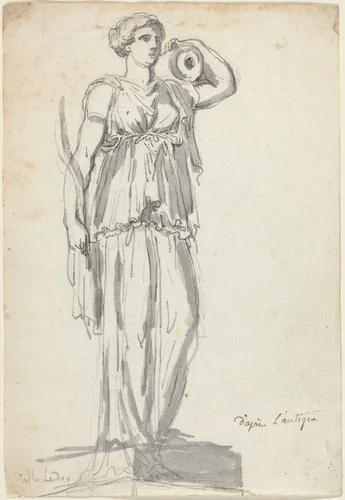
While known primarily for his marble portraits and funerary monuments, the body of work active between 1740 and 1752, particularly the surviving drawings, demonstrates his profound versatility in architectural design and modello creation. Works such as Design for a Pulpit and Design for a Vase and Supporting Console confirm his expertise in merging functional architecture with intricate, elegant ornamentation, a necessary skill for a sculptor working on major public and royal commissions. Other academic studies, including Le Grand Pénitencier and Copy after an Ancient Sarcophagus, illustrate his rigorous attention to historical detail.
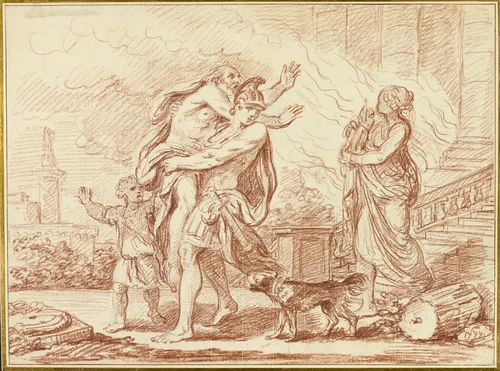
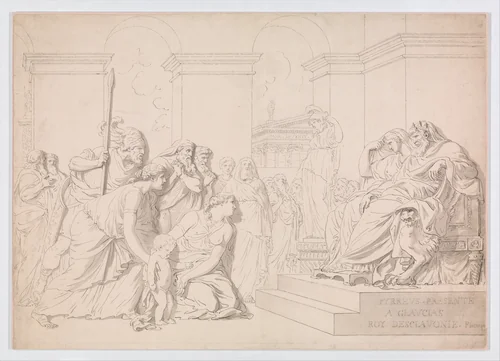
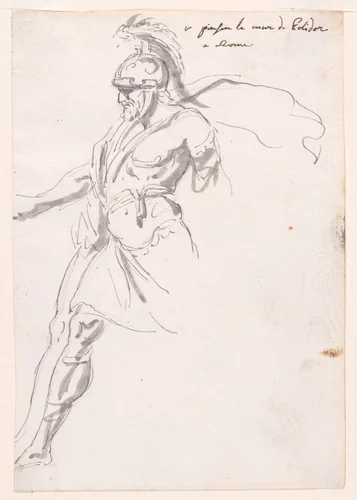
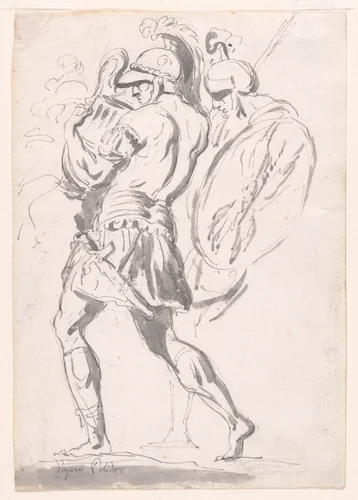
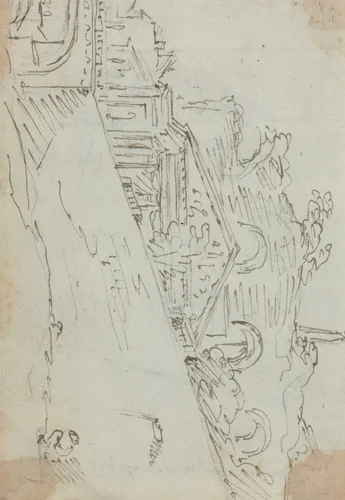
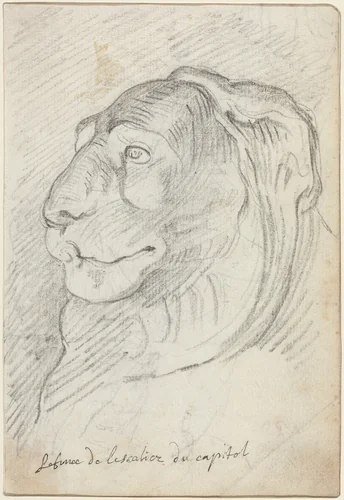
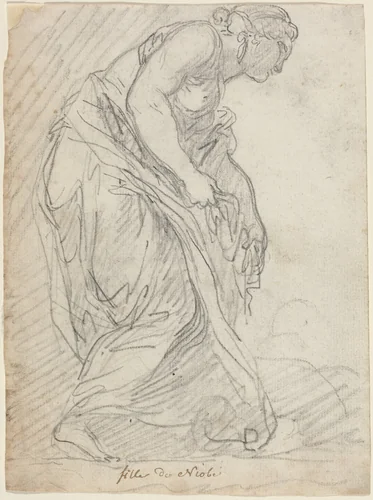
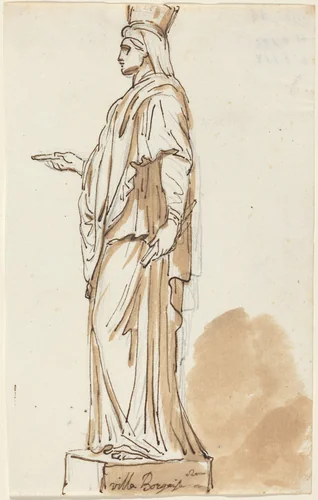
The drawings, which span mythological narratives like Pyrrhus in the House of Glaucias and detailed studies of antiquity, reveal a deep engagement with draftsmanship. It is a subtle observation that, even in his most elaborate mythological compositions, Pajou maintains a remarkably consistent clarity of line, often resisting the heavy chiaroscuro favored by some contemporaries. His mastery of the figure and of high-relief design ensured he received continuous patronage throughout the reigns of Louis XV and Louis XVI. Many of these preparatory works are now held in major international institutions, including the Metropolitan Museum of Art and the National Gallery of Art, providing museum-quality examples for scholarly review. These studies are often available today as high-quality prints, ensuring that the legacy of Augustin Pajou prints remains a vital resource for understanding 18th-century French court aesthetics, even decades after they entered the public domain.
Source: Wikipedia · CC BY-SA 4.0
![The Ripetta in Rome [verso] by Augustin Pajou, drawing, 1752-1756](https://img.artbee.org/b941fbb1-ec4d-4d48-b428-23984b263904/small.webp)