Augustin Hirschvogel
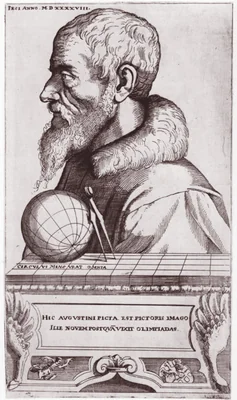
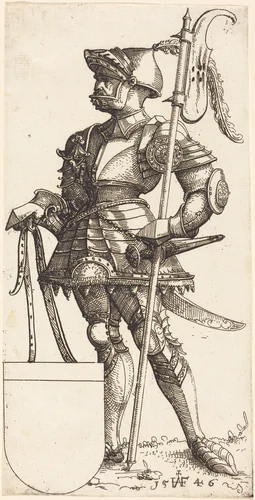
Augustin Hirschvogel (c. 1503–1553) holds a distinctive position in sixteenth-century German art history, being recognized not only as a master etcher but also as a proficient mathematician and cartographer. While his broad intellectual pursuits informed his approach, his primary artistic legacy rests upon his contributions to printmaking. Active principally in the mid-century, Hirschvogel is celebrated for his sophisticated manipulation of line and shadow, evident in the detailed texture of early devotional works, including Jacob Wrestling with the Angel and the complex anatomical rendering required for Jonah in the Whale.
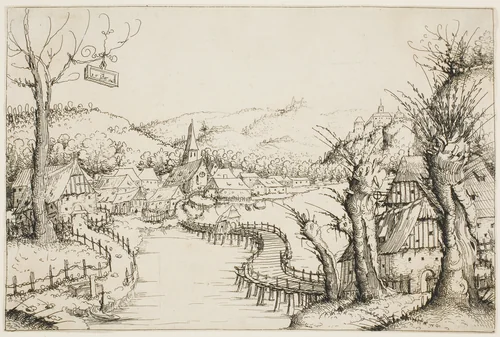
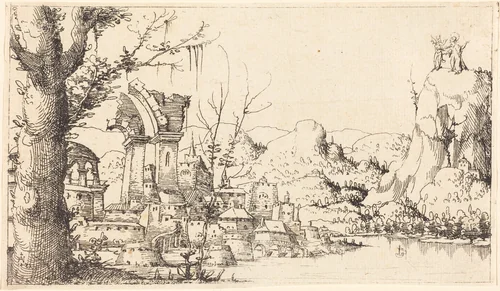
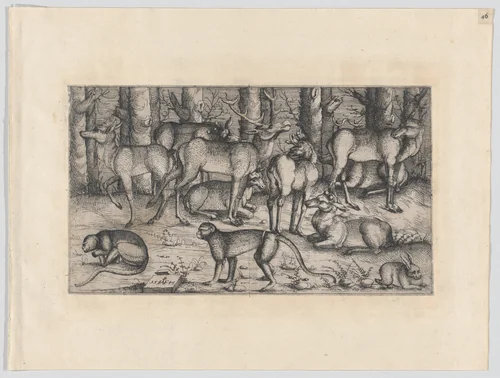
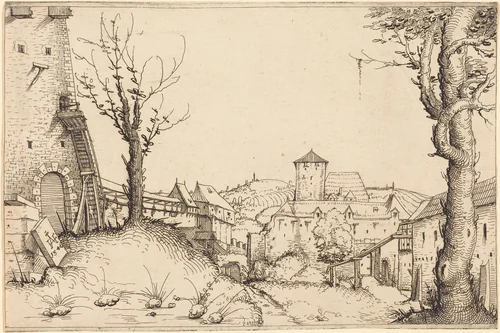
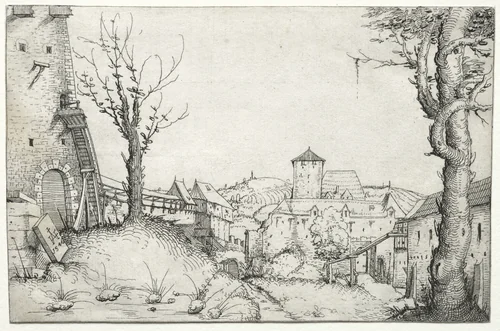
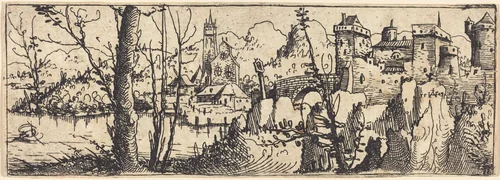
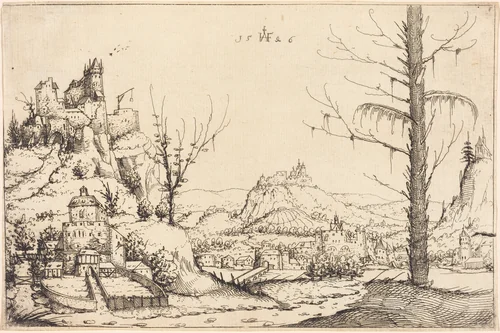
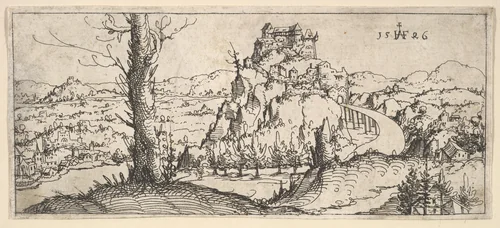
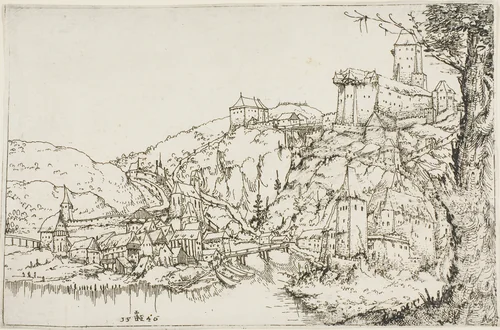
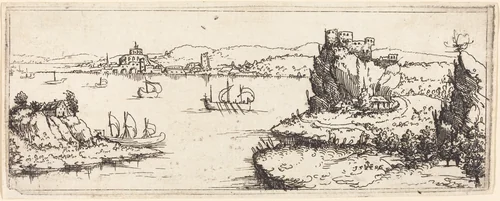
Hirschvogel’s artistic identity is most significantly defined by his relationship with the Danube School, a regional movement across Austria and Bavaria that fundamentally advanced the concept of landscape art. Between 1545 and 1549, he executed a remarkable suite of thirty-five small landscape etchings. These works were pioneering, demonstrating an innovative approach to composition that placed unadorned nature, rather than historical narrative or religious scene, at the core of the composition. In prints like Landscape with Six Single Trees and Three Small Farm-Houses, the artist achieved remarkable spatial depth within a diminutive format, showcasing the technical challenges inherent in this medium. This concentrated output secured his position as one of the most innovative graphic artists of the period.
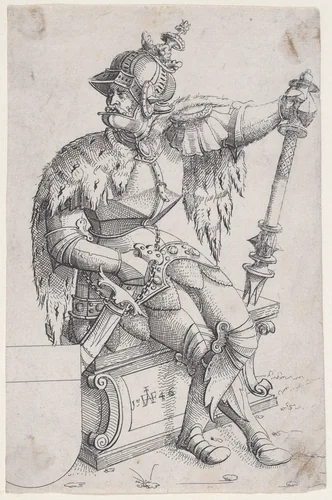
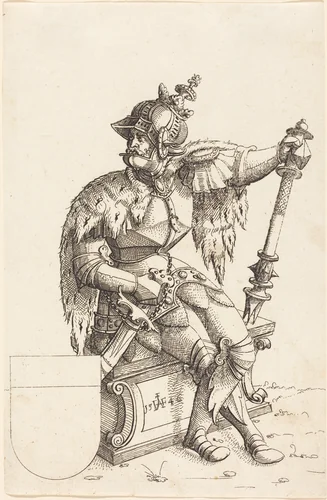
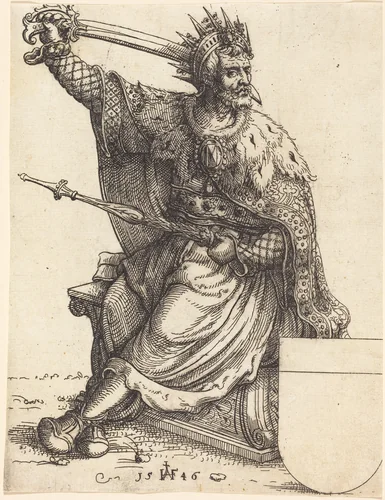
The multidisciplinary precision that characterized his career, combining cartographic exactitude with expressive artistry, is often evident even in seemingly straightforward genre studies, such as Roundel with Netting Quail or the heraldic detail required for Coat of Arms of Unknown Man. It seems appropriate, considering his practice as a cartographer, that he was equally adept at defining boundaries, be they geographic or artistic.
These Augustin Hirschvogel prints continue to be essential references for studying sixteenth-century European graphic technique. Today, his output is housed in prestigious collections, including the Metropolitan Museum of Art and the National Gallery of Art. Ensuring accessibility to this important period of printmaking history, many of his finest pieces are frequently available as museum-quality, high-quality prints and downloadable artwork through public domain collections, offering researchers and enthusiasts alike royalty-free access to his sophisticated imagery.
Source: Wikipedia · CC BY-SA 4.0
![Landscape with Sail Boats [bottom plate] by Augustin Hirschvogel, print, 1546](https://img.artbee.org/5338b6c8-8c64-420e-b69b-73957cafca16/small.webp)