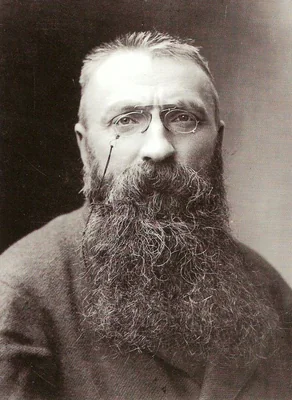
Auguste Rodin
François Auguste René Rodin (1840-1917) stands as the undisputed hinge between the academic traditions of the nineteenth century and the revolutionary innovations that defined modern sculpture. Although he received traditional, classical schooling and maintained a fastidious, craftsman-like approach to his production, Rodin fundamentally repurposed these conservative methods to achieve unprecedented emotional realism. He was not merely refining classical forms, he was injecting them with the messy, turbulent reality of human interiority.
Rodin’s profound technical contribution lay in his unparalleled ability to manipulate clay. He rejected the prevailing preference for smooth, idealized neoclassical surfaces, favoring instead a complex, deeply turbulent, and intensely modeled texture. These agitated surfaces captured and refracted light, giving his figures a sense of dynamic life and psychological strain that was entirely new to the medium. This focus on the immediate, tangible action of modeling the material allowed him to translate the flux of human emotion directly into physical form. One might observe that, ultimately, the man was simply obsessed with the sheer tactile potential of mud, elevating the working sketch in clay to the status of a finished masterpiece.
His impact is cemented by a sequence of monumental, narrative works that remain defining elements of the global artistic canon. Sculptures such as The Thinker, originally conceived for the sprawling composition The Gates of Hell, and the profoundly moving group The Burghers of Calais, showcase his capacity to fuse heroic scale with deeply individualized vulnerability. The raw emotionality found in The Kiss contrasts sharply with the near-abstract power of Monument to Balzac, a work that shocked contemporaries but proved highly prophetic of sculptural modernism to come.
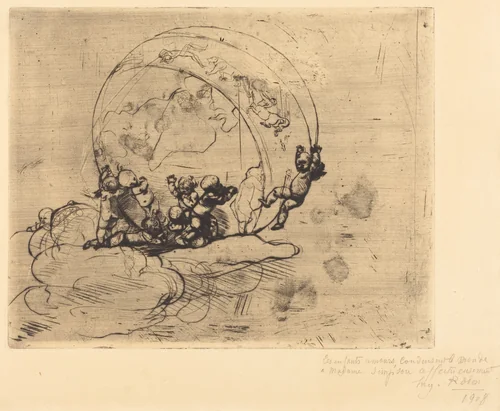
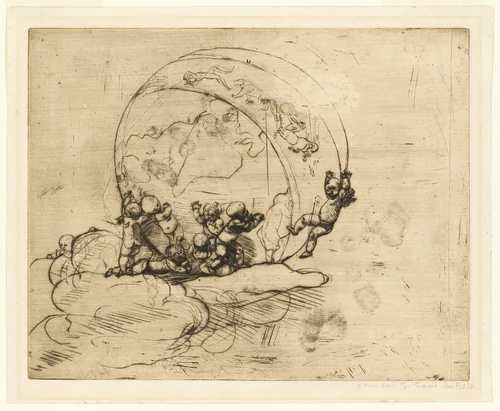
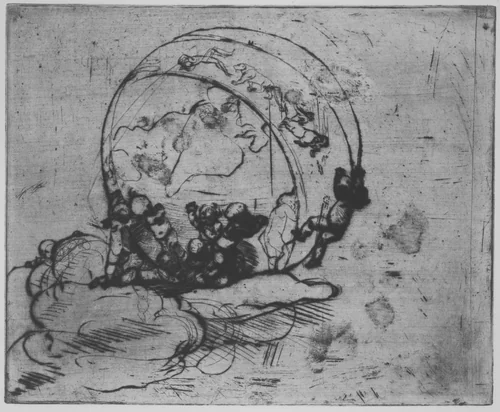
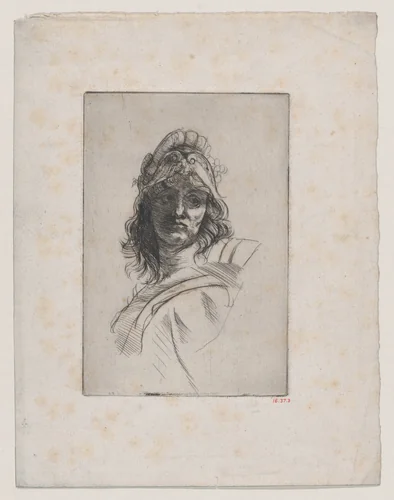
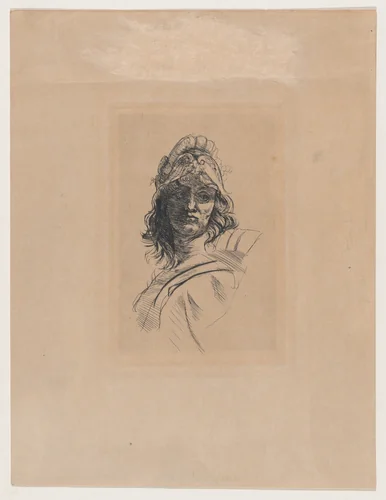
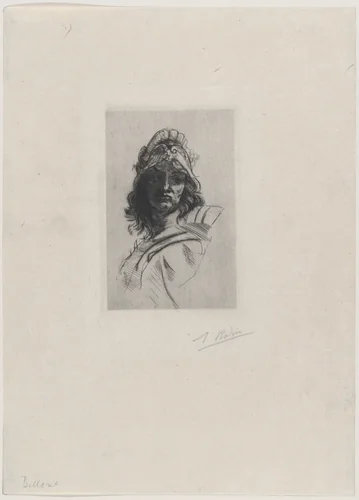
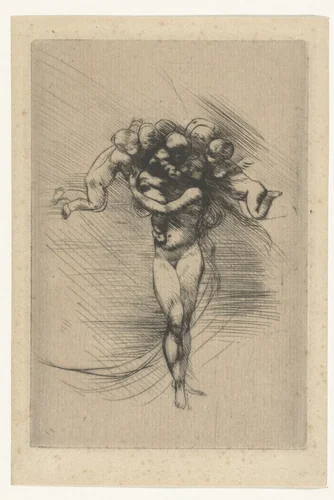
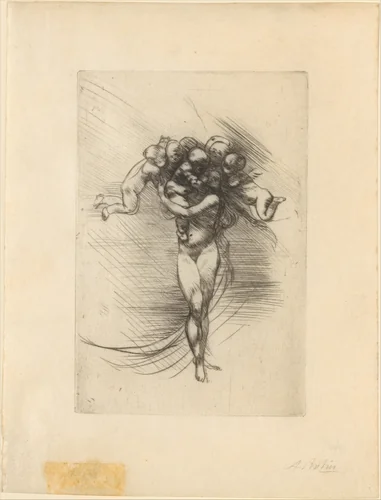
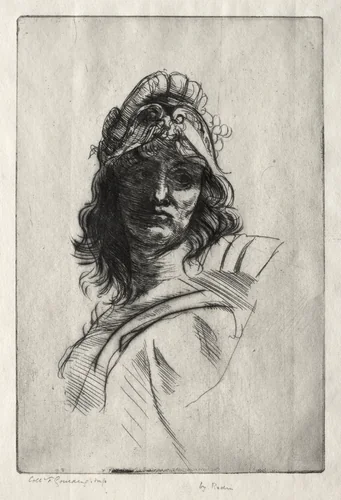
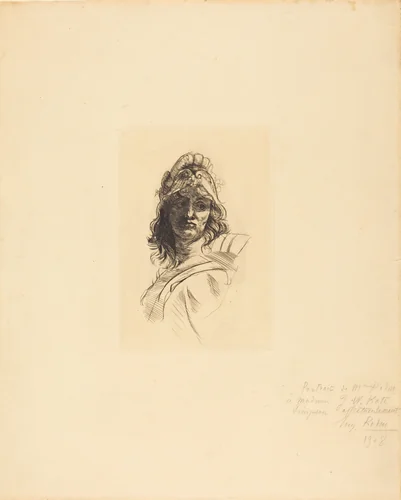
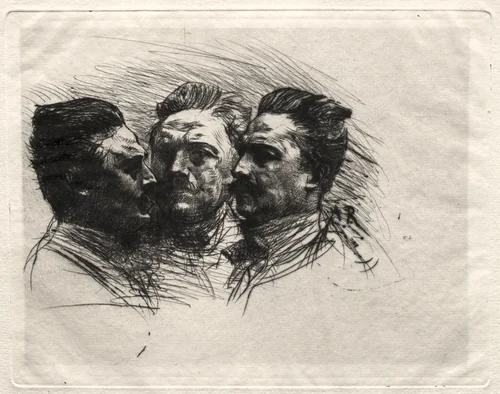
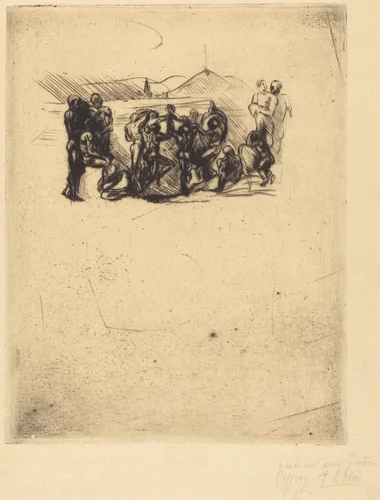
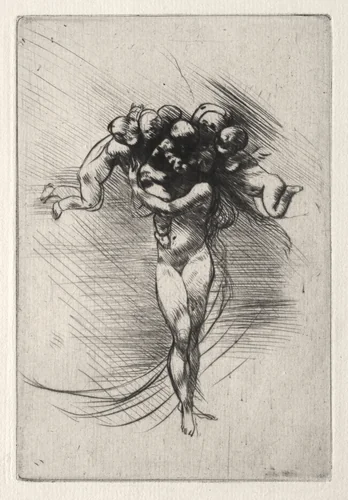
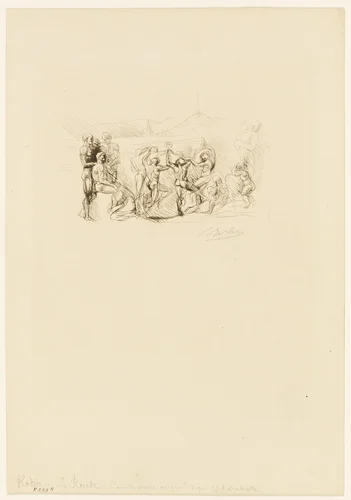
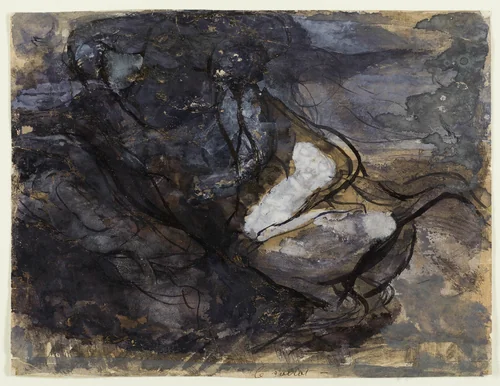
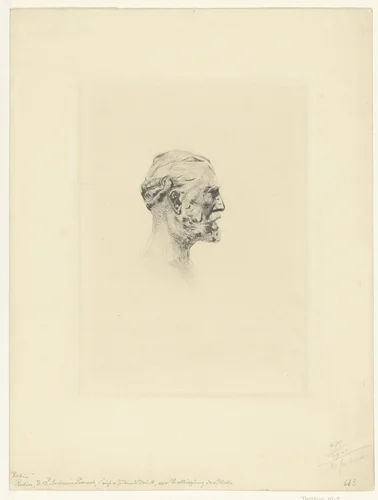
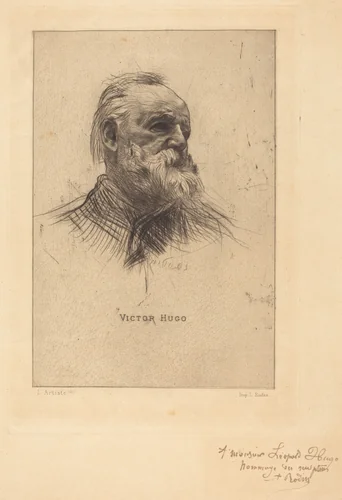
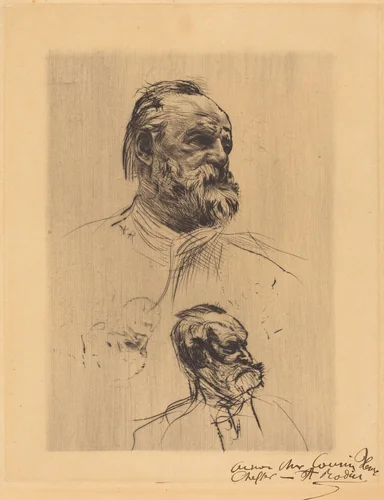
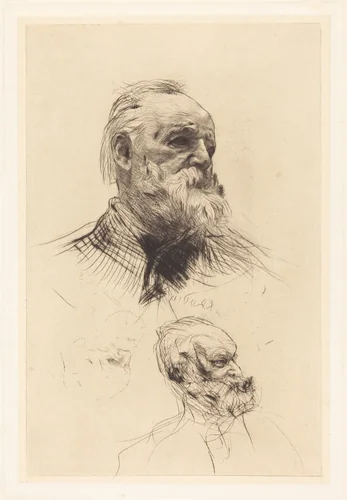
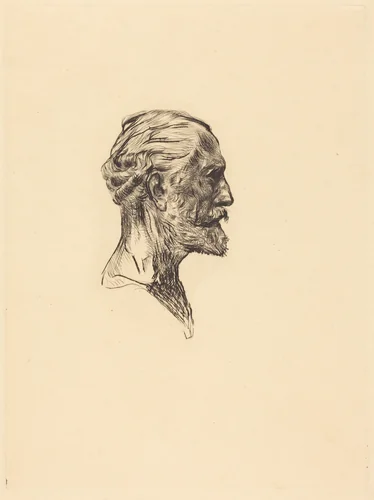
Today, Rodin’s legacy remains a source of intense study. For those interested in his preliminary steps, preparatory drawings such as Allegory of Spring and Studieblad met twee naakte vrouwen, op de rug gezien offer intimate access to his process. Fortunately, numerous Auguste Rodin prints and drawings are held in major institutional collections, including the Metropolitan Museum of Art and the Rijksmuseum. Many are now in the public domain, making high-quality prints and downloadable artwork accessible to the public, ensuring his methods continue to inform and inspire future generations.
Source: Wikipedia · CC BY-SA 4.0