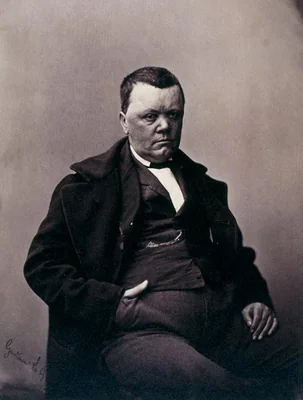
Auguste Mestral
Auguste Mestral (1812–1884), a French photographer also known by the initial O. Mestral, holds a crucial, if exceptionally brief, place in the foundational history of nineteenth-century architectural documentation. His artistic legacy is intrinsically tied to the summer of 1851, when he was selected for a vital national undertaking: the Mission Héliographique. Commissioned by the Commission des Monuments Historiques, this pioneering initiative sought to systematically record France’s imperiled architectural treasures, many facing radical restoration or imminent structural failure.
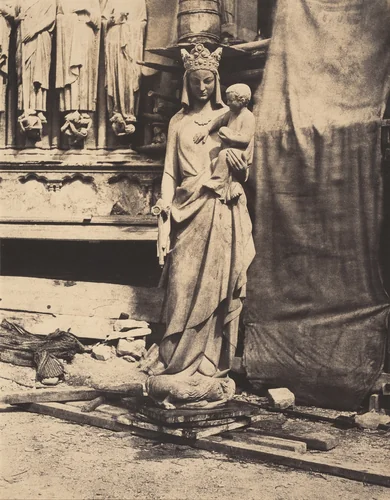
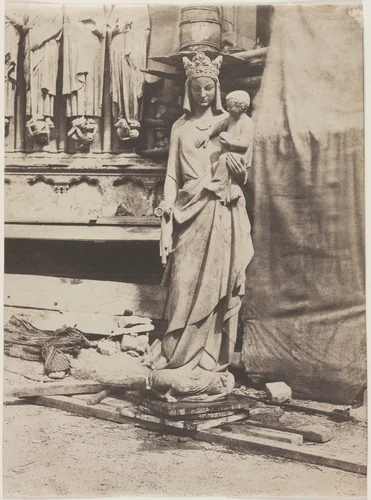
Mestral was placed in the company of the era's most formidable photographic talents: Édouard Baldus, Henri Le Secq, and Gustave Le Gray. This highly pressurized collaborative environment demanded technical mastery and an acute aesthetic sensitivity to historic structures. While his recorded period of photographic activity was remarkably short, confined primarily to the years 1851-1854, the seven surviving photographs attributed to him demonstrate a sophisticated eye for monumentality and detail. His work was focused principally on capturing the nuanced, often deteriorating, surfaces of medieval religious structures. Studies such as the focused rendering of Geoffroy-Dechaume’s Angel of the eastern gable of Sainte-Chapelle and the detailed view of the Statue of the Virgin, Notre Dame de Paris function simultaneously as meticulous historical records and powerful artistic statements. Mestral showed a particular aptitude for isolating sculptural elements, allowing the viewer to appreciate the subtle textures and architectural forms of stonework created centuries earlier.
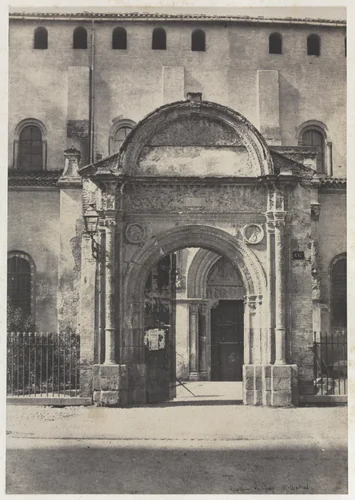
Mestral’s contributions, particularly his documentation of interiors and critical architectural details like the Porte Bachelier, Eglise Saint-Sernin, Toulouse (Haute-Garonne), established a high technical and aesthetic standard for the burgeoning field of architectural studies. That such a concentrated and limited output secures his work in permanent, prestigious collections including the Metropolitan Museum of Art and the National Gallery of Art speaks volumes about the enduring museum-quality of his efforts. It remains a curious observation that while his colleagues from the Mission Héliographique went on to achieve international renown, Mestral left the photographic field almost immediately, leaving behind only this concentrated, indispensable body of work for scholars and historians. Although original Auguste Mestral prints are exceedingly rare, the historical importance of these documents ensures that high-quality prints and downloadable artwork are widely accessible today.
Source: Wikipedia · CC BY-SA 4.0
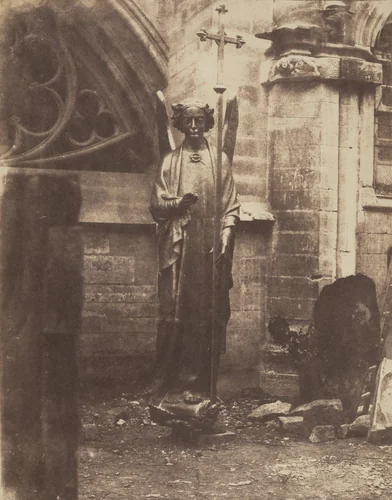
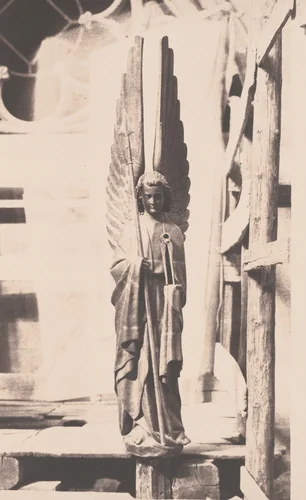
![[Angel of the Passion, Sainte-Chapelle, Paris] by Auguste Mestral, photograph, 1853-1854](https://img.artbee.org/42d4bcc1-3eee-40eb-baa5-c832ee632e3b/small.webp)
![[Sculpture of Virgin and Child, Notre Dame, Paris] by Auguste Mestral, photograph, 1853-1854](https://img.artbee.org/6c8e459f-aa4d-4511-bca2-ab7869068b39/small.webp)