Arthur Stewart
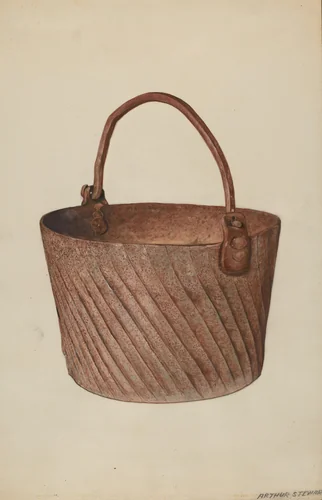
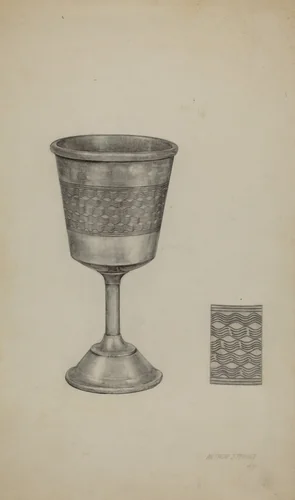
Arthur Stewart was a significant contributor to the Index of American Design (IAD), a massive visual survey initiated under the Works Progress Administration (WPA). Active between 1936 and 1940, Stewart’s specialization was the precise, analytical rendering of utilitarian objects from the 18th and 19th centuries, capturing not the grand fine arts, but the items that defined American domestic and working life. His portfolio, comprising ten documented designs, forms a crucial part of the IAD collection now housed primarily within the National Gallery of Art.
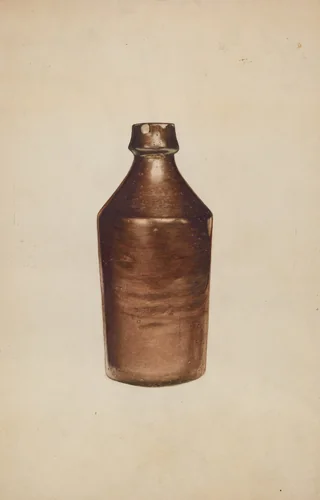
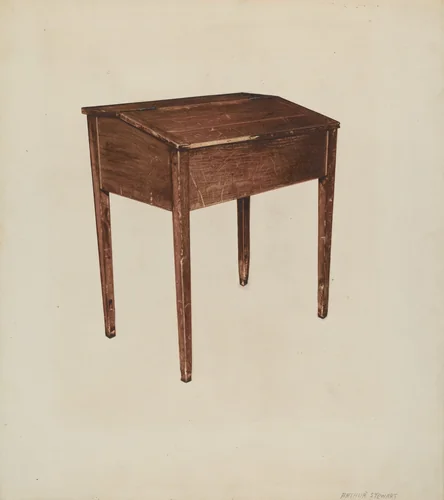
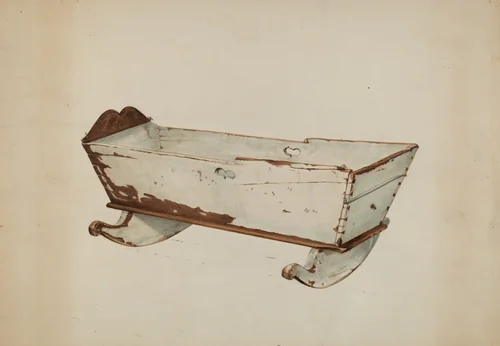
The Index project aimed to create museum-quality records of vanishing American folk arts and decorative crafts. Stewart’s work is characterized by its rigorous attention to texture, form, and historical context. His technical skill allowed him to translate the dimensionality of diverse materials, ranging from polished pewter to wrought iron, onto two-dimensional paper with remarkable fidelity. This process ensured the survival of specific regional and historical designs that might otherwise have been lost to time or neglect.
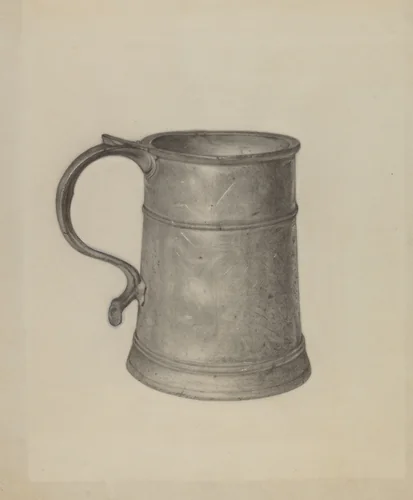
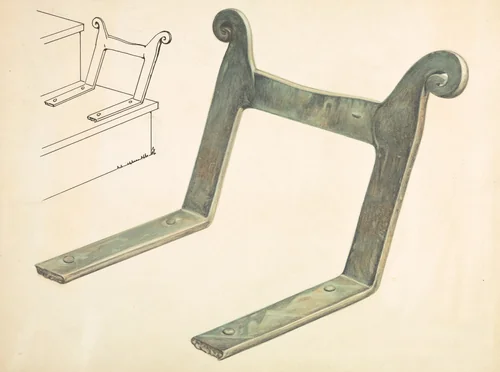
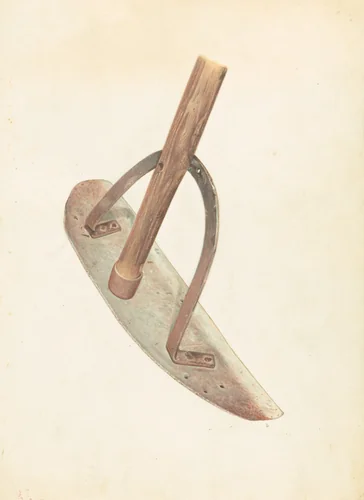
Stewart’s subject matter was distinctly pragmatic, drawing heavily on functional objects associated with early American communities, including the communal Amana colonies. He elevated mundane, everyday tools to subjects worthy of serious artistic and historical study. Key examples include the detailed illustrations of a Pewter Mug, the sturdy Amana Shoe Scraper, and the agricultural implement Amana Baker's Hoe. While much of WPA art focused on social realism or sweeping murals, Stewart dedicated his efforts to documenting the quiet, inherent elegance found in a simple piece of household ironwork, thereby ensuring that the legacy of American craftspeople survived the economic hardship of the 1930s.
Today, the entire collection to which Arthur Stewart contributed is linked to the public domain, guaranteeing widespread access to these important historical design records. Researchers and collectors often seek Arthur Stewart prints because his detailed fidelity provides an invaluable window into early American craftsmanship, making these high-quality prints enduring documents of functional art and industrial design history. His documentation efforts remain accessible as royalty-free downloadable artwork for educational and research purposes globally.