Arthur Fitzwilliam Tait
Arthur Fitzwilliam Tait (1819-1905) was a British-American artist who emerged as one of the nineteenth century’s preeminent chroniclers of North American wildlife. Though born in England, Tait spent the majority of his professional life immersed in the New York City art scene, where he cultivated a highly successful practice centered on the specialized field of animal painting. Active between the 1870s and 1890s, his meticulous output documented the natural life of the rapidly industrializing continent, striking a crucial balance between academic realism and popular sentiment.
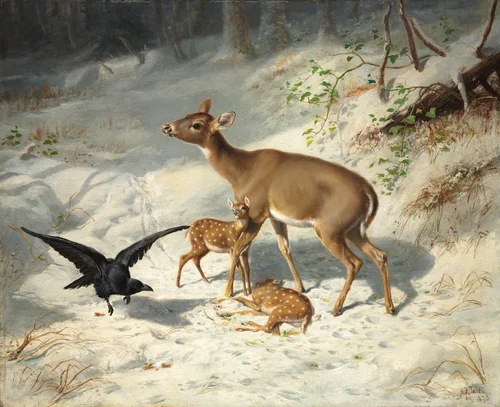
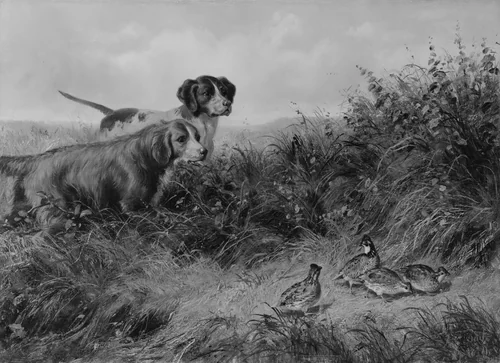
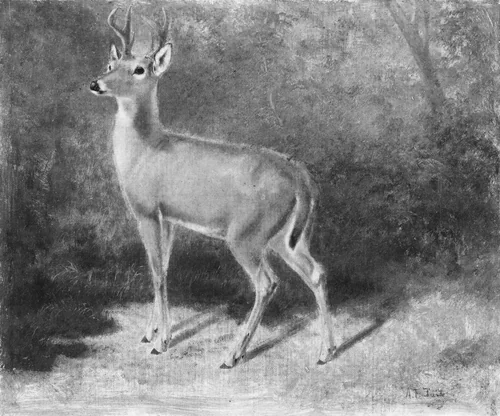
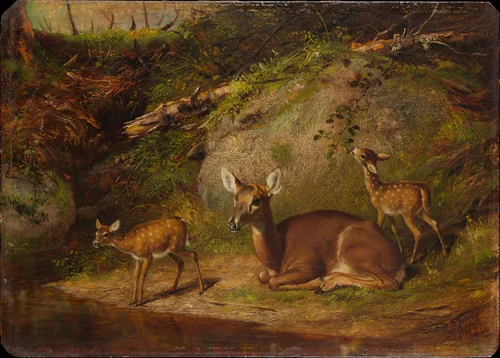
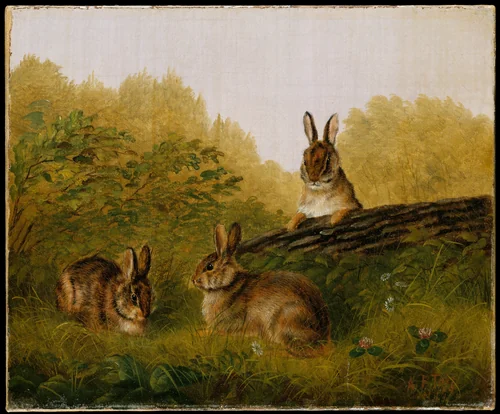
Tait’s artistic strength lay in his ability to capture both the intimacy and the inherent drama of the wild. He moved beyond mere illustration to produce detailed, finished compositions, often working from sketches made directly in the field, such as his precise study, Deer—Sketch from Nature. His subjects ranged widely, from pure natural observation in works like Doe and Two Fawns and Rabbits on a Log, to more structured sporting scenes. Tait had a sophisticated understanding of animal behavior, lending authenticity and narrative weight to scenes such as On Point and the tender domestic moment presented in Maternal Solicitude.
Crucially, Tait’s influence extended well beyond the walls of formal exhibition venues. His alignment with major print publishers, most famously Currier and Ives, meant that many of the best Arthur Fitzwilliam Tait paintings were widely disseminated across the country as affordable reproductions. This commercial partnership cemented his position as the most recognizable painter of American wildlife of his era. It is, perhaps, the highest irony of his legacy that an artist so dedicated to depicting the wild and untamed became an essential component of genteel domestic interior decoration throughout the continent.
Today, Tait's works are highly valued as museum-quality examples of nineteenth-century Americana and reside in significant institutional holdings, including the Metropolitan Museum of Art and the Cleveland Museum of Art. Due to the high visibility and age of his works, many of his compositions are now available to the public. These images can be found as high-quality prints and downloadable files through numerous archives, often available on a royalty-free basis, sustaining the recognition of his foundational contribution to naturalistic painting.
Source: Wikipedia · CC BY-SA 4.0