Arthur Boyd Houghton
Arthur Boyd Houghton (1838-1875) was a pivotal British painter and illustrator whose intense, if tragically brief, career redefined narrative illustration during the late Victorian era. Active primarily between 1865 and 1871, Houghton possessed a distinctive visual syntax, characterized by vigorous cross-hatching, dramatic compositions, and a keen, often uncomfortable observation of human psychology. His significant works are today held in notable institutional collections, including the Metropolitan Museum of Art.
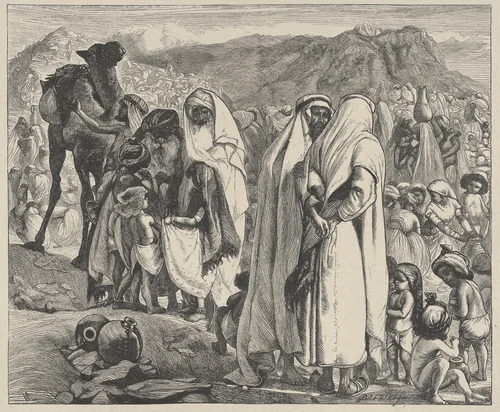
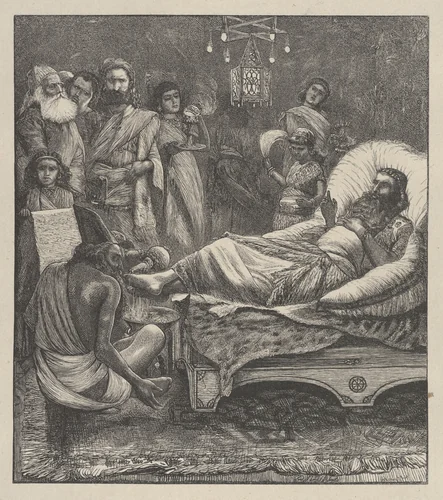
Houghton established his reputation during the Golden Age of Illustration, contributing illustrations to the ambitious wood-engraving projects of the era, notably the prestigious Dalziels' Bible Gallery. Illustrations such as Gathering Manna and The Chronicles Being Read to the King reveal his capacity to handle grand narrative scale while focusing on the psychological and physical gravity of the moment. These pieces positioned him swiftly among the leading illustrators of the day, distinguished by a mature intensity rare for a young artist.
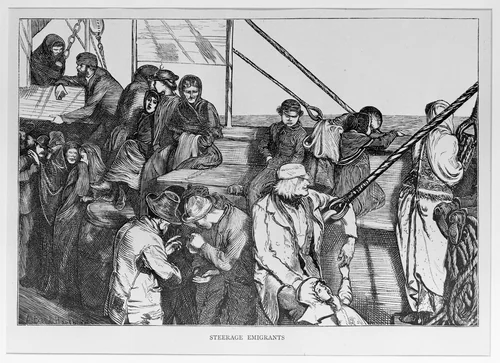
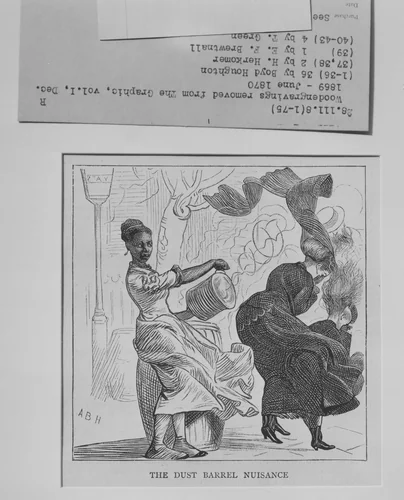
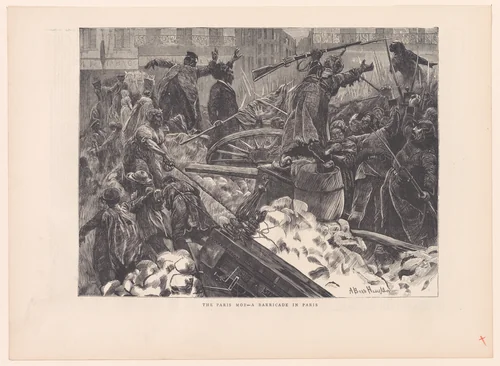
Houghton’s most lasting influence stemmed from his contribution to periodical illustration, particularly for The Graphic upon its launch in 1869. Here, his style shifted toward urgent social commentary, addressing the acute realities of industrial migration, urban blight, and political upheaval with unsentimental precision. Images such as Steerage Emigrants and The Dust Barrel Nuisance brought stark, unromanticized scenes of hardship directly to the middle-class readership. His ability to render a chaotic street scene, such as The Paris Mob–A Barricade in Paris, with documentary clarity yet retaining artistic power, sets him apart from his contemporaries.
Houghton’s intensive period of production was curtailed by his early death, yet his illustrations remain vital records of late-nineteenth-century life. While his Arthur Boyd Houghton paintings are appreciated, it is his prints that solidified his place in art history. The power of his drawing style, equally effective whether depicting religious spectacle or a mundane nuisance, ensures his continued study. Today, many of his original wood-engraved illustrations are widely preserved, often found in the public domain and available as high-quality prints, allowing contemporary viewers to fully appreciate the unsettling genius of his short, but remarkable, career.
Source: Wikipedia · CC BY-SA 4.0