Arthur and Robert
Arthur et Robert was a distinguished Parisian manufacturer of papier peint active during the pivotal aesthetic transition of the late 18th and early 19th centuries. Established by 1787, the firm operated at the apex of French decorative arts, capitalizing on the high demand for sophisticated interior finishing that marked both the final years of the Ancien Régime and the nascent Empire period following the Revolution.
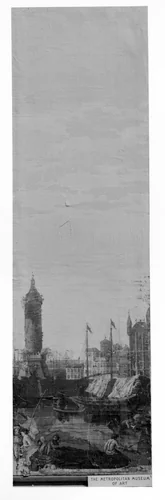
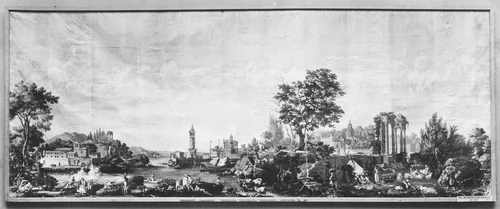
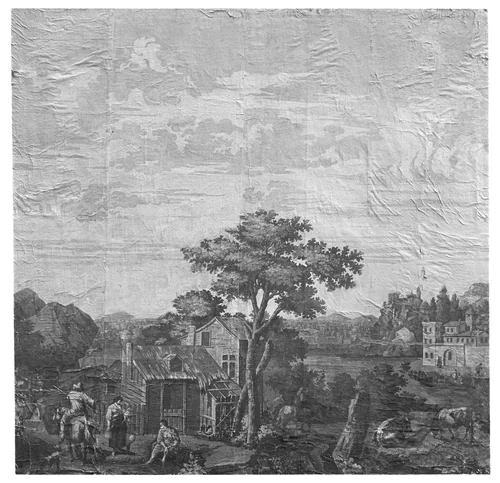
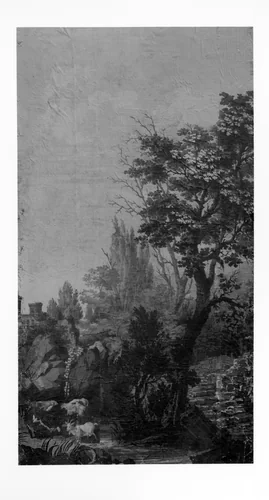
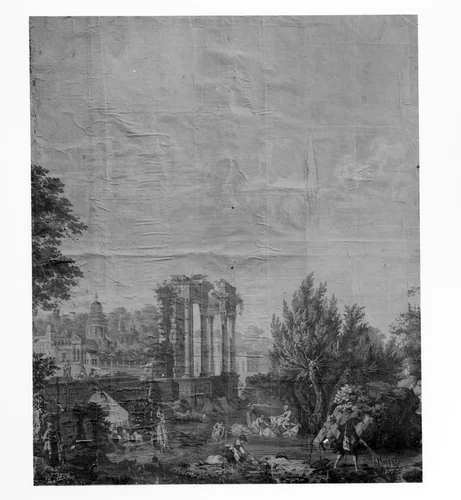
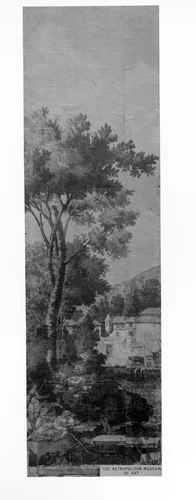
The significance of Arthur et Robert lies not merely in production volume, but in the meticulous technical skill required to execute their complex designs. During this era, wallpaper served as the primary means of creating integrated, immersive interior schemes, requiring hundreds of precision-cut blocks to print a single frieze or scenic panel. Their works reflect the prevailing tastes of Neoclassicism, featuring refined geometric structures, sophisticated grisaille techniques, and densely layered color palettes intended to mimic expensive woven textiles or trompe l’oeil architectural reliefs. This dedication to craft solidified the standing of their works as museum-quality examples of applied art, often held in the same esteem as contemporary paintings or fine furnishings.
Working in Paris placed Arthur et Robert at the competitive center of European design, alongside contemporaries such as Réveillon and Dufour. The survival of their output, much of which is found today in specialized collections including the Metropolitan Museum of Art, is a subtle observation on the fragility of fashion; unlike paintings, these ephemeral decorations were designed to be replaced and discarded. Yet, the persistence of these rare rolls and fragments attests to their original high cost, quality, and installation in houses of enduring historical importance.
Arthur et Robert’s legacy is increasingly recognized today not just through physical relics, but via design documentation. Their intricate patterns continue to inform modern textile and wallcovering development. Scholars and designers seeking inspiration from this foundational era of French interior decoration often rely on reproductions of their work. Fortunately, a wealth of their design motifs is now categorized as public domain material, ensuring that these historical patterns remain accessible for contemporary study and appropriation. High-quality prints and downloadable artwork derived from the firm’s surviving compositions allow for the detailed examination of their block printing mastery, securing their reputation as pioneers in the industry.