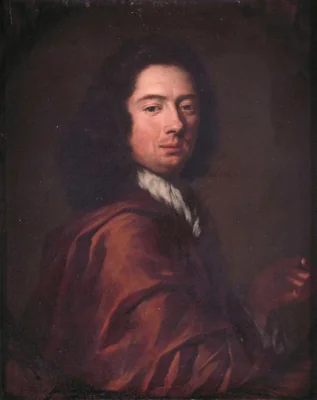
Arnold Houbraken
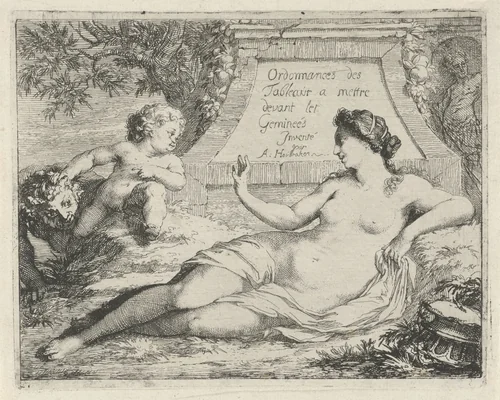
Arnold Houbraken (1660-1719) was a Dutch painter, writer, and draughtsman from Dordrecht, whose towering historical importance rests primarily on his biographies of the Dutch Golden Age masters. Before he transitioned into the role of chief chronicler, however, Houbraken maintained a serious, though brief, visual art career focusing on detailed drawings and reproductive prints.
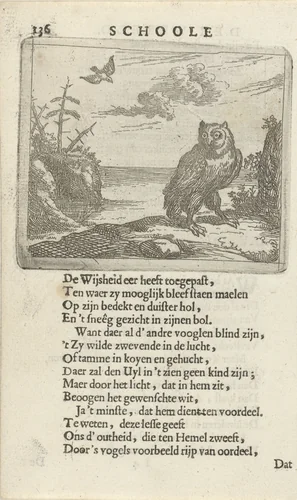
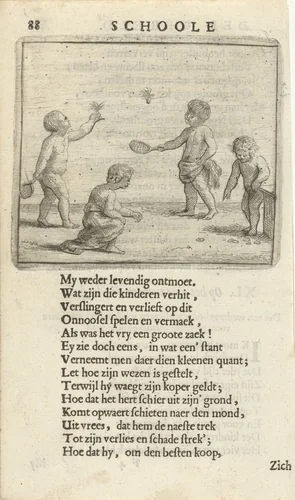
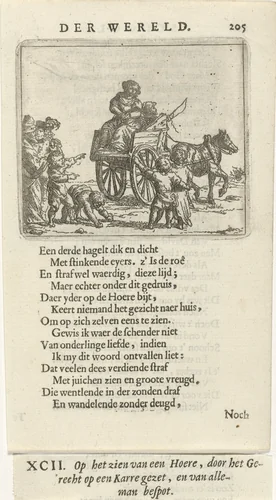
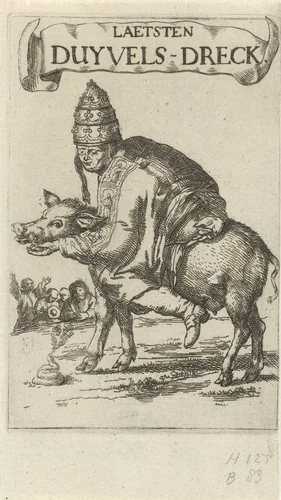
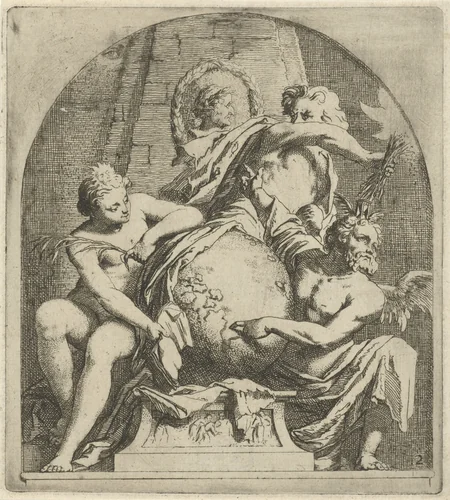
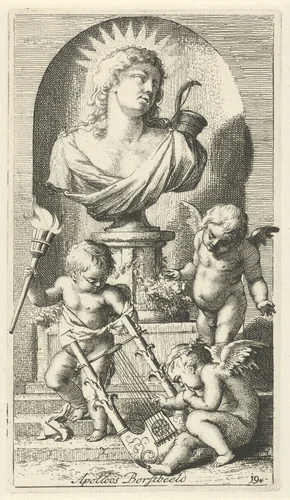
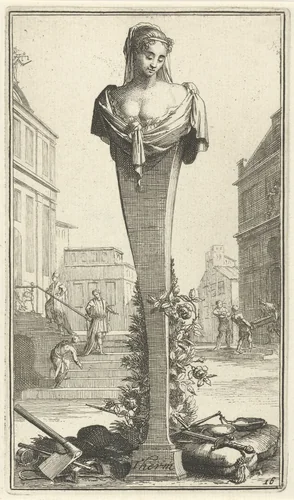
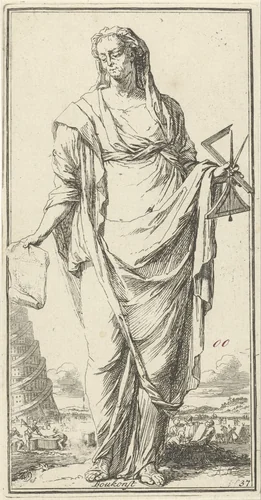
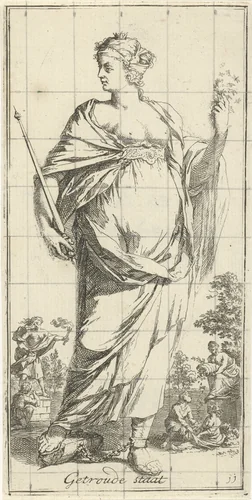
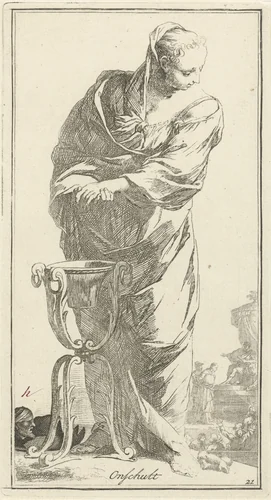
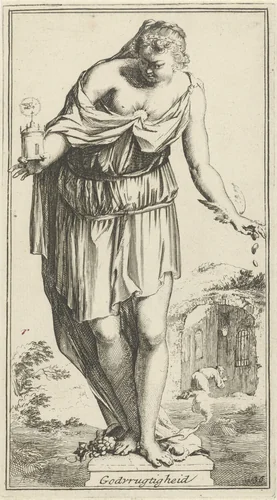
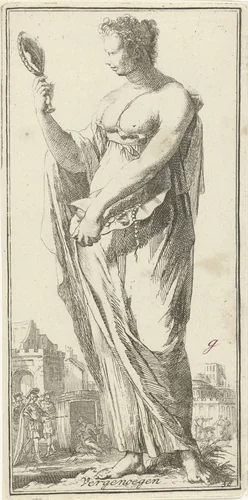
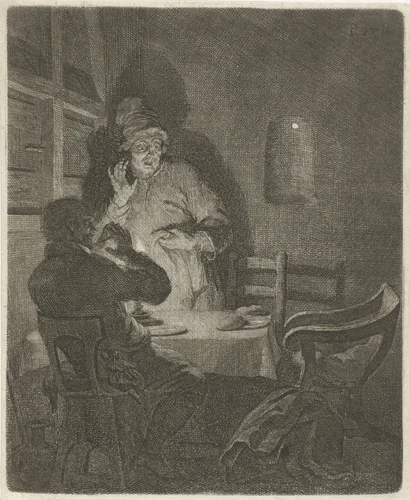
Active primarily between 1670 and 1682, Houbraken’s extant visual oeuvre totals approximately fifteen known pieces, including nine prints and six highly finished drawings. These works often employ classical or complex allegorical themes, executed with the high technical precision characteristic of late seventeenth-century Dutch draftsmanship. His subjects ranged from the deeply classical, exemplified by Aeneas and the Sibyl in the Underworld, to vivid moralizing scenes, such as Bedrog en Valsheid (Deceit and Falseness) and De Dood en Troost (Death and Comfort). Such narrative complexity confirms his artistic engagement with the prevailing intellectual and moral currents of the time. Even his observational studies, including the meticulously rendered Een Kameel or Een Schoone Boom, reveal a focused commitment to draftsmanship.
It is a curious irony that Arnold Houbraken is now overwhelmingly famous for writing about art, a fame that tends to overshadow the sophisticated prints and drawings he actually created. Nonetheless, the intrinsic museum-quality of his early output is secured by representation in major institutions; significant examples of his drawings and prints reside in the permanent collections of the Rijksmuseum in Amsterdam and the Metropolitan Museum of Art in New York.
His commitment to producing high-quality prints and finely detailed preparatory drawings undoubtedly sharpened the critical and visual eye that would later inform his magnum opus, De groote schouburgh der Nederlantsche kunstschilders en schilderessen (The Great Theatre of Dutch Painters). Today, many Arnold Houbraken prints are in the public domain, offering historians and enthusiasts easy access to this often-forgotten stage of his career, confirming his dual legacy both as an artist and as the period’s most diligent recorder.
Source: Wikipedia · CC BY-SA 4.0