Arnold Böcklin
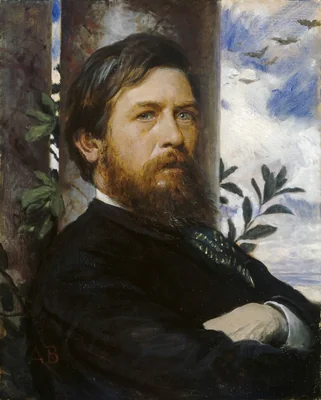
Arnold Böcklin was a pivotal figure in the European art world, a Swiss Symbolist painter whose deeply evocative canvases bridged late Romanticism and the dawning currents of modern art. Active from 1840 to 1884, Böcklin established a distinct visual language characterized by mythic figures, classical architectural decay, and unsettling psychological depth. His impact was particularly acute in Germany and Central Europe, where his commitment to mood over realism fundamentally shifted artistic priorities away from academic tradition.
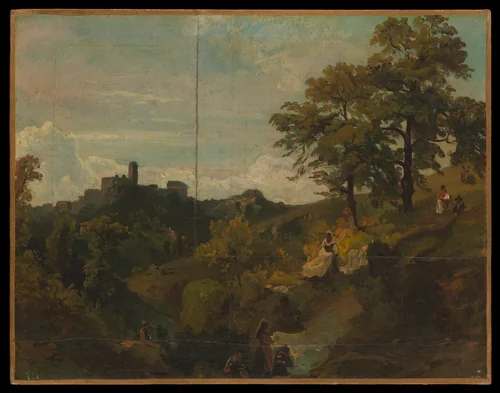
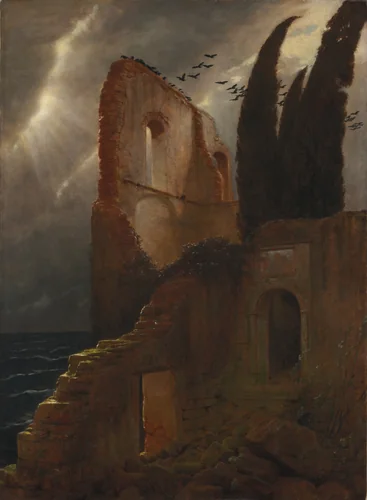
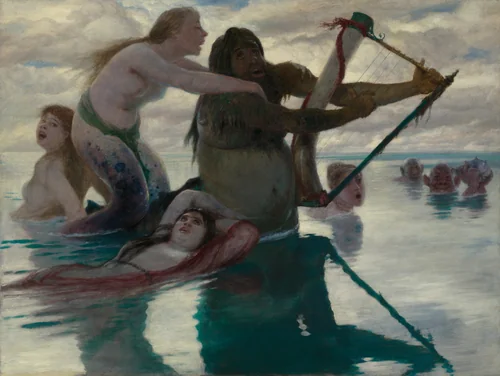
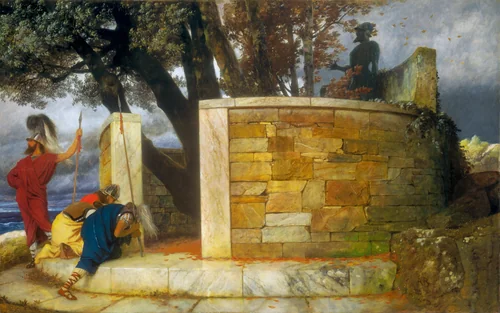
Böcklin's approach frequently involved the creation of intensely personal mythologies rooted in Mediterranean antiquity and the subconscious. Works like Roman Landscape, Ruin by the Sea, and the dynamic In the Sea reject straightforward narrative, presenting instead potent vignettes of confrontation between human emotion and natural grandeur. His calculated blend of meticulously rendered surfaces and fantastically improbable subjects gives his works a potent, dreamlike charge. One of the subtle charms of Böcklin’s method was his steadfast refusal to explain the allegories woven into his paintings; this perpetual enigma ensured his images remained endlessly open to interpretation and speculation long after his death.
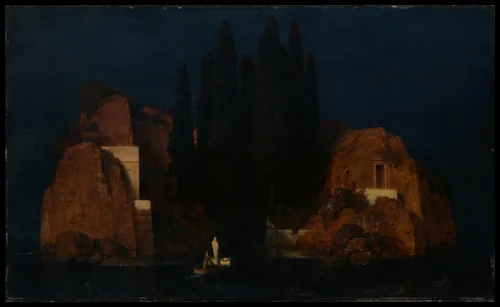
His greatest contribution to European sensibility remains the haunting image, Island of the Dead (Die Toteninsel). Böcklin painted five distinct versions of this work, each depicting a solitary, cypress-studded islet approached by a ferryman and a shrouded figure. The pervasive atmosphere of solemnity and finality rendered this composition the quintessential Symbolist statement on mortality. Its profound emotional resonance inspired several late Romantic composers, notably Sergei Rachmaninoff, to create musical interpretations, testifying to the work’s extraordinary cross-disciplinary impact on the fin de siècle culture.
Today, Böcklin's legacy is preserved in prestigious institutions globally, including the National Gallery of Art, the Metropolitan Museum of Art, and the Art Institute of Chicago. Given their museum-quality status and historical importance, many key Arnold Böcklin paintings have entered the public domain. This accessibility allows scholars and enthusiasts to study the artist’s unique approach to classicism and fantasy, providing access to high-quality prints and downloadable artwork derived from his most famous compositions, including the rare Arnold Böcklin prints created late in his career.
Source: Wikipedia · CC BY-SA 4.0