Armand Séguin
Armand Séguin (1869-1903) occupies a significant, if often understated, position within the Symbolist circle of late nineteenth-century France. While his professional career as an artist was tragically brief, peaking between 1888 and 1895, his output of roughly fifteen known prints cemented his reputation as a master of the woodcut and etching mediums, deeply aligned with the aesthetic philosophies emerging from Pont-Aven.
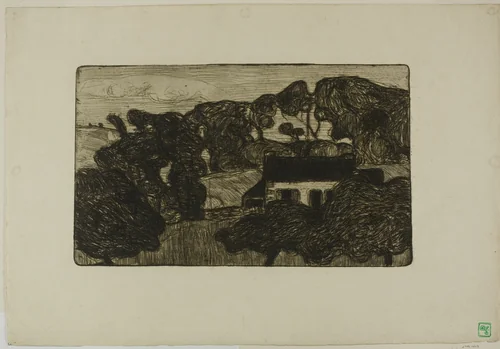
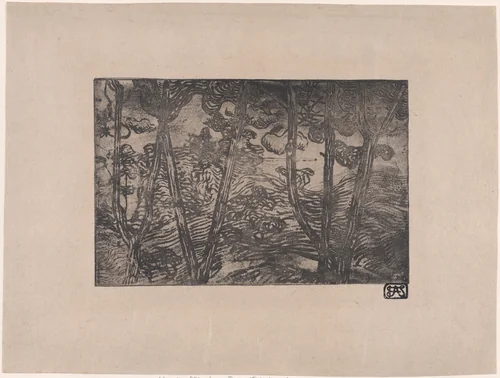
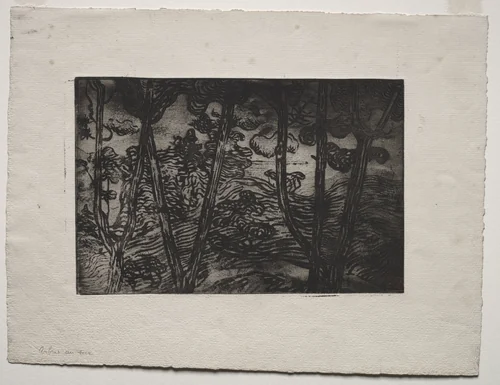
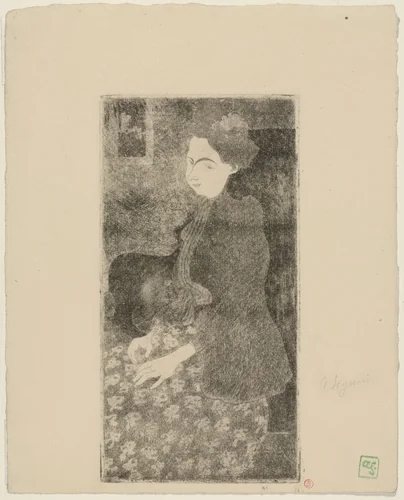
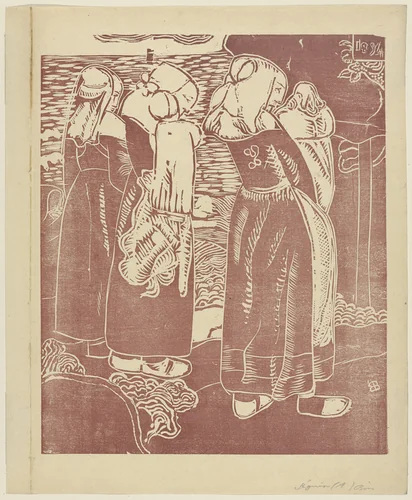
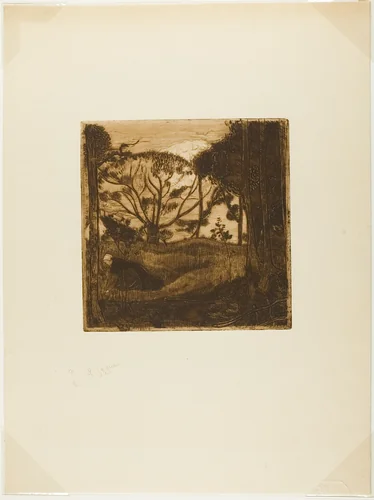
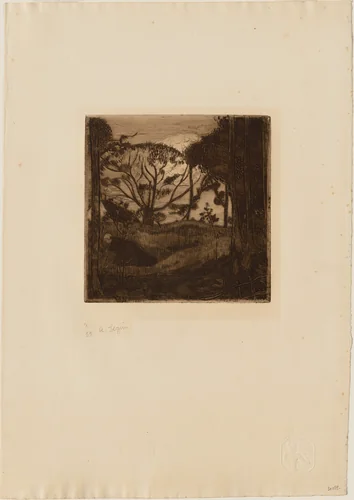
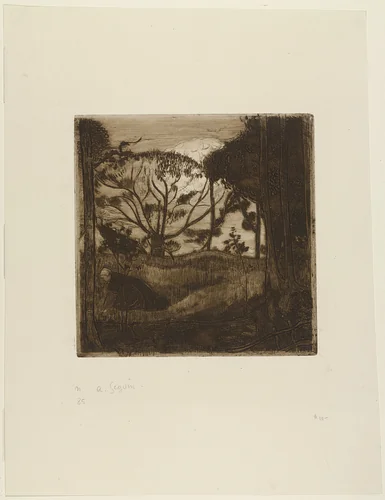
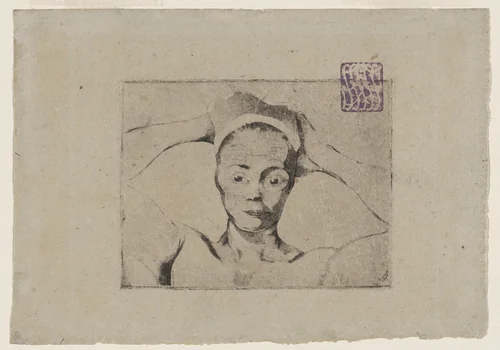
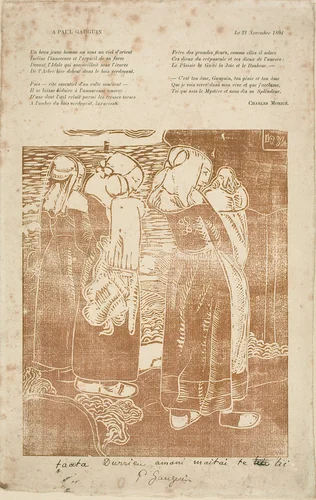
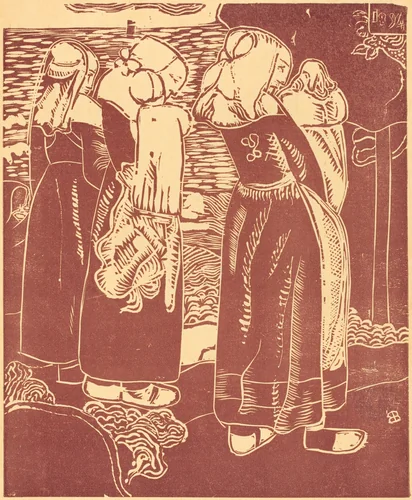
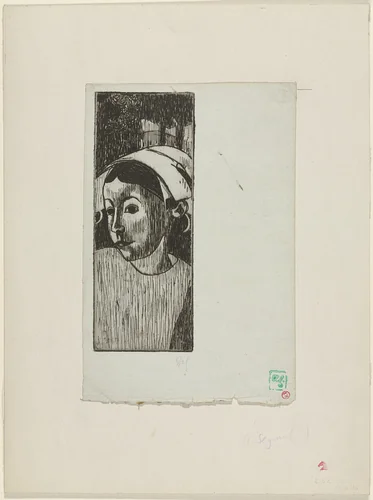
Séguin’s influence stemmed less from traditional paintings and more from his graphic work. He developed a distinctive style characterized by flattened planes, stark outlines, and a deeply emotional use of pattern, which is visible in celebrated works such as Farmhouse Surrounded by Trees. His profound association with Paul Gauguin encouraged his retreat toward synthetism and spiritual exploration, leading him to produce emotionally resonant pieces like Breton Woman. The dark, brooding quality of his imagery, exemplified by the duality of light and shadow explored in the multiple studies titled Trees at Night, reveals a focus on psychological atmosphere rather than simple visual documentation.
Séguin was the artistic inheritor of substantial wealth, a fascinating element of his biography. His ability to pursue printmaking and associate with the non-traditional artists of Pont-Aven was underpinned by a fortune established earlier by Armand Jean François Séguin (1767-1835), the chemist and physiologist. This earlier Séguin discovered a faster, cheaper process for tanning leather, becoming immensely rich through supplying Napoleon’s armies—an extraordinary, almost industrial, provenance for an artist dedicated to mystic symbolism.
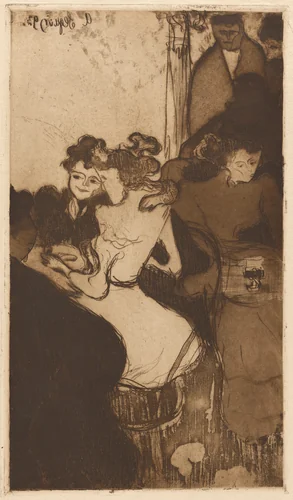
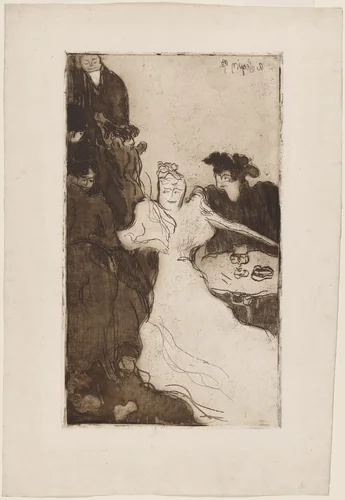
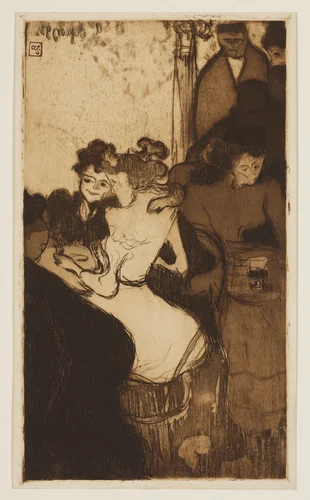
Though he died prematurely, the technical innovation and intense style displayed in his work ensured his legacy was preserved by major international institutions. Key pieces, including the intriguing café study Le Bar, reside in collections such as the Museum of Modern Art, the National Gallery of Art, and the Art Institute of Chicago, confirming his museum-quality status. Today, reproductions of Séguin’s powerful graphic work, like much royalty-free output from the fin-de-siècle period, are available as high-quality prints and downloadable artwork, offering modern viewers unfiltered access to this critical chapter of Symbolist printmaking.
Source: Wikipedia · CC BY-SA 4.0