Armand Rassenfosse
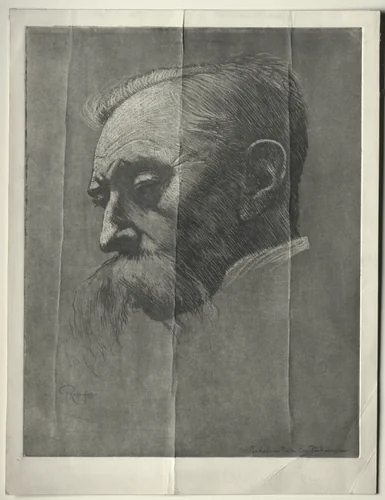
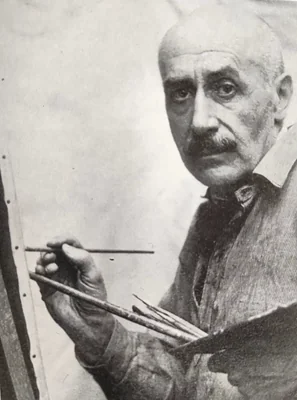
Armand Rassenfosse (1872-1932) holds a distinct, if sometimes understated, place in the history of Belgian graphic arts and illustration. Active across drawing, printmaking, and painting for six decades, Rassenfosse established a reputation for technical precision, even though he was largely self-taught. His dedication to graphic rigor ensured his work quickly entered major institutional holdings, with significant examples of his prints and drawings now held by the Rijksmuseum, the National Gallery of Art, and the Cleveland Museum of Art.
Rassenfosse’s career trajectory demonstrated a profound commitment to figure work and literary interpretation. His most celebrated achievement is the comprehensive set of illustrations created for Charles Baudelaire’s seminal and controversial collection, Les Fleurs du mal. This masterwork confirmed his extraordinary ability to translate complex literary nuance into visual rhythm, employing a sharp line and keen sense of psychological observation characteristic of late nineteenth-century sensibilities.
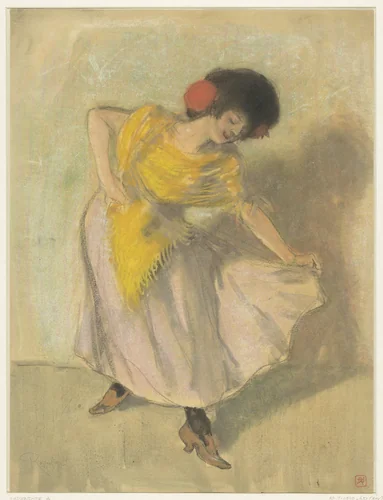
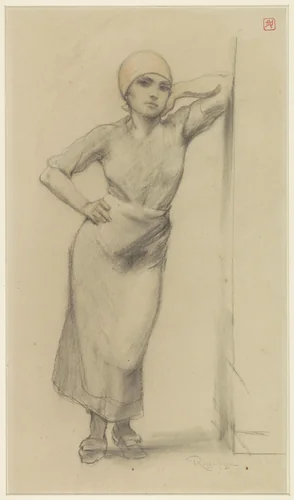
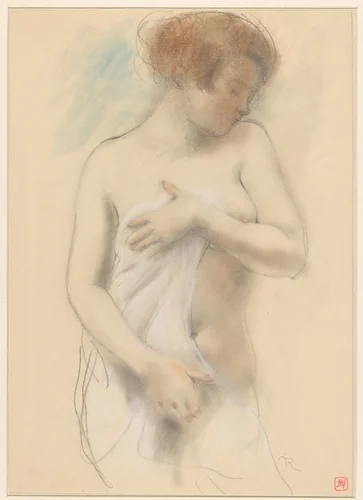
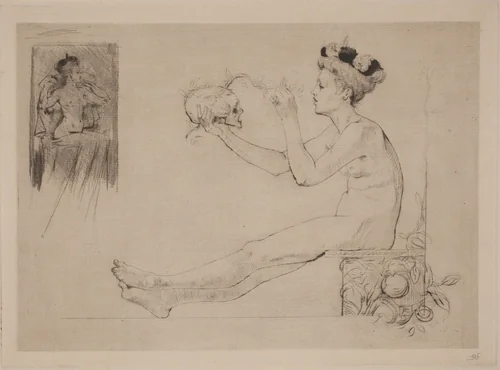
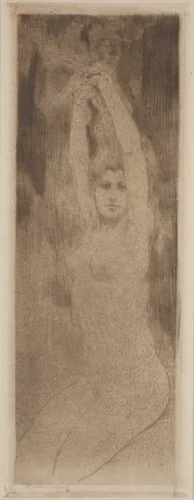
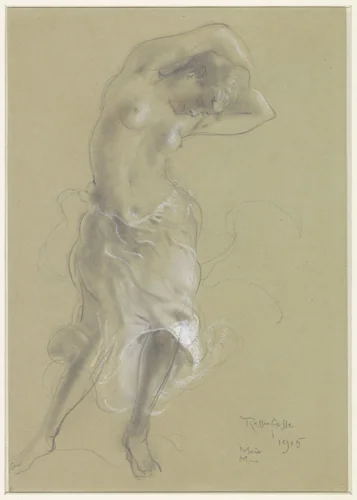
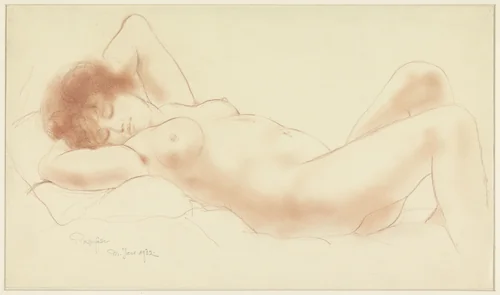
Unlike many of his formally trained contemporaries who relied heavily on preparatory oil studies, Rassenfosse showed a marked preference for direct draftsmanship, capturing the immediacy of the human figure. This is evident in works such as the striking Staande naakte vrouw and the carefully observed genre study, Staand fabrieksmeisje tegen de post van een deur leunend. He successfully navigated the fin-de-siècle fascination with decadence and theatricality, demonstrated in compositions like La Coquetterie and the energetic Danseres, while retaining a classical sense of structure. It is an intriguing combination, suggesting that he internalized traditional academic rigor despite lacking years of formal tutelage.
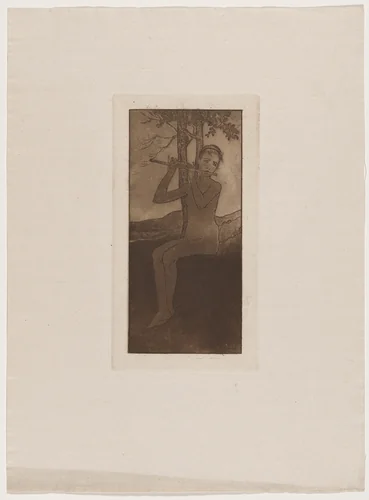
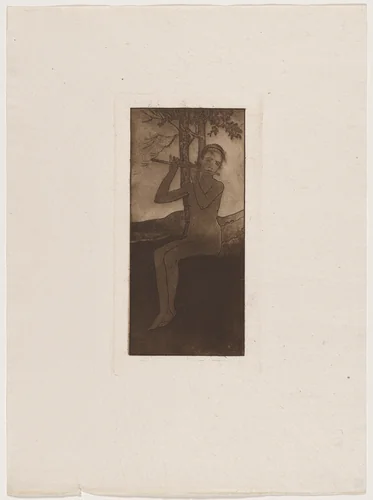
The scope of Armand Rassenfosse prints encompasses intimate portraits, striking figure studies, and atmospheric compositions, including the evocative Le chant de la cigale. While Armand Rassenfosse paintings are less numerous, his graphic output remains highly valued for its consistent quality and technical skill. Today, his work, particularly his beautiful drawings and high-quality prints, are increasingly accessible to scholars. Many works have entered the public domain, allowing institutions and researchers to provide downloadable artwork for study and appreciation worldwide, ensuring his meticulous draftsmanship is preserved.
Source: Wikipedia · CC BY-SA 4.0