Antonio Piccinni
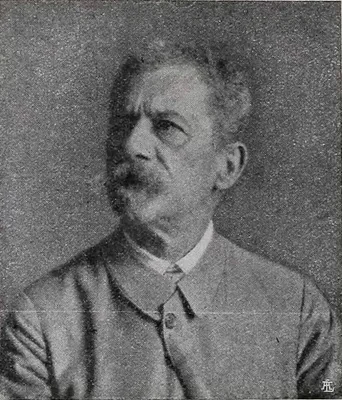
Antonio Piccinni (fl. 1874-1878) was an Italian artist whose primary contributions were made through painting, particularly watercolor, and the demanding medium of engraving. Though his documented active period was brief, spanning only four years in the mid-1870s, his meticulous output secured a lasting presence in major institutional collections, including seven prints housed at the Art Institute of Chicago.
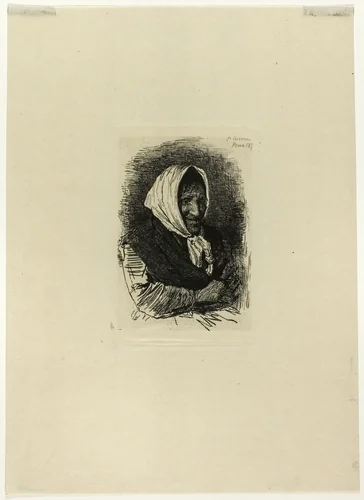
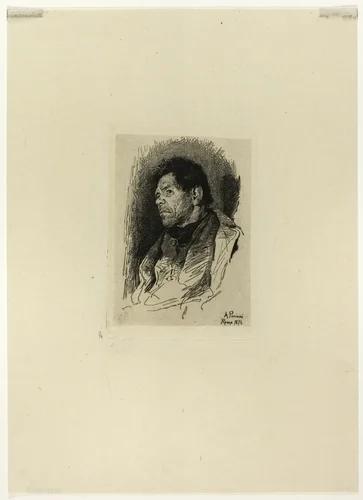
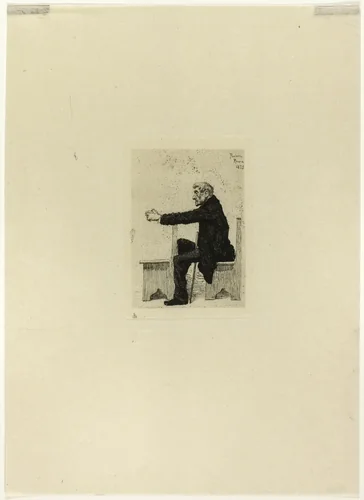
Piccinni demonstrated exceptional technical facility as an engraver. The original documentation of his career emphasizes his proficiency in reproducing diverse subjects, spanning history, landscape, portraiture, and sacred scenes. This versatility is evident in the surviving corpus of his prints, which shifts effortlessly from penetrating character studies like Old Woman Facing Right and Seated Man Facing Left to complex architectural and devotional observations. His ability to translate the nuanced light and atmosphere typically associated with his watercolor practice into the stark, linear discipline of printmaking is a hallmark of his achievement.
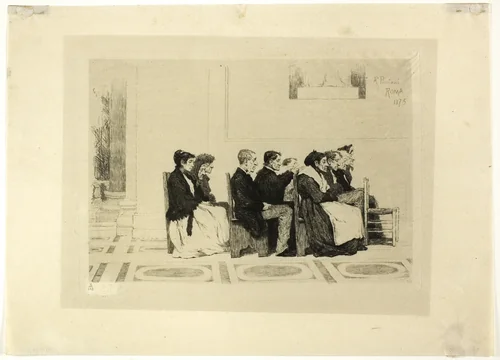
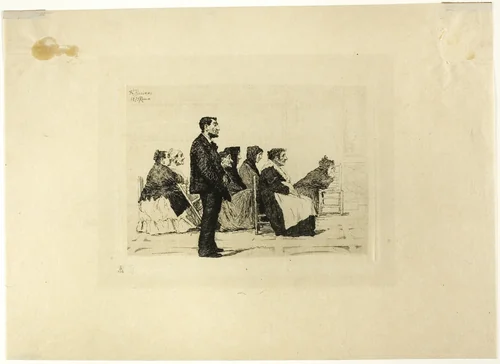
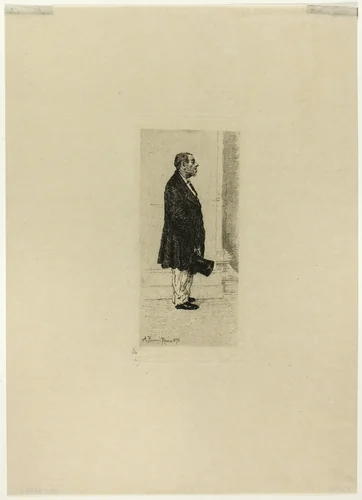
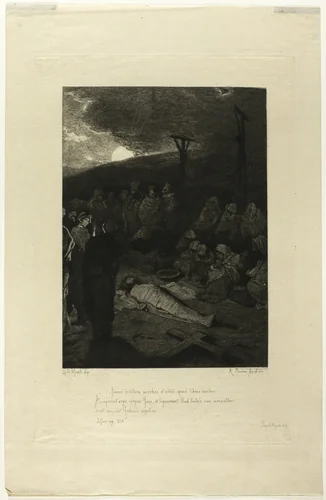
His focus often centered on quiet acts of reverence, documenting private contemplation amidst public ritual. This preference for human observation is clearest in works documenting Roman ecclesiastical life, specifically Attending Mass, Rome, Group of People in Church, and Man Standing in Church. Rather than focusing solely on the grandeur of the structures, Piccinni meticulously captures the human elements populating the spiritual space. It is a peculiar pleasure, one might observe, that an artist so adept at documenting the spiritual seriousness of church attendees managed to achieve such broad appeal with relatively few documented works.
Though few Antonio Piccinni prints have survived relative to the vast output of his contemporaries, the quality and detail of the available pieces ensure their continuing relevance to the study of 19th-century Italian graphic art. Today, researchers and enthusiasts can access downloadable artwork derived from institutional collections. Due to careful institutional curation, high-quality prints of his output are accessible worldwide, serving as excellent examples of museum-quality Victorian-era engraving. His quiet legacy rests on this small but compelling collection, confirming his status as an accomplished, though understated, master of the burin.
Source: Wikipedia · CC BY-SA 4.0