Antonio del Pollaiuolo
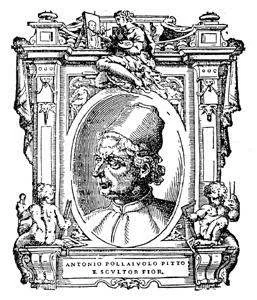
Antonio del Pollaiuolo (c. 1431-1498), also known as Antonio di Jacopo Pollaiuolo, was an essential Florentine Renaissance figure whose technical ingenuity spanned painting, sculpture, engraving, and the demanding craft of goldsmithing. Unlike many of his contemporaries who specialized in one primary discipline, Pollaiuolo moved fluently between media, often designing works in peripheral fields like metal embroidery and ecclesiastical vestments early in his career. This extensive experience in the applied arts gave him a profound understanding of material texture and dimensionality, which intensely informed his later artistic output.
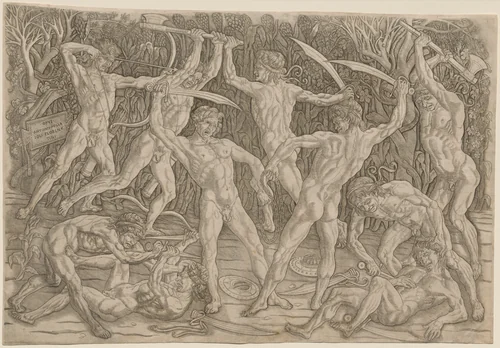
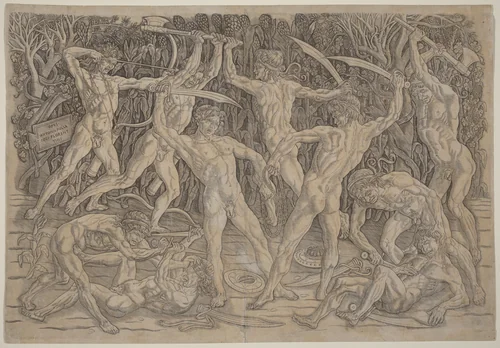
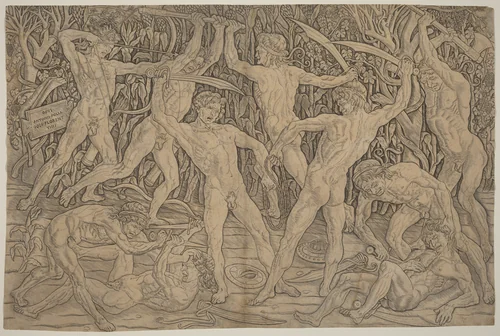
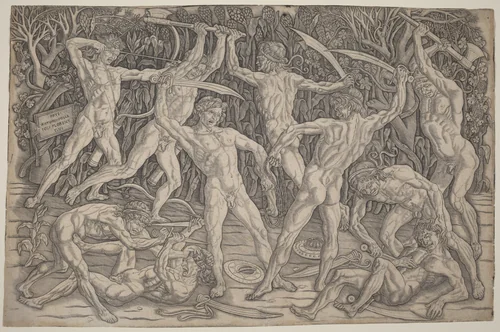
While recognized for his accomplishments in monumental sculpture and Antonio del Pollaiuolo paintings, his most historically significant contribution arrived through engraving. His masterpiece, Battle of the Nudes (c. 1470-1475), is widely considered the largest and most ambitious Italian print of the fifteenth century. This singular work is a revelatory study in muscular energy and human conflict. It broke new ground in its depiction of the nude, illustrating figures in dynamic, anatomically complex poses previously unseen in graphic art. Pollaiuolo’s intense focus on underlying anatomy, likely derived from clinical study, marked a crucial step toward the High Renaissance’s fascination with the idealized and powerfully articulated human form.
The intensity captured in the dynamic musculature of works like Battle of the Nudes reflects the workshop’s central concern: how to render bodies under maximum strain. It is a minor, but often amusing, footnote that Antonio and his equally talented brother, Piero, inherited the surname ‘Pollaiuolo’ (meaning ‘poultry-seller’) from their family trade, a nomenclature that seems entirely disconnected from the elegant violence depicted in their art.
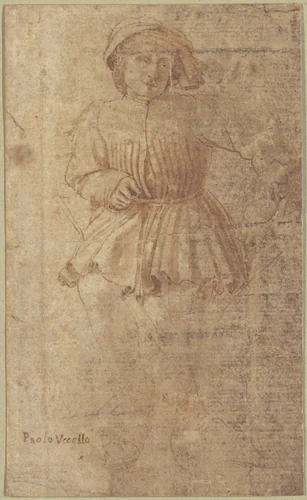
Today, researchers and collectors rely on digitized resources, finding many of his historical works, including preparatory drawings like Young Man, available in the public domain. These open resources allow for detailed study and the creation of museum-quality, high-quality prints, ensuring that the graphic and anatomical innovations of Pollaiuolo remain accessible to contemporary audiences worldwide.
Source: Wikipedia · CC BY-SA 4.0