Antonio del Castillo y Saavedra
Antonio del Castillo y Saavedra was a versatile and significant figure of the Spanish Baroque, active during the crucial decades between 1616 and 1636. His comprehensive artistic practice spanned painting, sculpture, and literature, defining him as a true multidisciplinary talent of the period. While his role as a poet often remains a fascinating footnote, modern art historical assessment primarily focuses on his compelling contributions to draftsmanship and religious figure studies.
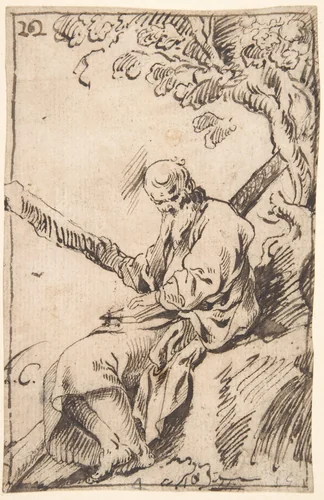
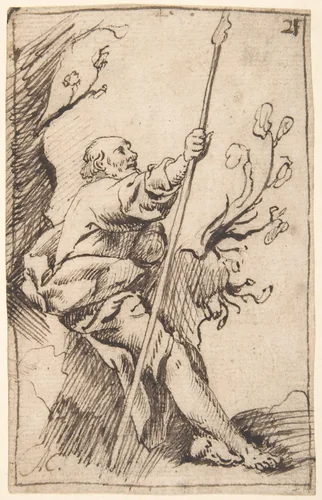
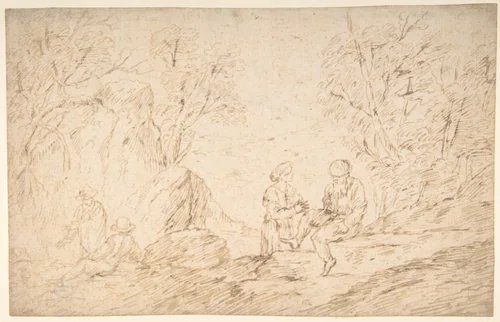
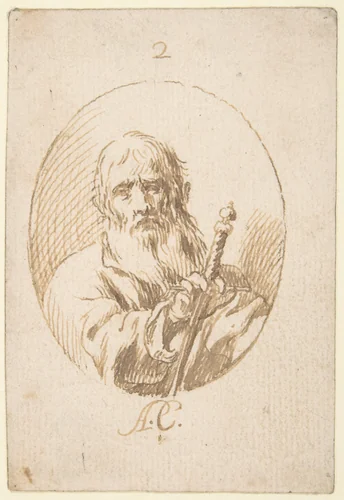
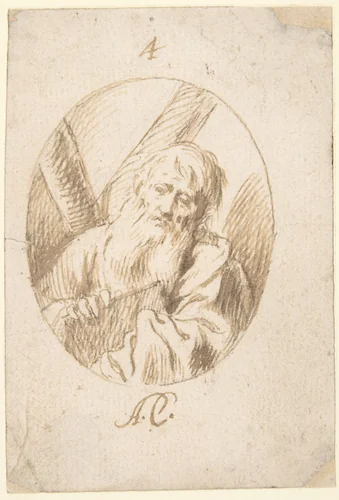
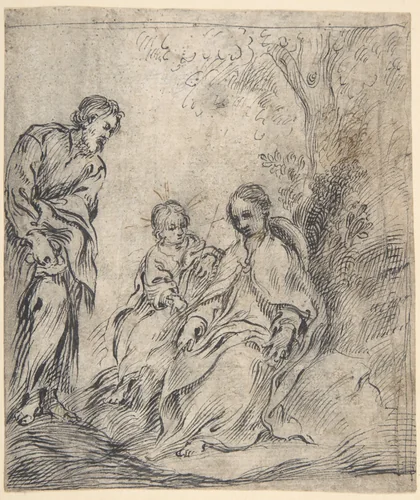
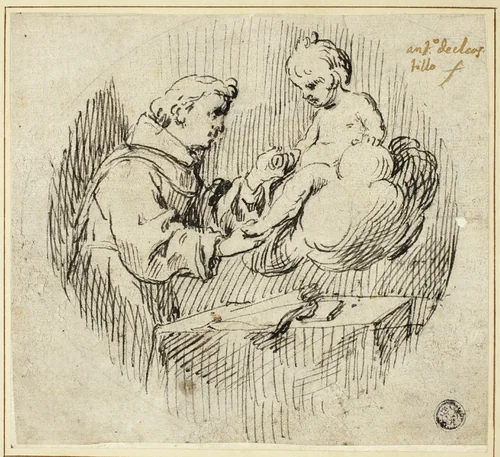
The surviving, albeit concise, body of known works, primarily drawings, showcases a remarkable facility with line and composition. These studies often emphasize the interaction between monumental human figures and expansive surroundings, reflecting the era’s taste for integration and drama. Examples such as Figure of St. James the Great Seated in a Landscape illustrate his capacity to anchor a weighty, devotional subject within an atmospheric, detailed setting. Conversely, other works highlight a refined sense of classical restraint, seen in the formal precision of pieces like Half-length Figure of St Paul in an Oval and Half-length Figure of St. Andrew in an Oval. This preference for containing dynamic religious energy within strict geometric formats suggests a sophisticated understanding of both preparatory art and the decorative demands placed upon finished works.
Castillo y Saavedra’s dual dedication to the visual arts and verse is an intriguing facet of his character. It is perhaps no surprise that an artist capable of such disciplined visual articulation also possessed the lyrical inclination to compose poetry; his technical precision in depicting the human form may have found its analogue in the meticulous structure required for written verse.
Despite the relatively short period of his recorded activity, Castillo y Saavedra’s historical importance is confirmed by the placement of his works in major international collections, notably the Metropolitan Museum of Art and the Art Institute of Chicago. These museum-quality drawings serve as essential reference points for understanding early Spanish Baroque conventions. Today, scholars and enthusiasts interested in Antonio del Castillo y Saavedra prints can study these works firsthand. Due to the transition of many historical drawings into the public domain, downloadable artwork and high-quality prints are widely accessible, allowing his nuanced approach to religious portraiture to continue informing subsequent generations.
Source: Wikipedia · CC BY-SA 4.0