Antonio de la Gandara
Antonio de la Gandara (1861-1917) stands as a quintessential chronicler of the French Belle Époque, renowned for his sensitive and meticulous portraits that encapsulated the high style and intellectual fervor of Parisian society at the turn of the century. Identified as a French painter, pastellist, and draughtsman, Gandara developed a sophisticated visual language focused not on the broad strokes of Impressionism, but on psychological detail and refined observation.
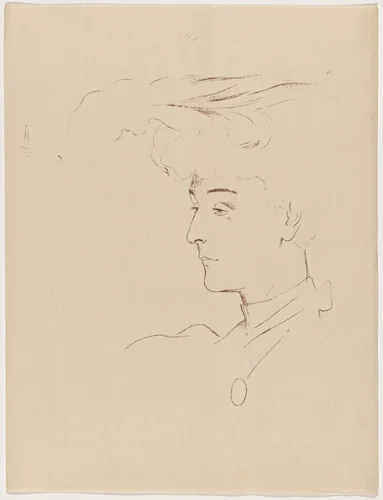
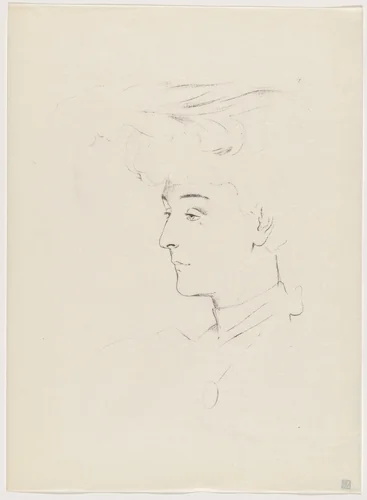
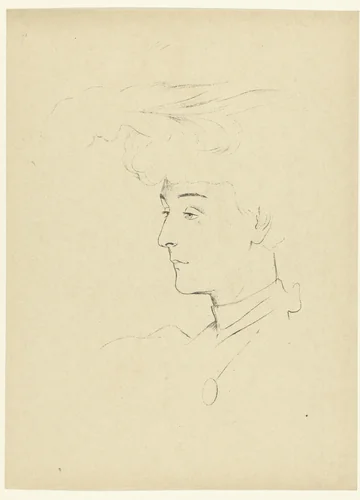
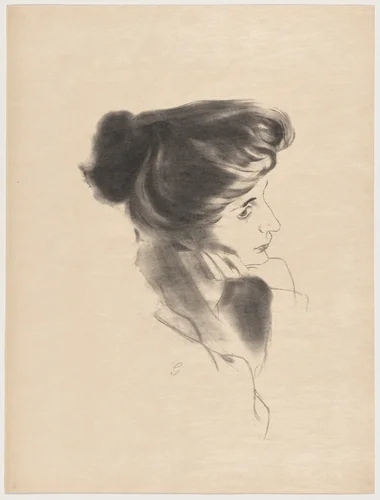
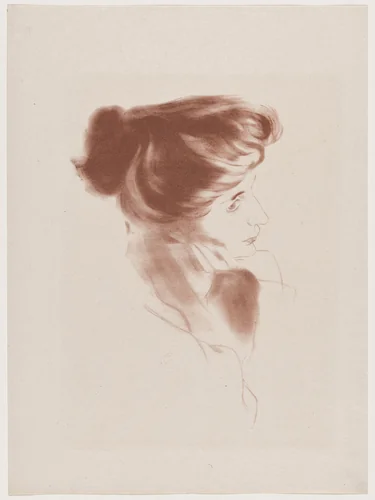
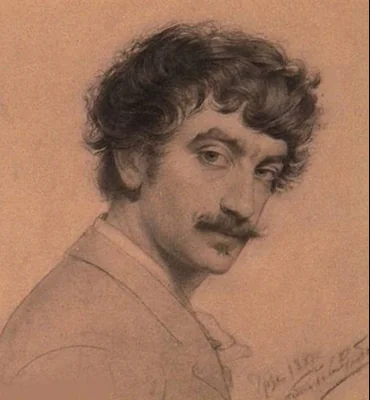
His work provided a compelling bridge between traditional academic realism and the burgeoning aestheticism of the Symbolist movement, earning him consistent acclaim throughout the 1890s. Gandara excelled particularly in pastels and black chalk, media that allowed for an immediate responsiveness and an elegant blending of line and tone. This mastery of drawing is evident in pieces like Etude and Portret van vrouw, where the precision of the form maintains a delicate, almost ethereal quality.
Gandara’s active period, particularly around 1895, yielded a series of remarkable studies of the female form, characterized by understated elegance. Works such as Tête de femme, profil à droite (Head of a Woman in Profile to the Right) demonstrate his ability to use profile views to amplify the dignity and sometimes, the subtle melancholy, of his sitters. He eschewed distracting backgrounds, preferring to illuminate the sitter’s character through costume, posture, and a focused lighting arrangement.
It is perhaps telling of his stature that, unlike many contemporaries who chased ephemeral fame, Gandara’s sitters were often just as famous as he was, creating a fascinating double-portrait of the era itself.
His sustained focus on museum-quality portraiture ensured his appeal to major institutions. Today, examples of Antonio de la Gandara prints and original works are held in prestigious international collections, including the Rijksmuseum and the National Gallery of Art. The enduring appeal of his draughtsmanship is supported by the increasing availability of his less restricted works in the public domain, allowing access to high-quality prints and downloadable artwork derived from his most celebrated period.
Source: Wikipedia · CC BY-SA 4.0