Antonio Canaletto
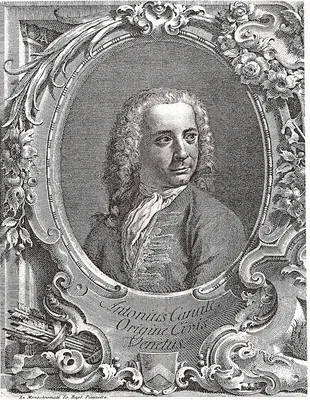
Antonio Canaletto, born Giovanni Antonio Canal, stands as the most vital figure of the 18th-century Venetian school and the undisputed master of the veduta, or detailed topographical view painting. Active in a period of intense artistic productivity between 1717 and 1735, Canaletto transformed the genre of cityscape painting from mere documentation into a dynamic, highly marketable art form, defining the visual identity of Venice for centuries to follow.
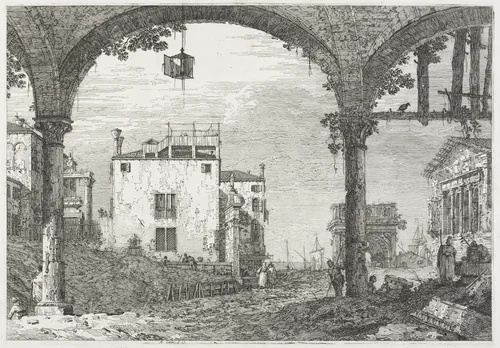
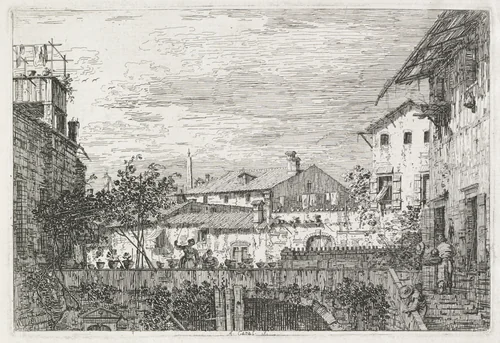
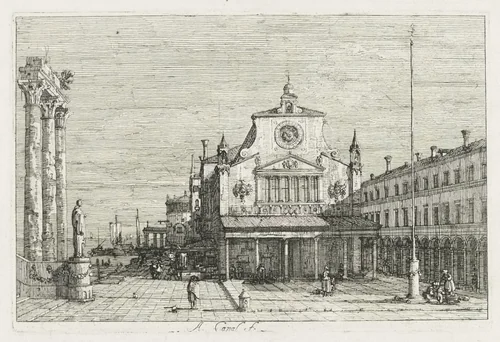
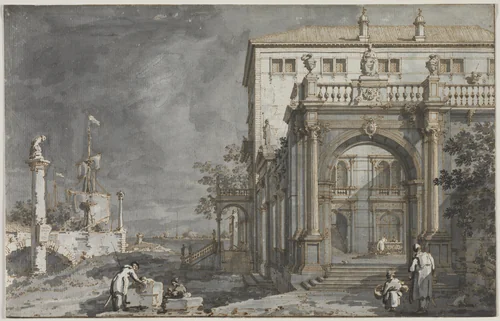
Though initially trained in the theatrical arts, working alongside his father as a stage-set painter in Rome, Canaletto quickly translated that understanding of dramatic perspective and light control into meticulously crafted cityscapes upon his return to Venice. His canvases, capturing the vast sweep of the Grand Canal or the intimate geometry visible in scenes like Views: A House Surrounded by Six Columns, became highly sought after by foreign dignitaries and British collectors engaged in the Grand Tour.
Canaletto’s innovative approach relied on rigorous observation, often employing the camera obscura to achieve an almost photographic accuracy in rendering complex architectural elements. Yet, his work never sacrifices atmosphere for precision; he carefully modulated light and color to create brilliant, sun-drenched views, sometimes combining several different viewpoints into an idealized composition that improved upon reality itself. It is a subtle but profound commentary on his influence that succeeding generations of tourists often saw Venice not as it was, but as Antonio Canaletto painted it.
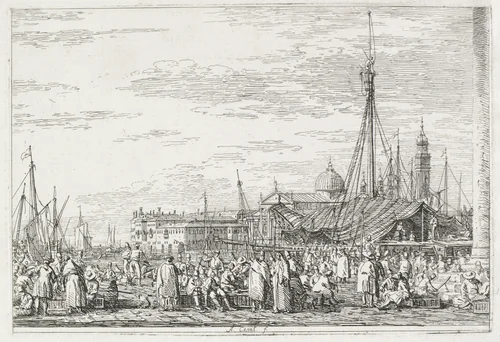
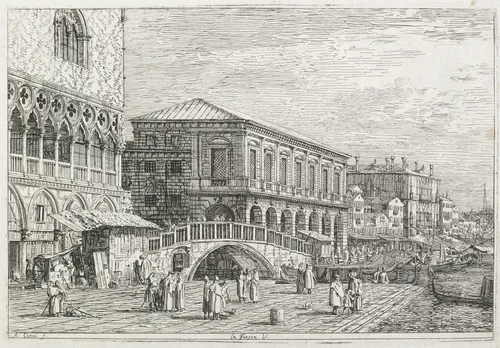
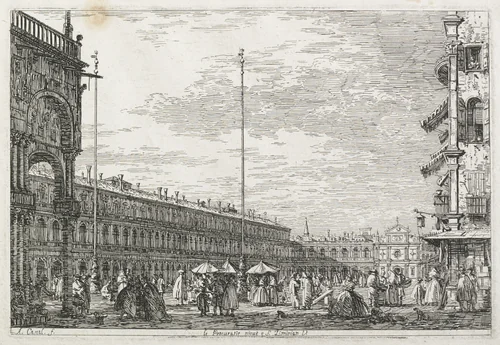
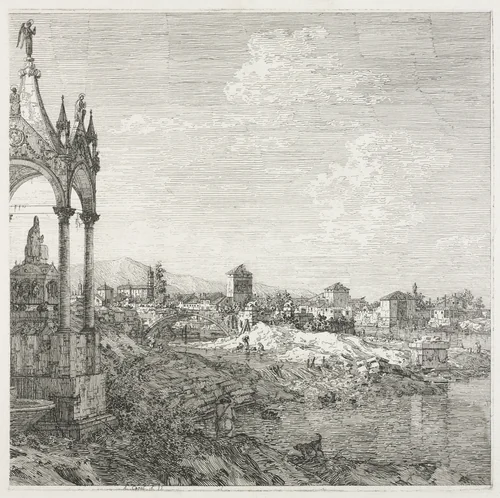
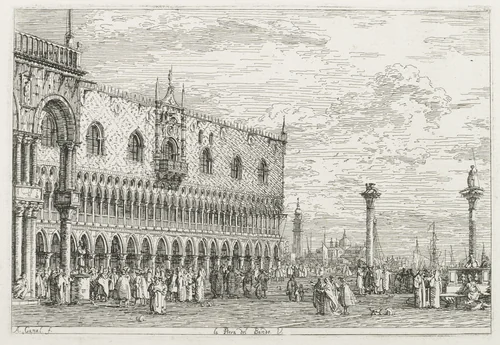
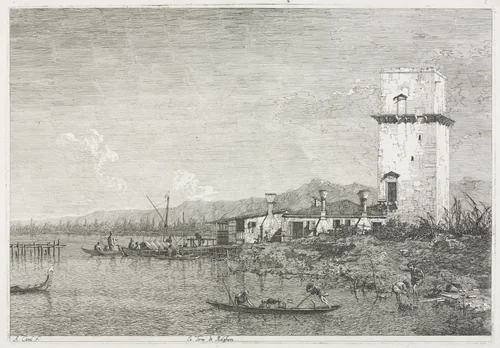
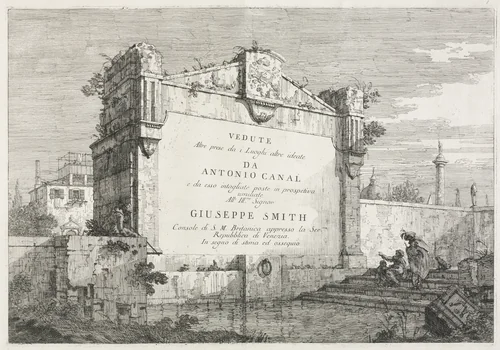
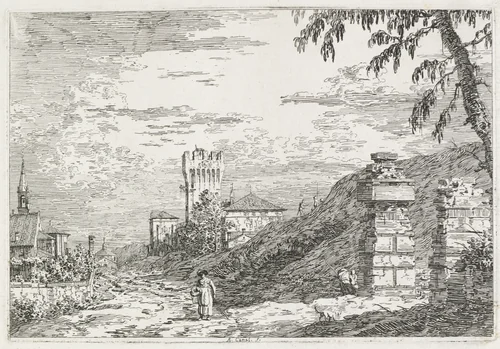
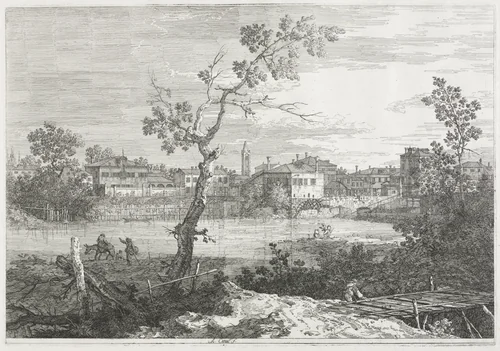
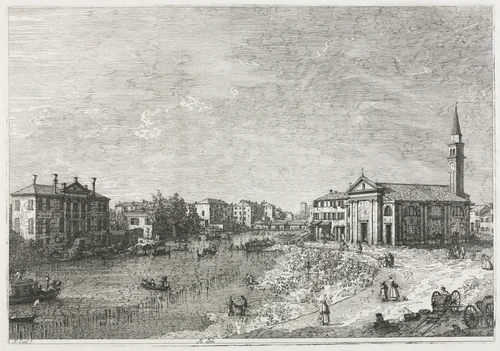
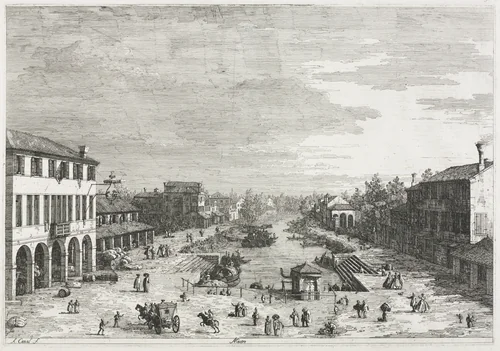
Beyond his celebrated large-scale paintings, Canaletto demonstrated comparable genius in graphic media. The artist produced a significant number of etchings, including the dramatic series Views of Venice and Environs: A City Beyond a River and Panorama of a City on a River. These Antonio Canaletto prints allowed for broader dissemination of his celebrated works. Today, his output is globally recognized, with major holdings in institutions such as the Cleveland Museum of Art. Recognizing the immense historical and aesthetic value of these images, a substantial portion of his graphic work is now in the public domain, ensuring that these high-quality prints remain accessible as downloadable artwork for scholarly research and appreciation worldwide.
Source: Wikipedia · CC BY-SA 4.0