Antonio Balestra
Antonio Balestra, an Italian master active across the transition from Late Baroque classicism into the elegance of the Rococo period, remains recognized for his sophisticated draughtsmanship and his ability to render complex spiritual and mythological narratives with compelling clarity. Though historical records suggest a remarkably long period of activity, spanning from approximately 1500 to 1734, his mature style aligns firmly with the 17th and 18th centuries, favoring delicate modeling and graceful composition over the visceral drama of his Baroque predecessors.
Balestra’s output, represented in major global institutions including the Art Institute of Chicago and the National Gallery of Art, confirms his importance in the academic traditions of Venetian and Roman painting. His surviving corpus of works, which includes meticulous drawings and significant prints, demonstrates an artistic intellect deeply engaged with both religious piety and classical learning.
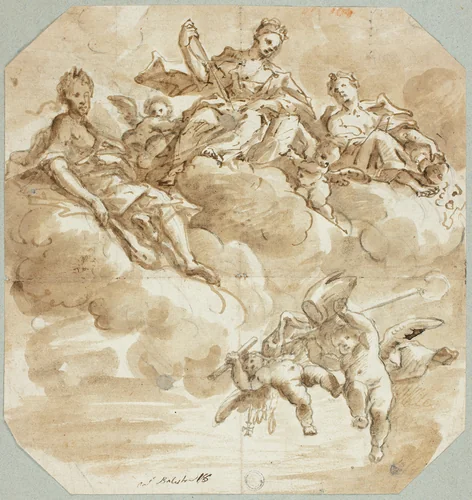
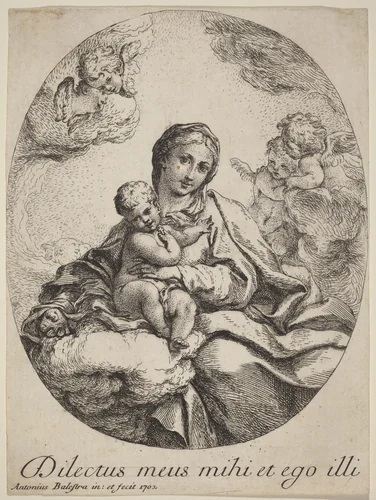
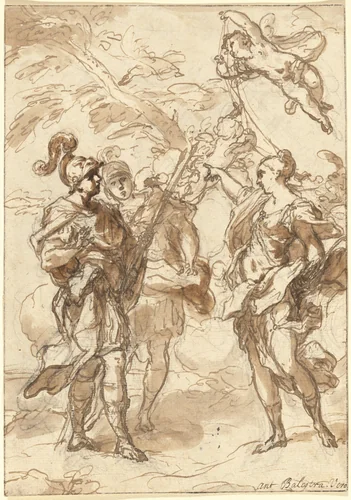
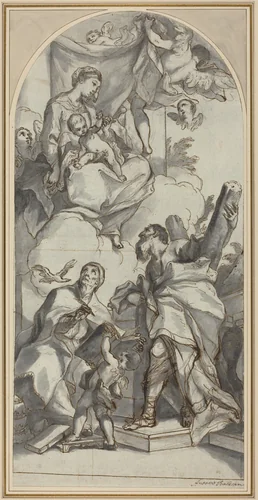
The sacred compositions exemplify his command over celestial drama, utilizing soft light to illuminate figures suspended in glory. In works such as Mary as Queen of Heaven or Apotheosis of Saint and Virgin and Child on a Cloud, Balestra utilizes a serene, uplifting palette, maintaining the compositional structure of the grand manner while introducing a sweetness characteristic of the nascent Rococo. Conversely, his engagement with antiquity, as seen in the dynamic composition Venus as a Huntress Appearing to Aeneas and Achates, showcases his facility for depicting mythological figures in spirited action, balancing classical form with narrative energy.
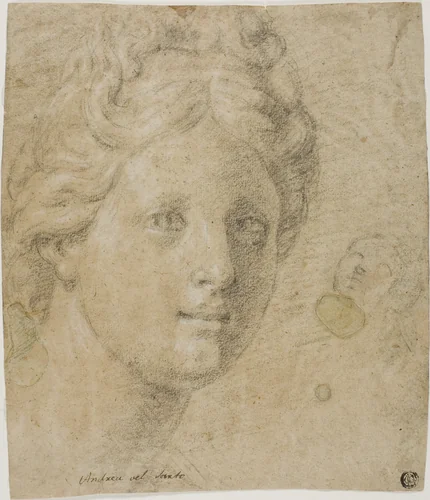
It is particularly in his preparatory sketches, like the striking Head of a Woman, that the immediacy of his technical genius shines through, revealing the assured hand that informed his finished Antonio Balestra paintings. Today, the enduring interest in his work ensures that this legacy is preserved: many of his studies and prints are now in the public domain, allowing students and collectors access to high-quality prints for research and appreciation. His enduring appeal rests not just on his technical mastery, but on the way he successfully softened the dramatic rigor of the preceding generation, guiding Italian art toward a lightness that defined the eighteenth century.
Source: Wikipedia · CC BY-SA 4.0