Antonello da Messina
Antonello di Giovanni di Antonio, known simply as Antonello da Messina (c. 1430–1479), stands as one of the pivotal figures of the Italian Early Renaissance. Active primarily between 1450 and 1475, this Sicilian master achieved a unique synthesis, fusing the geometrical clarity and structural drawing inherent to Italian painting with the profound atmospheric realism and advanced oil handling characteristic of contemporary Netherlandish art.
Unlike many of his Florentine and Venetian contemporaries who focused on fresco and tempera, Antonello traveled widely and absorbed techniques that fundamentally altered the course of Italian painting. His mastery of the pure oil medium, which allowed for unprecedented luminosity, subtle manipulation of light, and depth of color, suggests a direct engagement with or profound knowledge of the methods pioneered by Jan van Eyck. It is a delightful historical footnote that while Giorgio Vasari later credited Van Eyck with inventing oil painting, it was arguably Antonello who successfully introduced and popularized this refined Northern method throughout the major Italian centers, particularly influencing the burgeoning Venetian School.
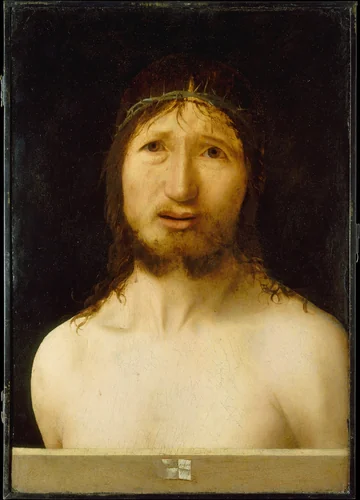
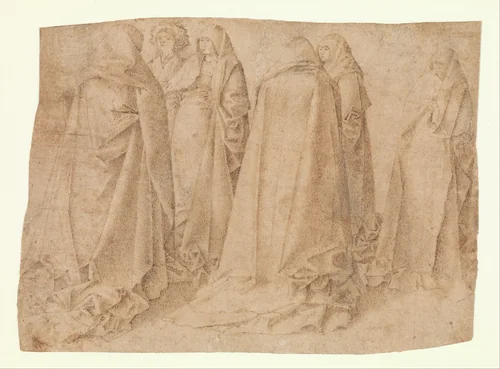
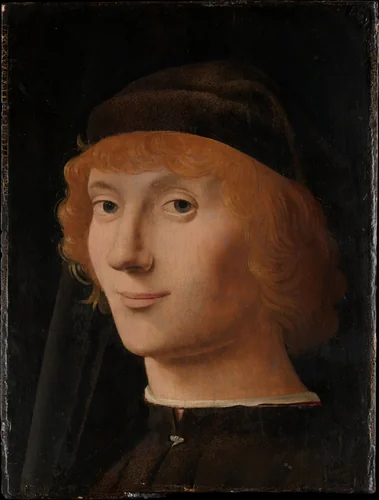
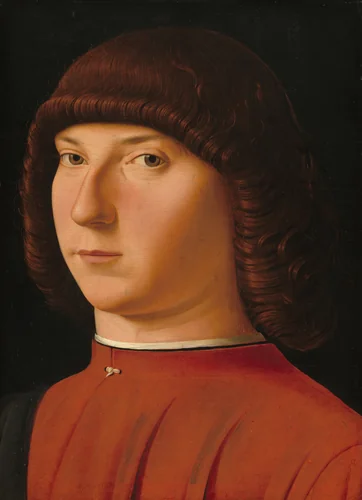
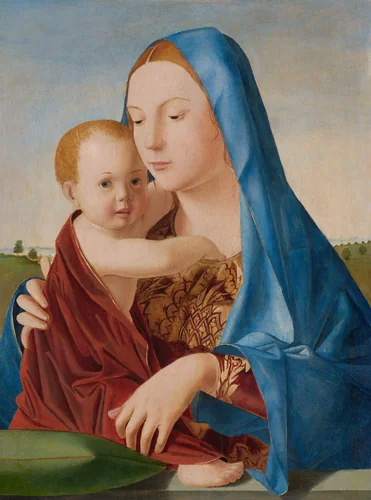
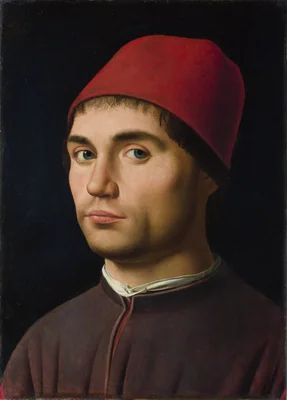
Antonello’s surviving oeuvre is small but highly influential, demonstrating command over diverse subject matter. His portraits, such as the two versions of Portrait of a Young Man, are renowned for their unflinching psychological penetration, presenting the sitter in the three-quarter view adapted from the North and utilized with intense, focused precision. His devotional works, including Madonna and Child and the starkly emotional Christ Crowned with Thorns, showcase his technical finesse, utilizing fine layers of paint to achieve delicate sfumato and subtle trompe l'oeil effects. The drawing Group of Draped Figures further reveals his underlying skill in human observation and volumetric form.
Today, Antonello da Messina paintings remain central components of institutional collections globally, held by major institutions like the Metropolitan Museum of Art and the National Gallery of Art. Because many of these influential Renaissance masterworks are now in the public domain, art enthusiasts can easily access high-quality prints and downloadable artwork, ensuring the foundational innovations of this Sicilian master continue to be studied and admired worldwide.
Source: Wikipedia · CC BY-SA 4.0