Anton Mauve
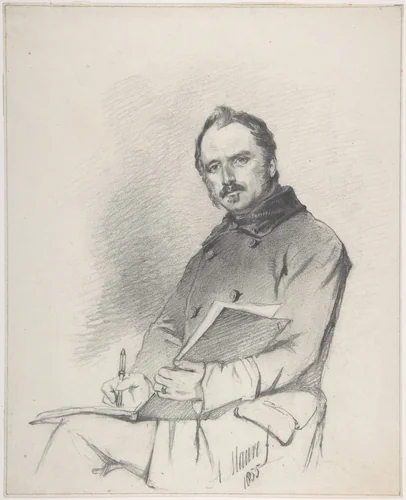
Anthonij "Anton" Rudolf Mauve (1838-1888) occupies a critical position in the history of Dutch art as a key architect of the Hague School. Integrating the emerging principles of French Realism with a deeply rooted national tradition of landscape painting, Mauve helped define the visual language of late nineteenth-century Dutch modernism. He is recognized today both for his distinct atmospheric style and for providing one of the most significant early influences on his cousin-in-law, Vincent van Gogh.
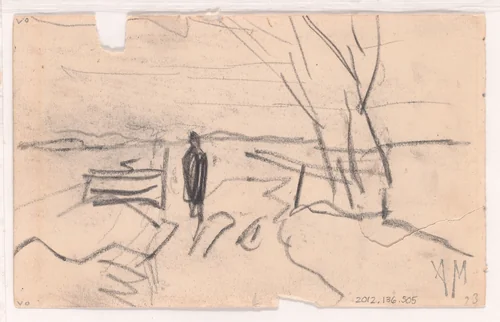
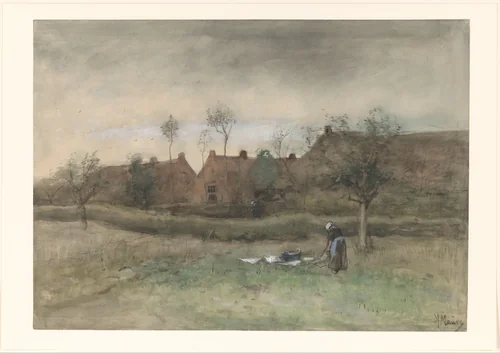
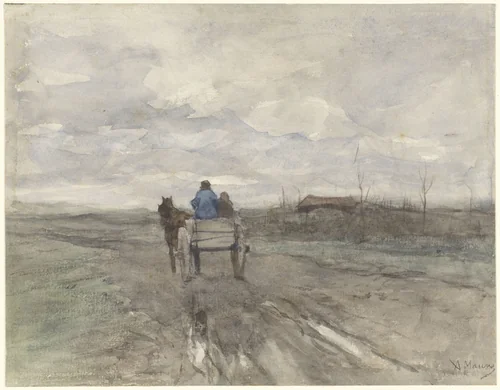
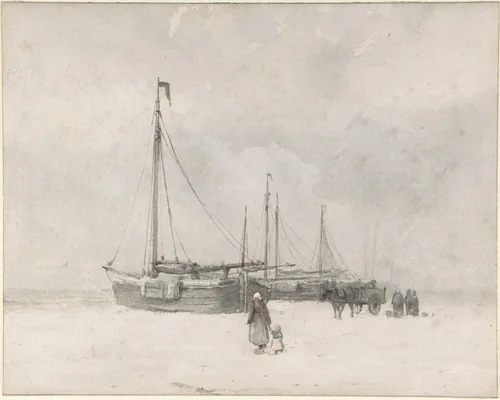
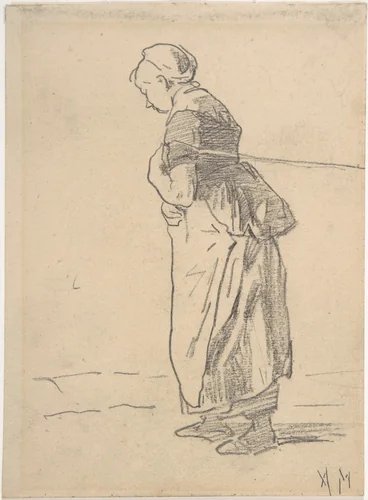
A recognized master colorist, Mauve approached the often-muted light of the Netherlands with exceptional sensitivity. While the typical palette of the Hague School favored somber, earthy tones, Mauve’s skill lay in the subtle modulation of grays, browns, and soft greens, creating powerful plein air effects. He signed his works succinctly, using either 'A. Mauve' or a monogrammed 'A.M.'
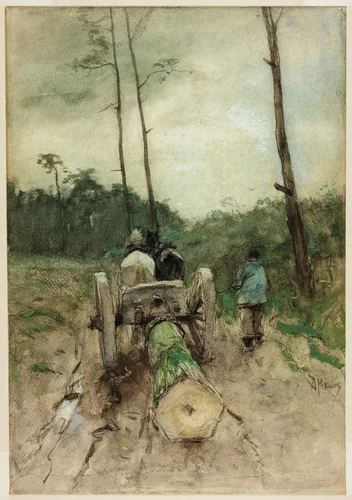
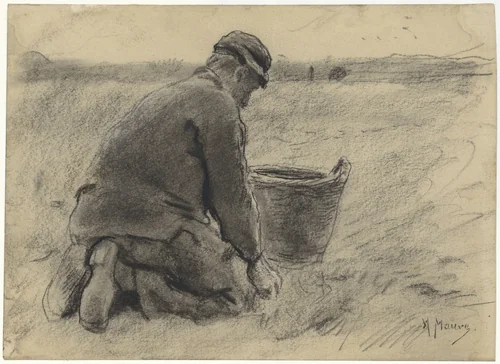
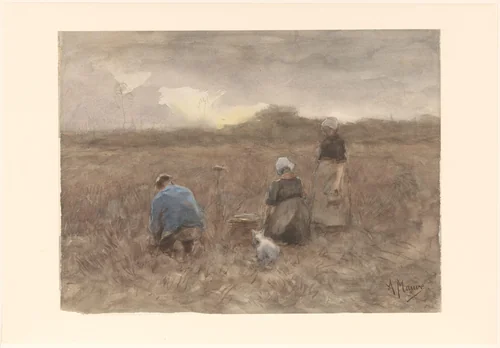
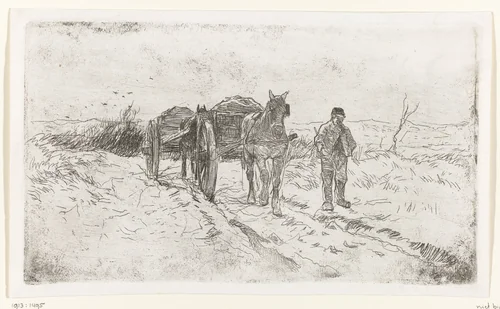
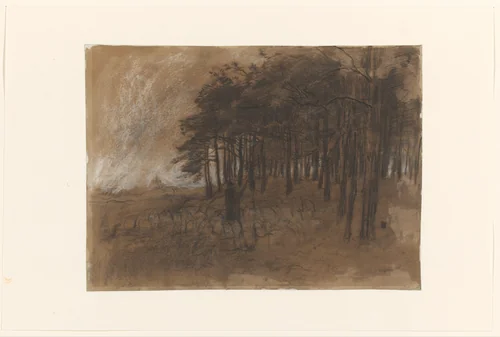
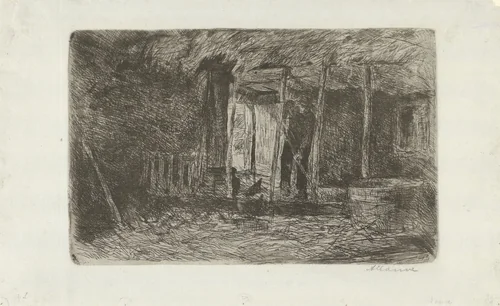
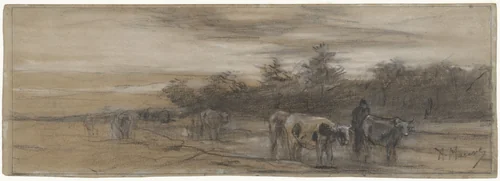
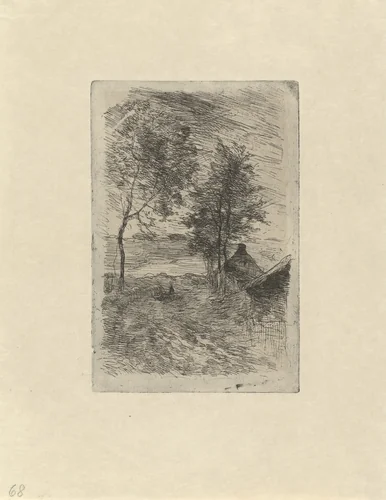
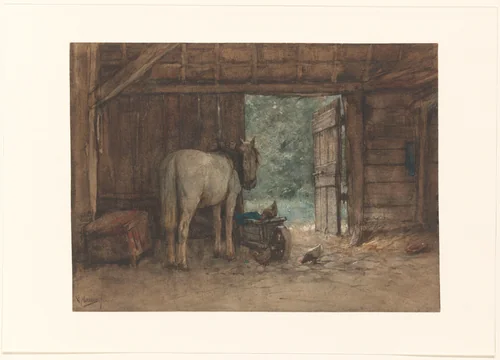
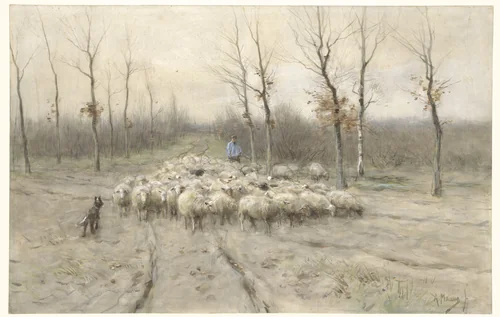
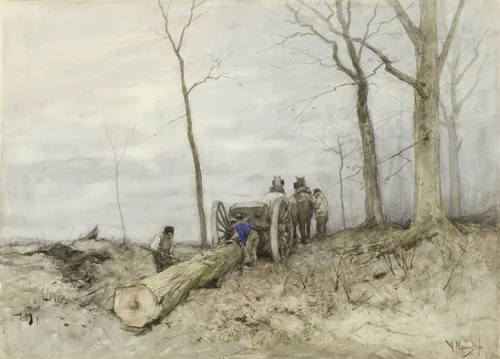
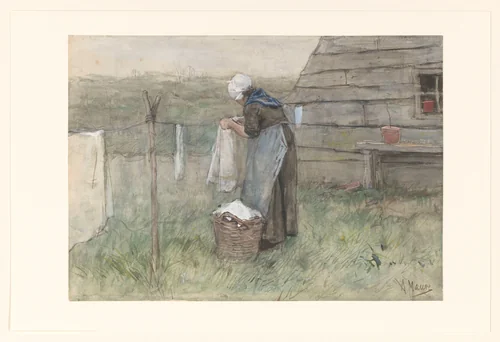
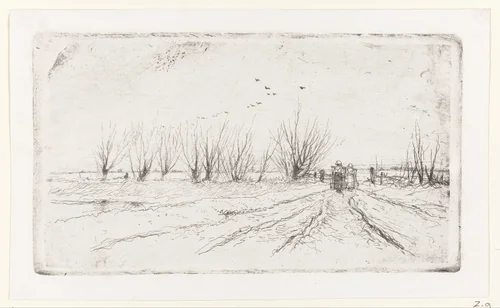
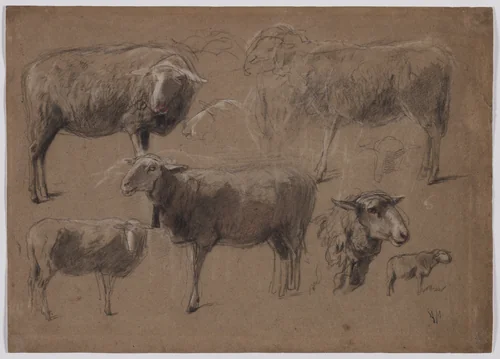
His output, encompassing painting, drawings, and prints, often centered on the quiet dignity of rural labor and the unadorned landscape. Works such as Aardappelrooier and its plural companion, Aardappelrooiers, alongside the compositional study Landscape with Women Working in a Field, illustrate his sustained interest in the arduous tasks of agricultural life. Similarly, in pieces like The Forester's Cart, Mauve elevates commonplace activities into dignified subject matter, capturing the specific texture of Dutch farm and forest environments. It is worth noting that while Mauve achieved great commercial success later in life with repetitive scenes of sheep and shepherds, his earlier, starker realist drawings often reveal a stronger emotional depth and commitment to objective observation.
Mauve’s enduring legacy is measured by both his technical skill and his influential role in bridging traditional Dutch themes with international modern sensibilities. His early mentorship provided Van Gogh with foundational lessons in color, tone, and the depiction of peasant life, shaping the nascent identity of the future post-Impressionist. Today, Anton Mauve paintings and his extensive corpus of graphic works are preserved in major collections globally, including the Metropolitan Museum of Art and the Rijksmuseum. Many of his drawings and Anton Mauve prints are now in the public domain, ensuring that this essential body of work remains widely accessible for scholarship and appreciation, allowing for the generation of high-quality prints and royalty-free materials for the public.
Source: Wikipedia · CC BY-SA 4.0