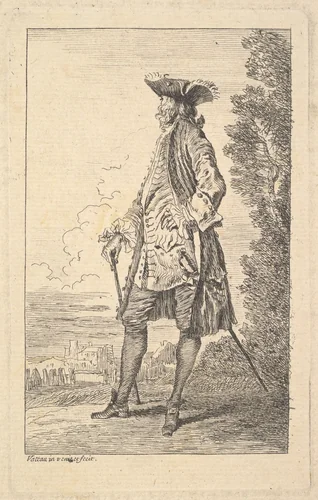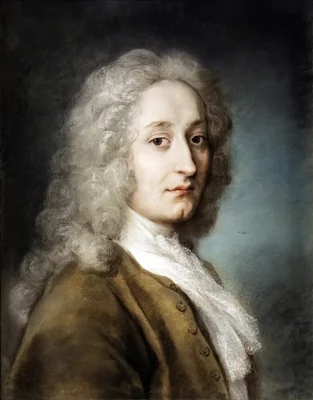
Antoine Watteau
Jean-Antoine Watteau (active 1615-1709) holds a pivotal position in the history of French art, serving as the essential bridge between the severe grandeur of the academic Baroque and the elegant, less formally classical intimacy of the incoming Rococo. Although his career was famously brief, his highly influential output catalyzed a crucial shift in aesthetic priorities, spurring a major revival of interest in color and dynamic movement that consciously recalled the traditions of masters such as Correggio and Rubens.
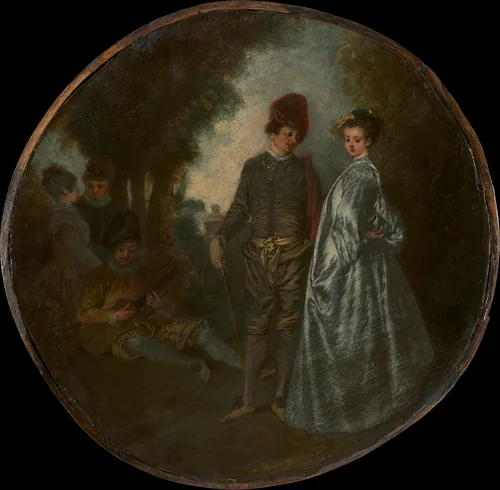
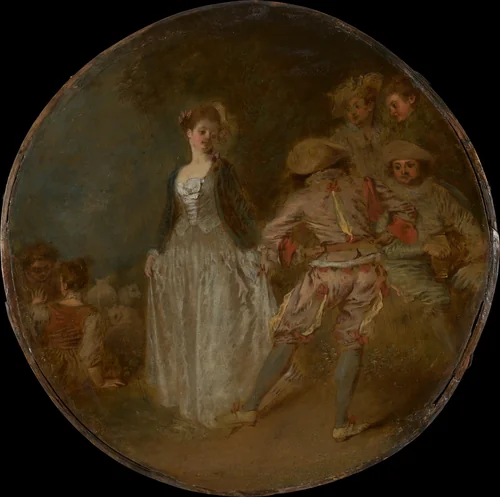
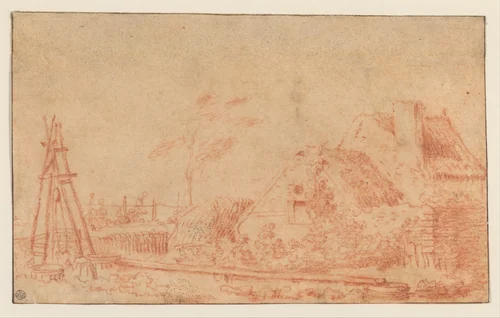
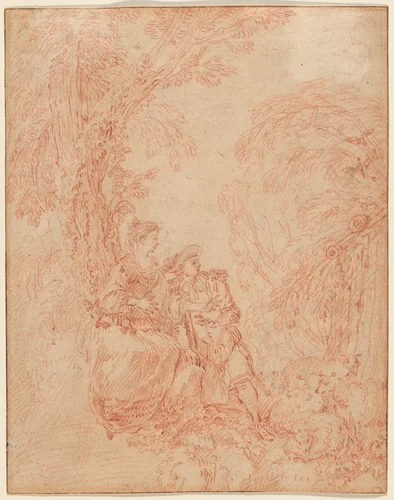
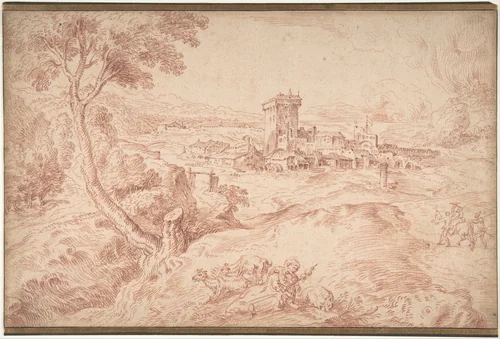
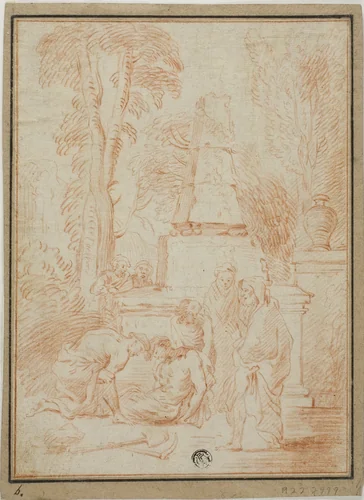
Watteau is universally credited with inventing the genre of the fête galante, a specialized category developed by the French Academy to describe his characteristic scenes. These works depict idealized social gatherings, often set within lush, pastoral environments and suffused with a delicate sense of theatricality and idealized romance. His capacity to capture the fleeting moment is perhaps his greatest strength, whether depicting the somber drama of his study Tobit Burying the Dead or Funeral of Phocian or the playful observation of nature in sketches like Treetops [verso].
His subjects often borrowed liberally from the world of Italian comedy and the contemporary ballet stage, allowing him to bypass staid historical narratives in favor of scenes of bucolic charm. Watteau managed to imbue these inherently light-hearted sources with a profound sense of human complexity; his figures are simultaneously actors in an elaborate play and participants in real, fleeting emotion. This subtly sophisticated approach helped define the emotional register of the entire 18th century.
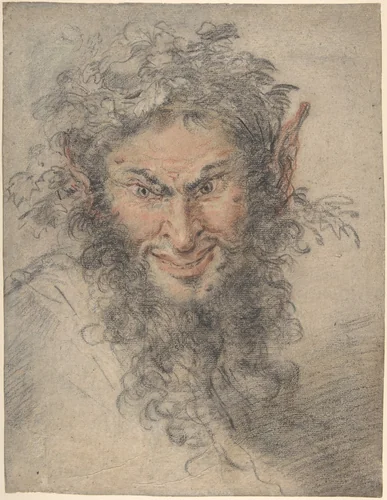
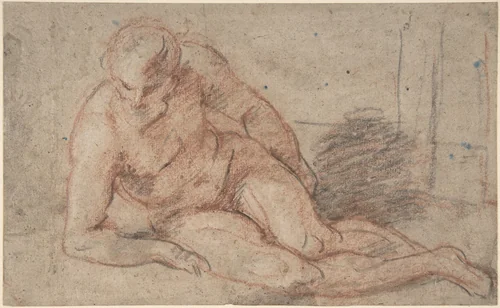
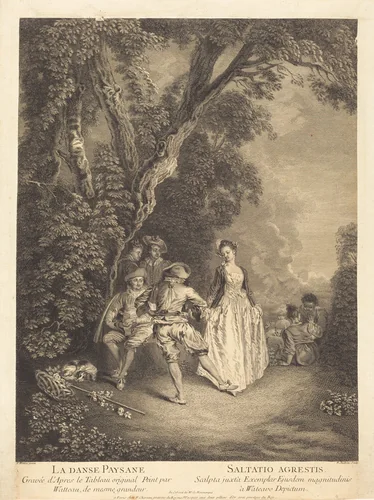
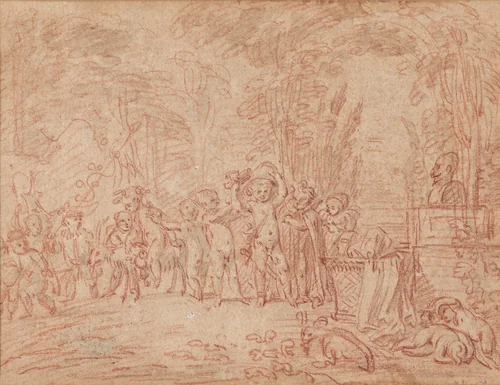
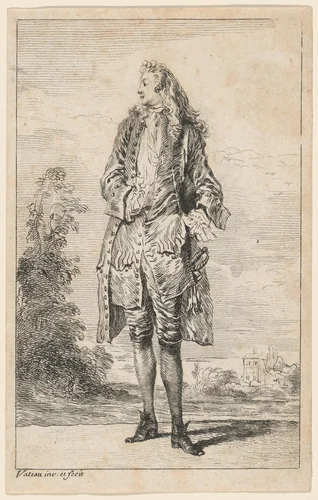
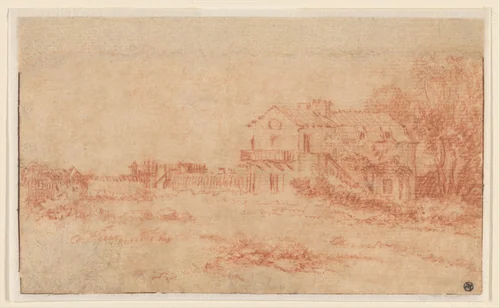
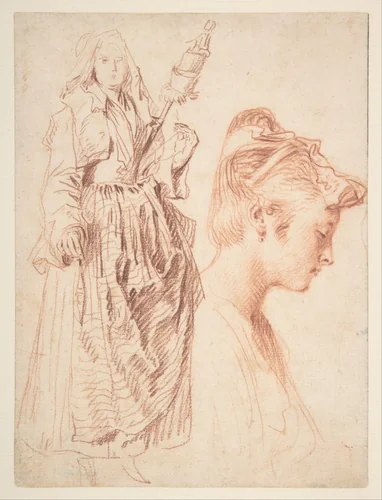
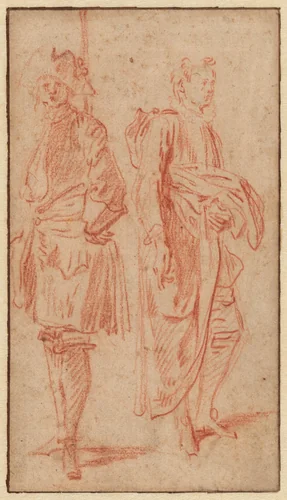
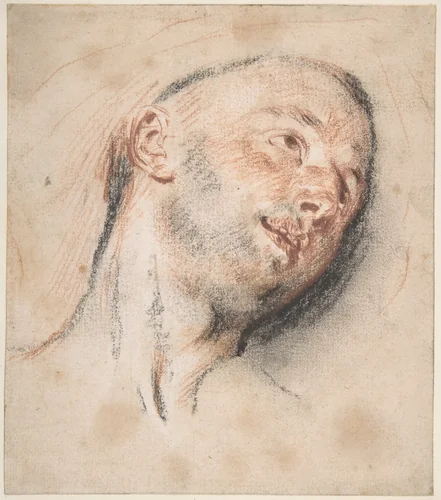
An accomplished draughtsman, Watteau produced numerous detailed preparatory studies, such as Seated Guitarist [recto] and Head of a Satyr, revealing his acute observational skill. The delicate execution seen in his drawings, alongside his finished Antoine Watteau paintings, cemented his reputation as a master observer of form and light. These influential designs, including the relatively rare Antoine Watteau prints he supervised, remain crucial documents in understanding the genesis of 18th-century European taste. Today, much of his foundational work, highly valued as museum-quality compositions, is available as downloadable artwork, providing unprecedented public access to his subtle innovations.
Source: Wikipedia · CC BY-SA 4.0
![Seated Guitarist [recto] by Antoine Watteau, drawing, 1684-1721](https://img.artbee.org/4fae3d43-ef7a-4aa3-a857-c889afab1ac8/small.webp)
![Treetops [verso] by Antoine Watteau, drawing, 1684-1721](https://img.artbee.org/0017b7d2-dbc0-4e8c-bac5-d03e284b80a2/small.webp)