Antoine Sallaert
Antoon Sallaert (1594–1650) holds a distinctive position among the practitioners of the Flemish Baroque, known for the breadth of his creative output across painting, drawing, and graphic arts. Based primarily in Brussels, Sallaert successfully transitioned between courtly patronage and devotional commissions, ensuring his status as a central figure in the city’s artistic milieu.
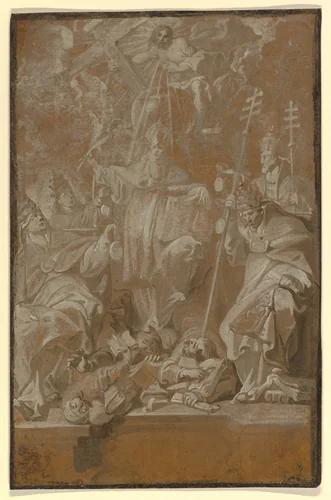
Sallaert served the sophisticated tastes of the Brussels court, working extensively for Archdukes Albert and Isabella. His production included numerous devotional paintings destined for both royal residences and local churches, characterized by rich color and dramatic storytelling. Works such as Saint Lambert Trampling his Murderers, Surrounded by the Four Church Fathers illustrate his engagement with forceful narrative subjects designed to elicit powerful religious feeling.
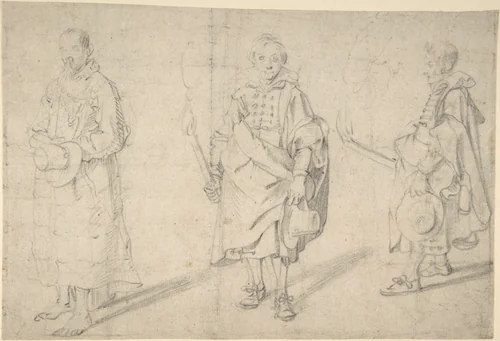
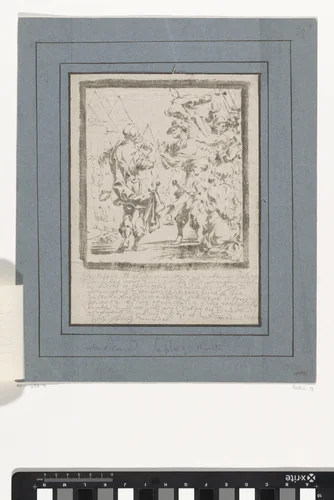
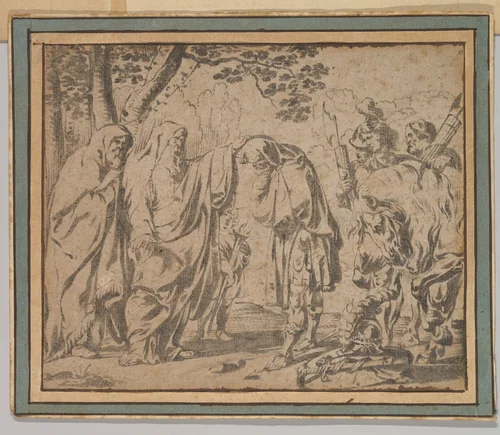
However, it is in his innovative approach to printmaking that Sallaert arguably left his most indelible mark. He is widely credited by art historians with pioneering the monotype technique. This singularly challenging process allowed the artist to create unique prints that merged the fluidity of drawing with the tonality of etching, effectively bridging the gap between reproductive print media and spontaneous painting. This technical daring places Sallaert among the most forward-thinking graphic artists of the period. Preparatory drawings, such as the detailed Study of Figures: an Old Man Holding a Hat and Facing Forwards, and a Young Man Holding a Torch and a Hat, seen from both the Front and Left Sides; Verso: Study of a Head, offer crucial insight into the rigorous development of his final compositions, whether paintings or Antoine Sallaert prints.
Beyond his work on panel and paper, Sallaert was a significant designer for Brussels’ powerful weaving industry, producing cartoons for complex tapestries that required mastery over monumental scale and intricate figure grouping. His legacy today is secured by works in major international holdings, including the Rijksmuseum and the Metropolitan Museum of Art. These museum-quality works ensure that much of his downloadable artwork remains accessible to scholars and enthusiasts globally, reinforcing Sallaert’s comprehensive contribution to the public domain.
Source: Wikipedia · CC BY-SA 4.0