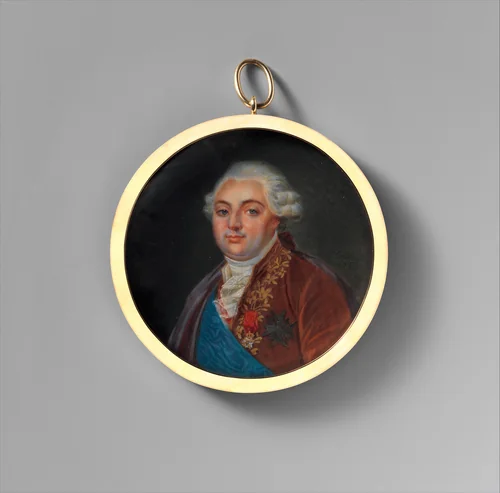
Antoine François Callet
Antoine François Callet (1741–1823) stands as a crucial, if sometimes overlooked, figure in late eighteenth-century French painting. Known generally as Antoine Callet, his lengthy career was definitively shaped by his appointment as the official portraitist to Louis XVI. Active between 1751 and 1787, Callet specialized in two distinct but related genres: formal court portraiture and demanding allegorical history painting. His substantial output provided a comprehensive visual definition of the waning Bourbon monarchy, capturing the final, high-gloss image of the sovereign just prior to the seismic political shifts of the 1790s.
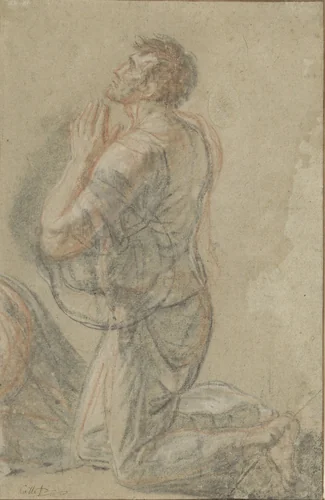
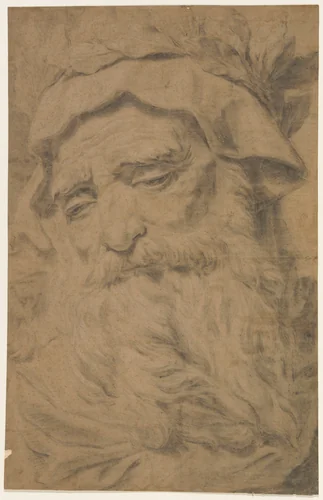
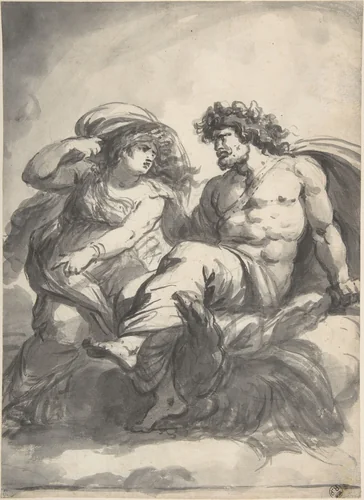
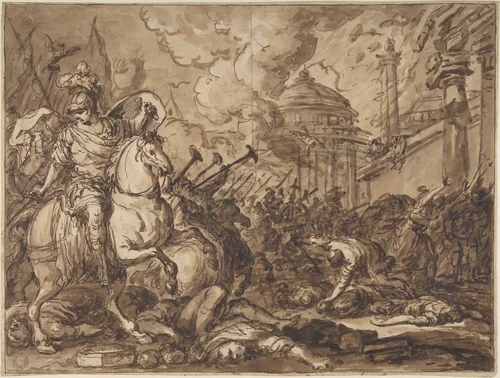
Callet’s style synthesized the technical rigor of the established academic tradition with the refined naturalism preferred in the later Enlightenment period. His historical works, such as the ambitious oil Jupiter and Ceres and the powerful preparatory drawing Ulysses Entering Troy, demonstrate a masterful control over complex figural arrangements and dramatic narrative composition. These academic exercises highlight the duality of his practice, contrasting sharply with the formal requirements of his commissioned portraits. Leading institutions, including the Metropolitan Museum of Art and the Rijksmuseum, hold key examples of his drawing practice—such as the sensitive figure study Knielende man, van opzij gezien and Head of a Bearded Old Man Wearing a Laurel Crown—confirming his strong draftsmanship.
His lasting fame, however, rests upon the large-scale commissions defining royal power. The iconic depiction of Louis XVI (1754–1793), King of France, remains central to understanding late Ancien Régime iconography. These official portraits served a distinctly political function, designed to project authority and stability through lavish setting and meticulous detail. It is a subtle irony that few artists have been so successful in defining a ruling power only to have that definition become instantly historicized shortly thereafter.
Despite their immense historical weight, many of these significant documents, including fine examples of Antoine François Callet paintings, are now available in the public domain. This widespread accessibility allows researchers and enthusiasts worldwide to easily locate downloadable artwork and acquire high-quality prints, ensuring the continued study of his legacy far beyond the original courtly environment. Callet did not pioneer new art movements, but he perfected the visual language demanded by his influential patrons, leaving behind an invaluable and precise record of the political and artistic climate of late eighteenth-century France.
Source: Wikipedia · CC BY-SA 4.0