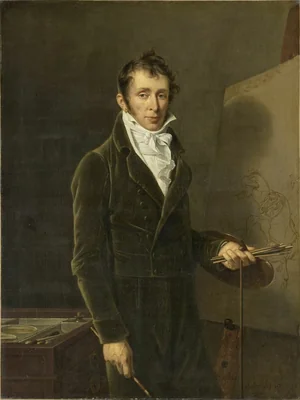
Antoine Charles Horace Vernet
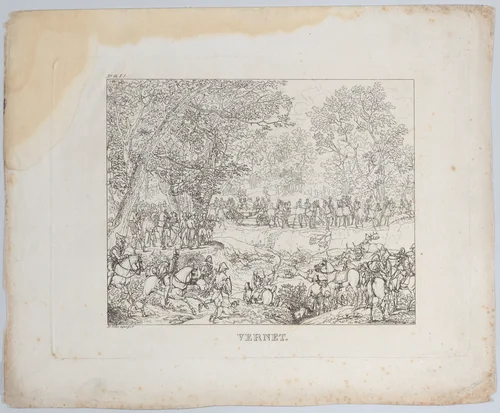
Antoine Charles Horace Vernet, widely known as Carle Vernet, secured his place in French art history not only through his own considerable skill but as the indispensable link between two dominant artistic generations: he was the youngest child of the esteemed marine painter Claude-Joseph Vernet and the father of the celebrated Horace Vernet. Active from the 1770s to 1835, Vernet’s career spanned the tumultuous years of the French Revolution and the Napoleonic ascendancy, a period he documented with keen visual precision.
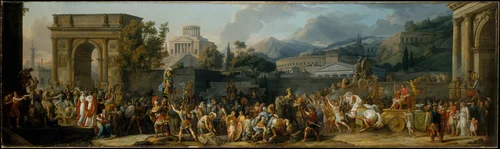
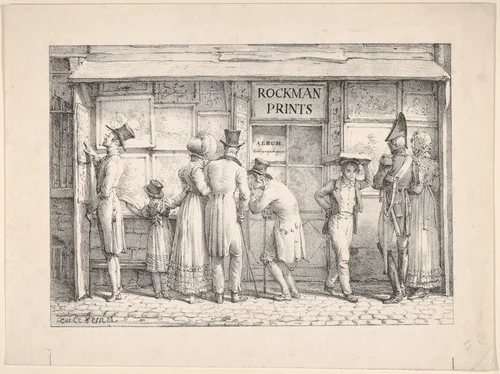
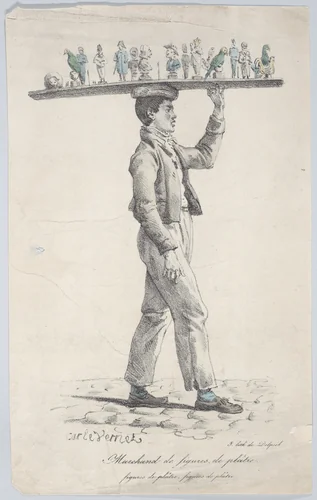
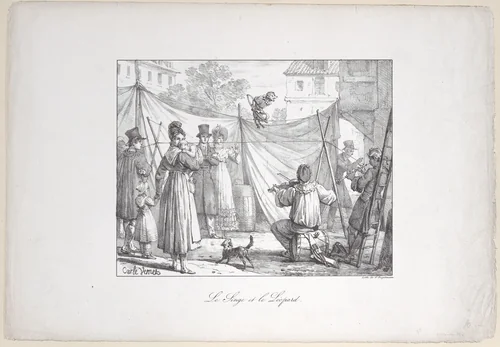
While his father mastered the classical veduta, Carle focused keenly on capturing the immediacy of contemporary life and military action. He specialized in horse studies, military subjects, and acute observations of Parisian society, often rendered with a spirited, sometimes satirical, touch. His output was highly versatile, encompassing both grand historical paintings, such as The Triumph of Aemilius Paulus, and detailed character studies.
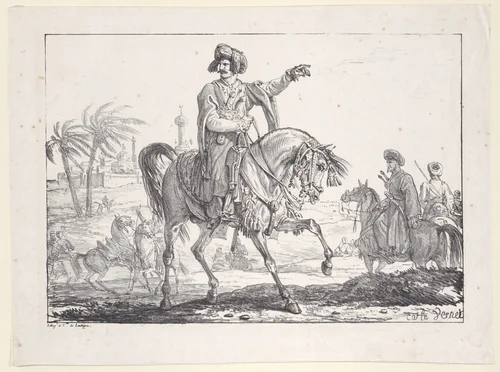
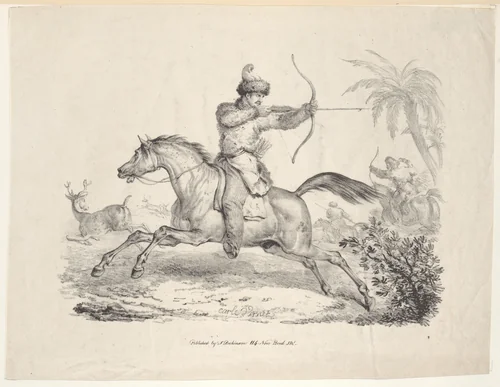
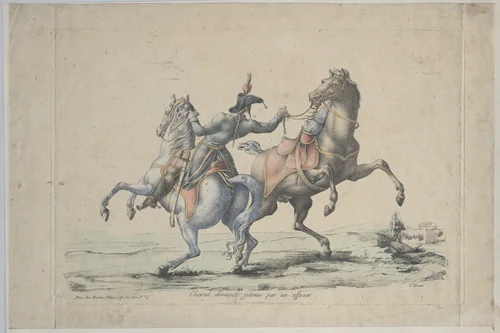
Vernet was a master draftsman, and many of his most enduring legacies are found in his preparatory studies and prints. These works, like A Dismounted Horse Reined in by an Officer, provided highly detailed documentation of equestrian anatomy and military equipment, establishing a benchmark for historical illustration during an age obsessed with mounted cavalry. His meticulous approach extended to his paintings, specimens of which are held in major institutions, including the Metropolitan Museum of Art.
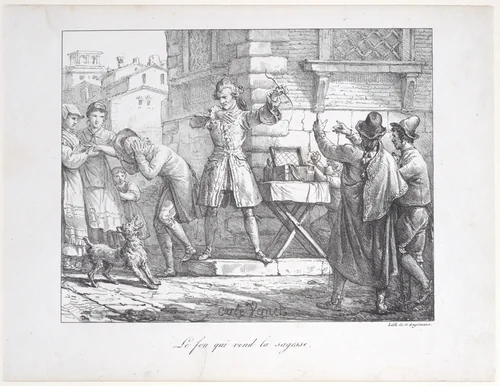
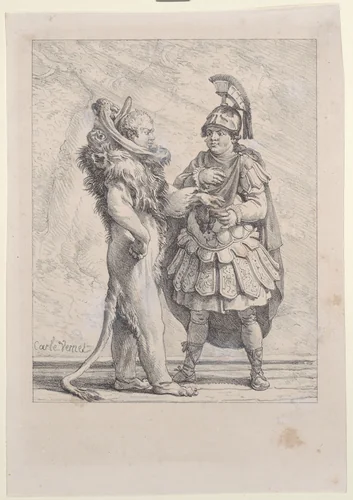
Vernet possessed a dry wit which often permeated his genre scenes. He was unafraid to capture the absurdity of human endeavor, as exemplified by the title The Fool Who Sells Wisdom, or the casual intimacy reflected in his depiction of fellow artists, Four Artists seated at a table. The sheer volume of Antoine Charles Horace Vernet prints produced during his active years ensured his broad influence. Today, much of this body of work resides securely in the public domain, allowing institutions to provide downloadable artwork for scholarly review. These high-quality prints continue to offer a unique visual narrative of the transition from the Ancien Régime through the Napoleonic era, solidifying Carle Vernet’s standing as a crucial chronicler of a changing world.
Source: Wikipedia · CC BY-SA 4.0
![Four Artists seated at a table (Brunet, Potier, Tiercetin [?], Vernet) by Antoine Charles Horace Vernet, drawing, 1770-1836](https://img.artbee.org/b83d5e8d-59a0-4af2-9333-2bbd49f8fc20/small.webp)