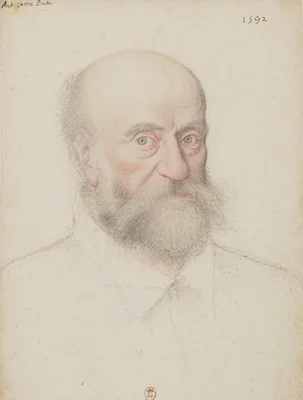
Antoine Caron
Antoine Caron (1521-1599) stands as one of the most distinctive French artists of the sixteenth century, a crucial figure linking the Italian Renaissance aesthetic to the developing court style of France. Initially trained as a master glassmaker and illustrator, Caron’s mature work positioned him firmly within the highly influential School of Fontainebleau. This designation signifies not merely a geographic location, but a sophisticated, intellectual movement centered around royal patronage, particularly under the reign of Catherine de' Medici, where Caron held a significant role as a court painter.
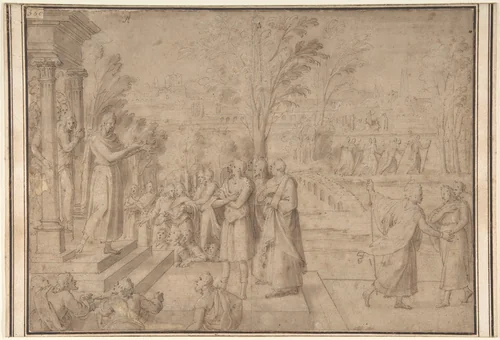
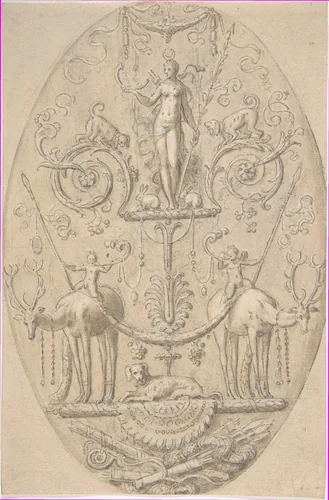
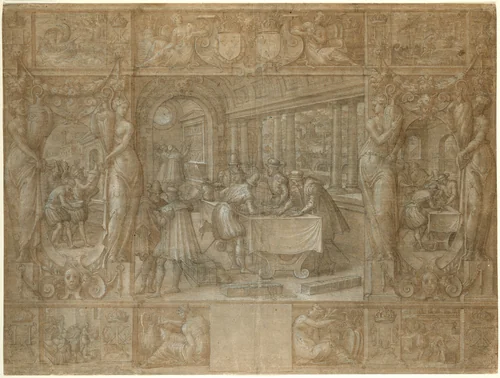
Caron’s style exemplifies Northern Mannerism, a movement characterized by a departure from classical harmony in favor of intellectualized elegance and dramatic tension. His compositions are often characterized by elongated figures, sharp contrasts in lighting, and a fascination with intricate architectural backdrops, typically focusing on complex historical or mythological narratives. Caron favored crowded, theatrical spaces populated by elegantly posed figures, such as seen in Diana with Attributes of the Hunt or the bustling scene depicted in A Saint Addressing Figures from the Steps of a Temple. He possessed a keen eye for pageantry, translating the highly ritualized political spectacle of the Valois court into visual form. This is perhaps best observed in his detailed chronicles of state events, including the grand, dense documentation found in Marriage of Henry II and Catherine de' Medici, The Dowry.
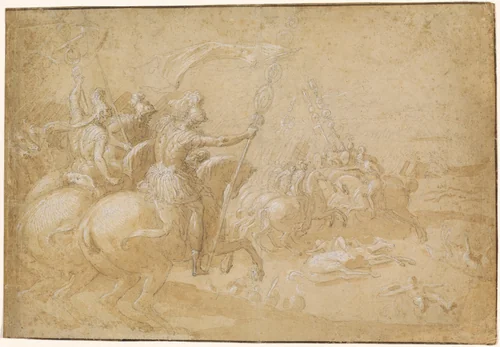
Though the surviving corpus of Antoine Caron prints and original drawings is small, they demonstrate an exceptional commitment to structural complexity and narrative detail, influencing subsequent generations of French history painters. His work often explored themes of classical antiquity and military might, as evident in Ancient Roman Warriors Riding into Battle, where historical accuracy bows to the demands of dramatic visual splendor. Caron was highly regarded during his lifetime, but because his works were commissioned for specific court functions or private consumption, many remain exceptionally rare today. Fortunately, major institutions, including the Metropolitan Museum of Art and the National Gallery of Art, safeguard these fragile works, making high-quality prints and downloadable artwork available for scholarly study, thereby maintaining the visibility of this singular master of Mannerist court painting.
Source: Wikipedia · CC BY-SA 4.0
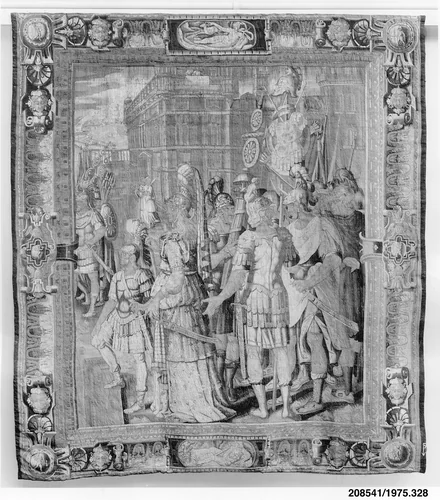
![The Feast [central part], from The Story of Artemisia by Antoine Caron, textile, 1607-1630](https://img.artbee.org/aa83175d-c660-4929-9263-b4ec00aa4f39/small.webp)
![The Petitions [right part] by Antoine Caron, textile, 1607-1630](https://img.artbee.org/a5602133-8193-42a1-bf82-4e342c69bd86/small.webp)