Anthony Devis
Anthony Devis (c. 1729-1780) holds an important, if often overlooked, position within the trajectory of 18th-century English landscape painting. Active primarily in London across the mid-Georgian period, his practice centered on the dual challenge of working proficiently in both oil and watercolor, a versatility characteristic of the era's evolving relationship with topography and the emerging picturesque ideal.
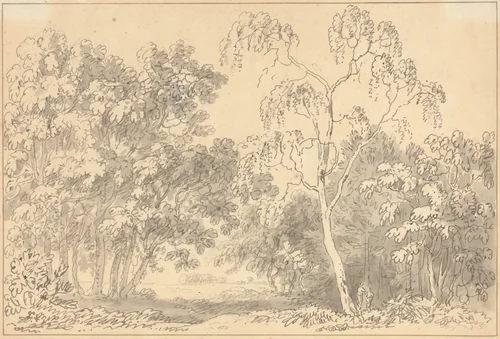
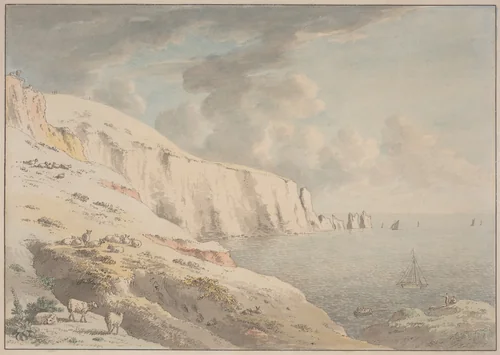
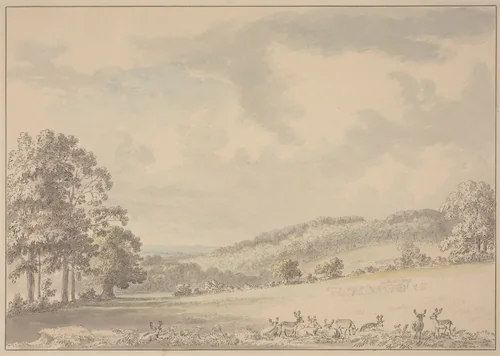
Devis maintained an industrious output over five decades, and the small catalog of surviving works offers a concentrated glimpse into the varied subjects popular among patrons of the time. His skill is particularly evident in precise topographical studies, such as the ambitious View of the Needles, and White Cliffs Taken from Allum Bay, Isle of Wight, a drawing that captures the dramatic maritime geology of the coast with acute observational clarity. In contrast, works like Wooded Landscape and Deer Resting in Albury Park demonstrate a subtle mastery of the tranquil pastoral, typical of the burgeoning English enthusiasm for domesticated nature and refined parkland vistas.
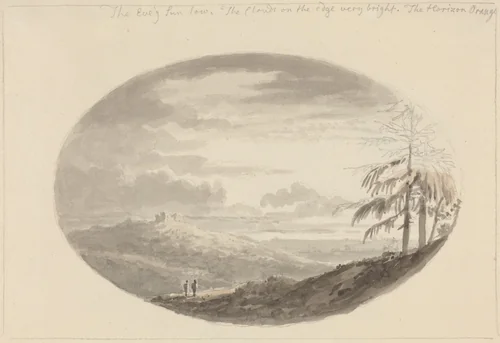
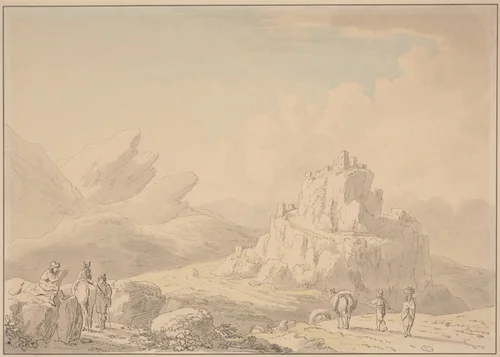
His ability to balance atmospheric effect with observational detail established his reputation among peers working in the specialized field of landscape rendition. While the setting for the dramatic Sunset over the Valley evokes the calm romanticism of the British countryside, the inclusion of the drawing titled Zahara suggests an unexpectedly cosmopolitan or derived interest in distant, perhaps imagined, southern European landscapes, lending a layer of intriguing complexity to his otherwise resolutely English oeuvre.
Devis’s landscapes, whether intimate drawings or more robust Anthony Devis paintings, represent the high-quality, measured output expected of professional artists during the age of nascent academicism. While the scope of his extant production is limited, their enduring value is confirmed by their continued inclusion in major institutional holdings, including the National Gallery of Art. The proliferation of digital access has ensured that many of his key studies, now residing in the public domain, are available globally. These compositions can now be enjoyed as high-quality prints, allowing modern viewers to appreciate the nuanced draftsmanship and delicate atmospheric effects that defined his active decades.
Source: Wikipedia · CC BY-SA 4.0