Anthonis Mor
Anthonis Mor, recognized internationally as Antonio Moro, was the foremost Netherlandish portrait painter of the mid-sixteenth century. His masterful ability to convey both the physical likeness and the underlying psychological disposition of his subjects made him highly sought after by the powerful courts of Europe, including the English Tudors and the Spanish Habsburgs. While history often refers to him by a variety of names—António Mouro, Anthony More, or Anthonis Mor van Dashorst—the artist displayed a consistent preference, signing the majority of his most important commissions simply as Anthonis Mor.
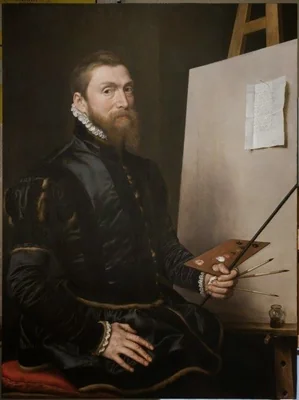
Mor’s distinctive style moved away from the complex symbolism often found in preceding court portraiture. He employed a sober, minimalist approach, characterized by a subdued palette, crisp outlines, and a focus on monumental simplicity. This technique provided an unprecedented intimacy, establishing a standard for psychological realism that profoundly influenced later generations of European portraitists.
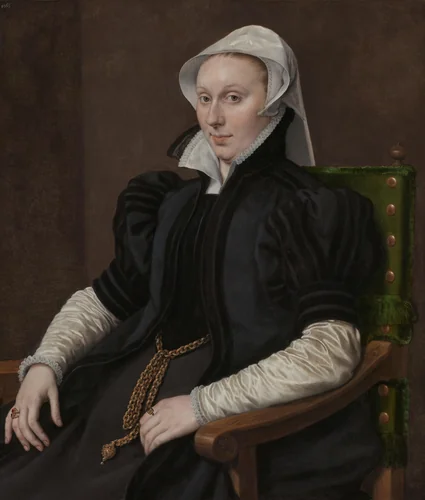
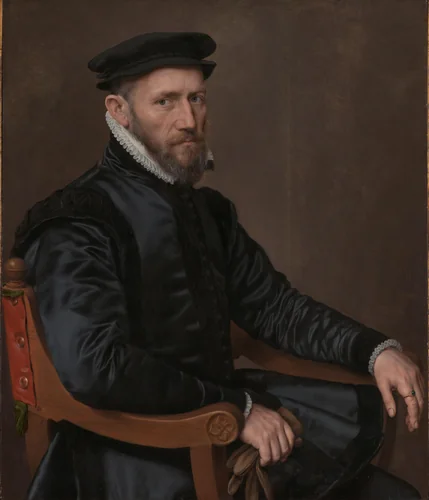
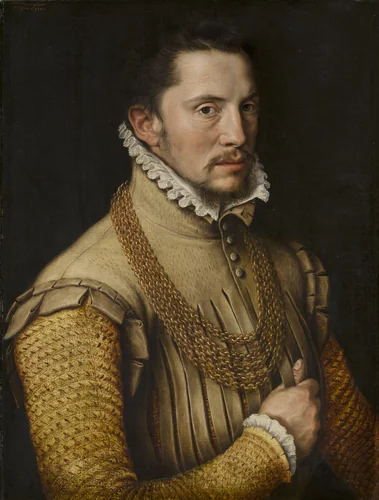
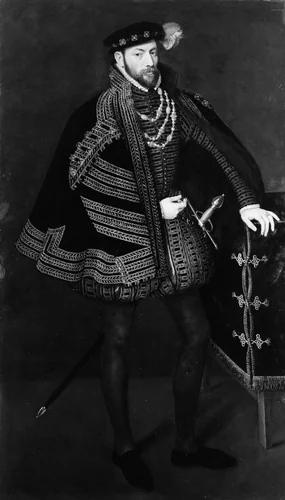
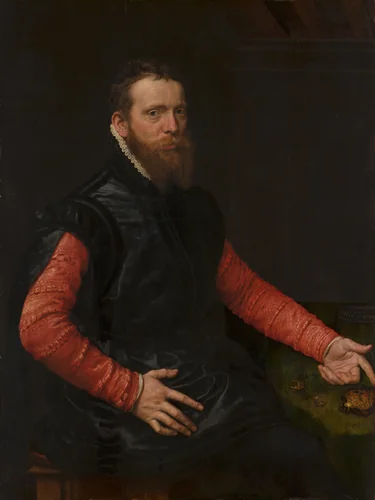
His prolific output during his active period, notably 1560-1564, is well-documented in major international holdings. His skill in rendering personality is clearly demonstrated in key works found in collections like the Rijksmuseum and the Metropolitan Museum of Art, including the pair of insightful companion pieces, Portraits of Sir Thomas Gresham and Anne Fernely, and the intense character study, Portrait of Steven van Herwijck. Another notable work, the Portrait of a Man, Possibly Ottavio Farnese (1524–1586), Duke of Parma and Piacenza, illustrates his capacity to convey commanding rank while retaining essential human vulnerability.
The continuing significance of his powerful compositions ensures that Anthonis Mor paintings are widely studied and collected globally. The high demand for his work means images, often available as museum-quality downloadable artwork, remain vital resources for art history scholars. It is perhaps a subtle testament to the artist’s own focused ambition that, despite his varied appellations abroad, he maintained a resolute insistence on the singular signature that defined his career.
Source: Wikipedia · CC BY-SA 4.0