Anne Appleby
Anne Appleby stands as a significant American painter defined by her rigorous pursuit of abstraction within natural parameters. Working from Jefferson City, Montana, Appleby developed an influential synthesis of Color Field theory and Landscape Reductive painting, extracting the elemental essence of the regional environment and translating it into highly disciplined chromatic compositions.
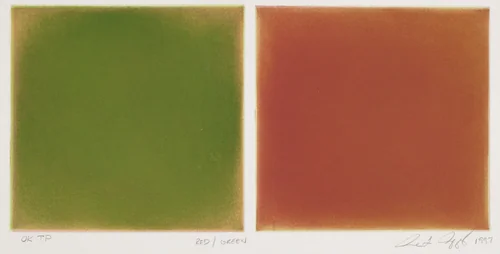
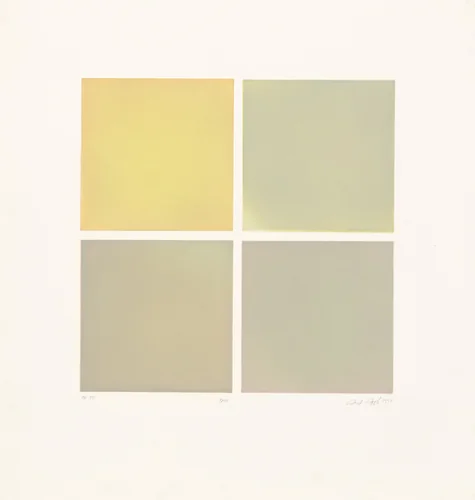
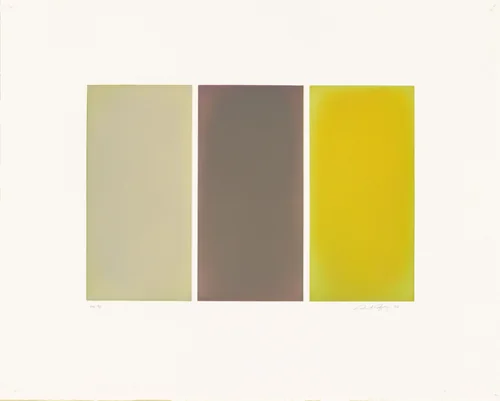
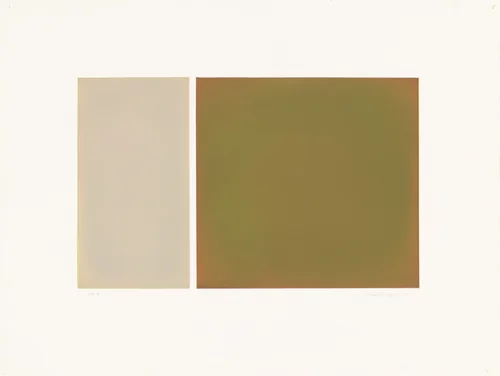
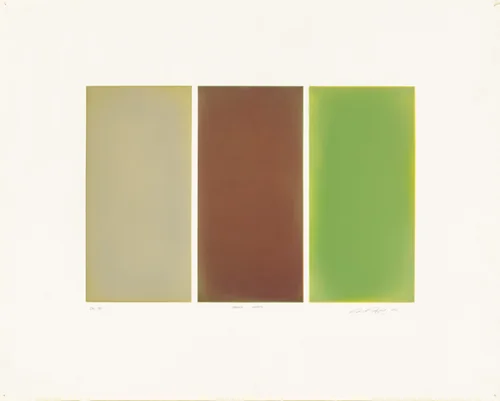
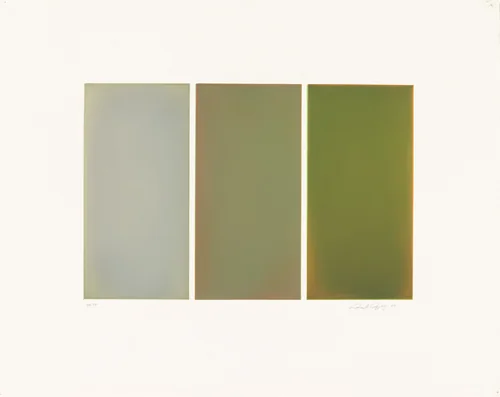
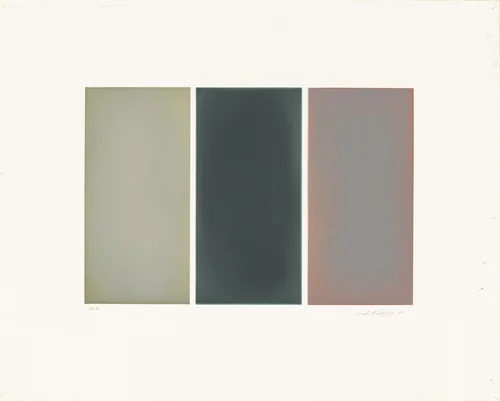
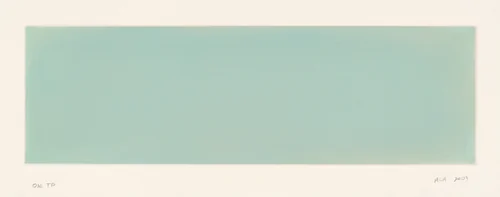
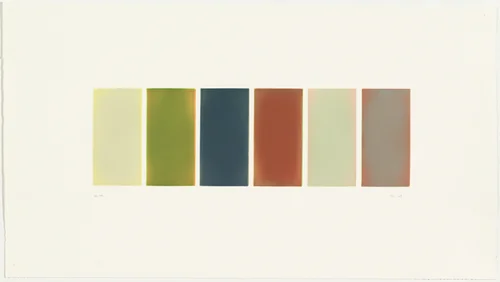
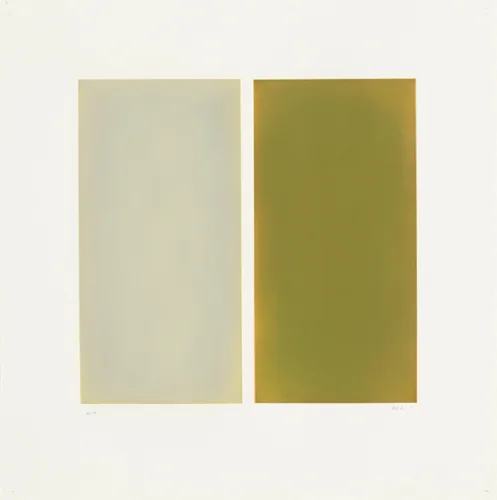
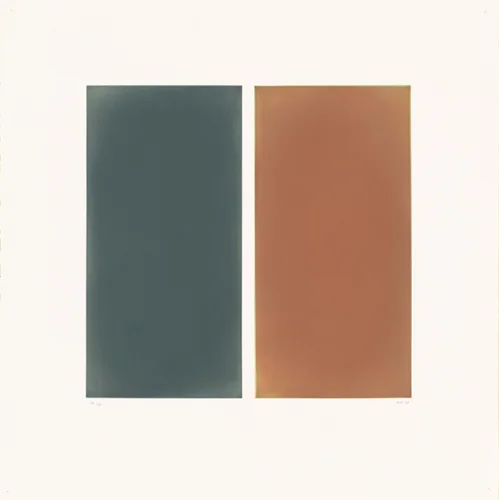
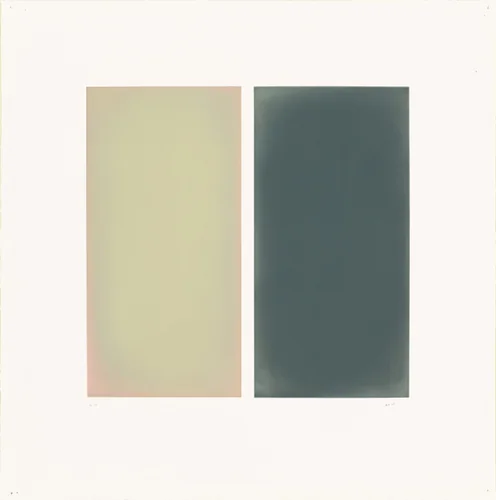
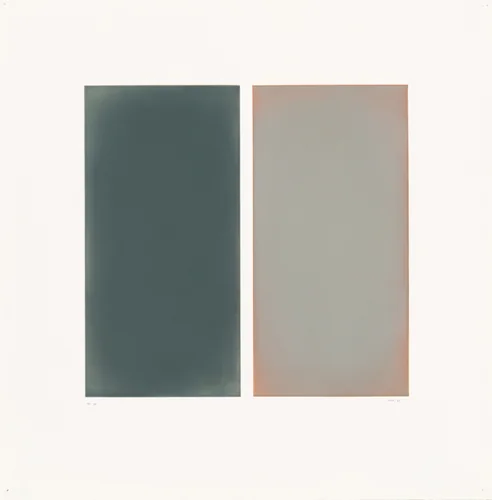
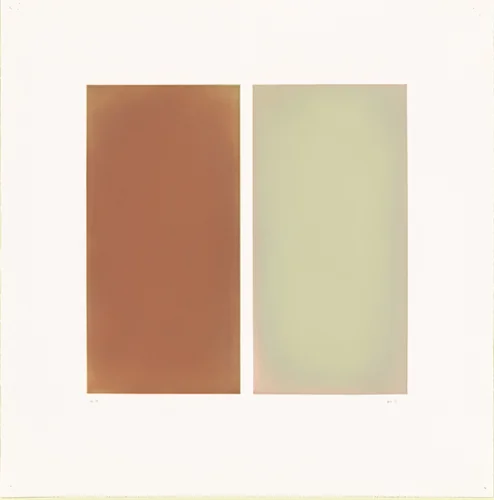
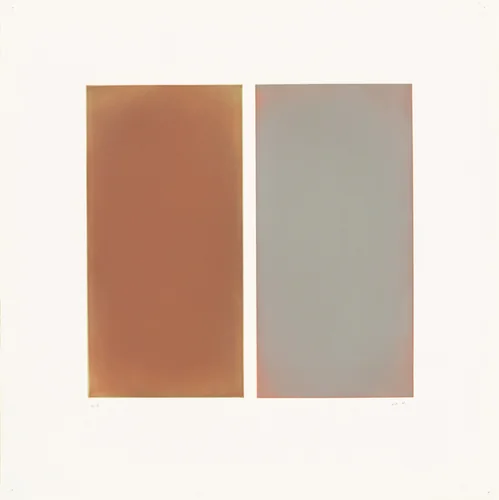
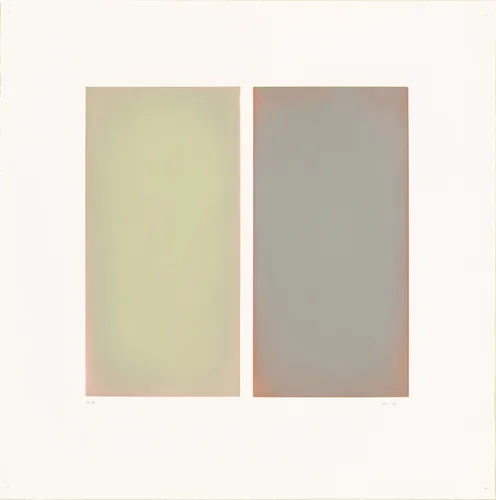
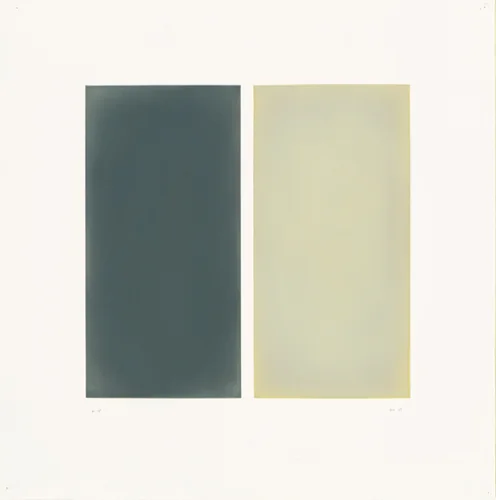
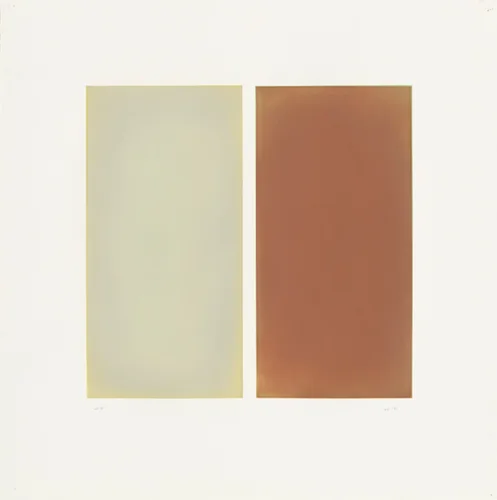
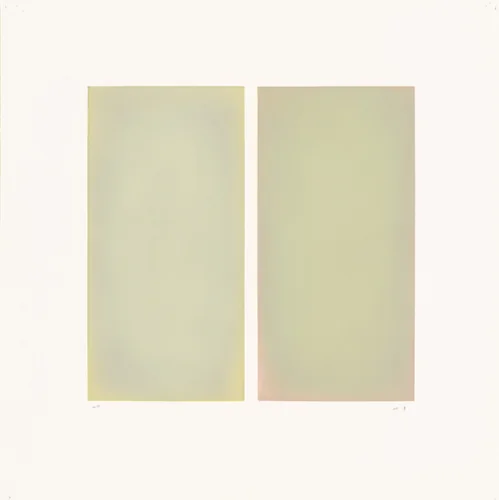
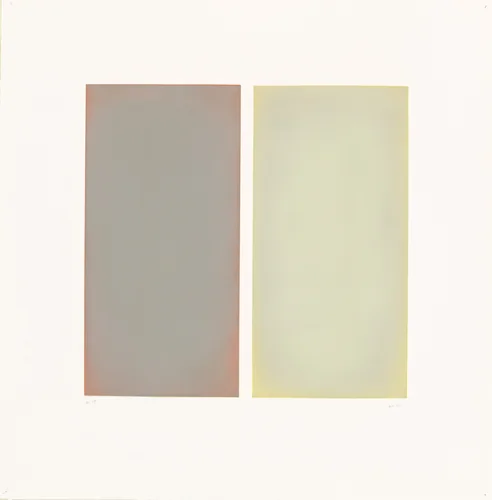
Active primarily between 1997 and 2003, Appleby created a concise yet powerful body of work, encompassing approximately fifteen major prints and numerous paintings. Her methodology involves observing a single natural object, location, or seasonal shift, and distilling its myriad sensory components into geometric fields of color. This results in a palette that is specific, yet universally felt. For instance, works such as Red/Green and Sage operate simultaneously as abstract studies in complementary color relationships and as immediate evocations of the arid, vegetal landscape of the American West. The series encompassing Autumn Aspen and Spring Aspen illustrates her dedication to capturing temporal shifts through subtle variation in tonal weight and saturation, often using four or six adjoining panels to form a unified, meditative image.
The visual discipline inherent in her compositions is arguably a direct reflection of the austere landscape in which she chooses to live and work. While her canvases avoid anecdotal representation, their titles provide essential anchors to reality. By eliminating horizon lines and depth, Appleby shifts the viewer’s focus entirely to the interaction of hue and surface texture, turning the experience of a Montana meadow or a blossoming shrub (as seen in Jasmine) into an internal, optical event.
The inclusion of key works in major institutions, notably the National Gallery of Art, confirms the enduring appeal and high-quality artistic rigor of her reductive aesthetic. For those interested in studying her distinctive approach to color theory, many Anne Appleby prints and related images are increasingly being digitized, appearing as downloadable artwork and occasionally entering the public domain, securing her place as a crucial late-twentieth-century exponent of American abstract painting.
Source: Wikipedia · CC BY-SA 4.0