Anna Claypoole Peale
Anna Claypoole Peale (1791–1878) occupies a distinguished place in the visual history of the early American republic, specializing expertly in both portrait miniatures rendered on ivory and refined still lifes. Active primarily between 1818 and 1832, she forged a professional identity characterized by technical precision and institutional validation that few female artists of her generation achieved. Critically, in 1824, alongside her sister Sarah Miriam Peale, she secured one of the most significant professional markers of the period: election as an academician of the prestigious Pennsylvania Academy of the Fine Arts (PAFA). This appointment confirmed her standing not as an amateur, but as a fully validated professional operating within the burgeoning structure of American art.
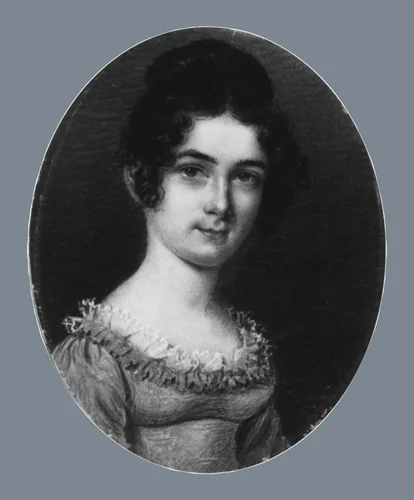
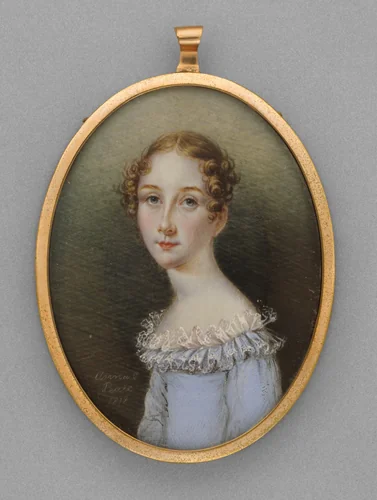
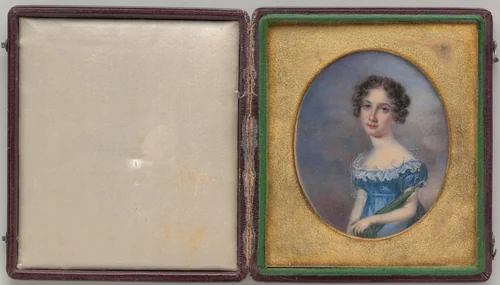
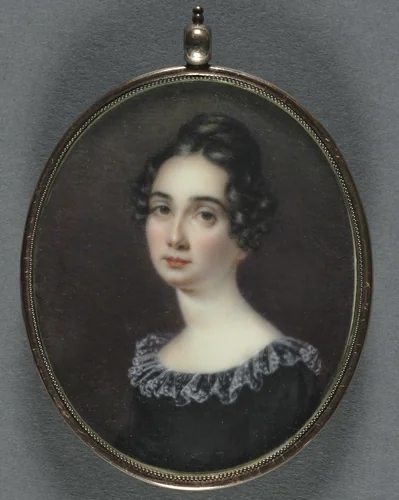
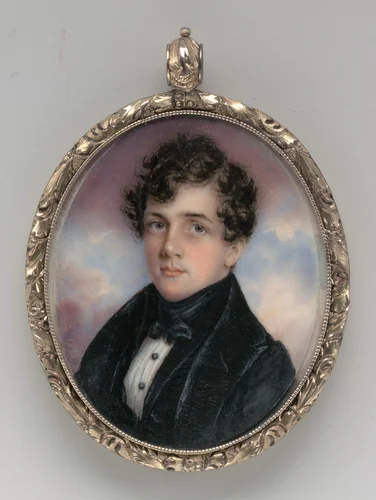
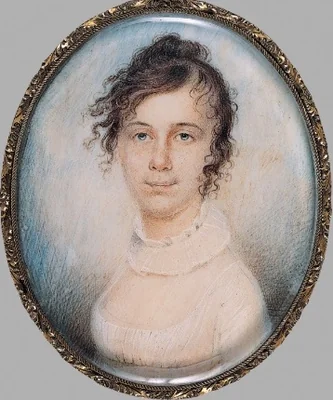
Peale’s reputation rests overwhelmingly on the sensitivity and technical brilliance of her miniature portraits. The demanding medium of ivory requires exceptional control, as the artist employed fine brushwork and stippling to build light and dimension on the thin, translucent surface. Her skill allowed her to capture the sitter’s character with remarkable intimacy and delicate coloring, evident in known works such as Mrs. Thomas Larcombe (Anna Smith) and Sarah Ann Beck. These portraits exemplify the elegance and measured reserve characteristic of the Federal period sitters she documented. While many surviving pieces are simply recorded as generic portraits, such as Portrait of a Woman or Portrait of a Gentleman, her work consistently upholds a sophisticated level of realism and detail.
Although Anna Claypoole Peale operated within the sprawling artistic dynasty founded by her uncle, Charles Willson Peale, her professional accolades were entirely self-earned. She maintained a rigorous practice, exhibited frequently, and traveled to secure commissions, highlighting the gradual, though often challenging, professionalization available to skilled women artists in the 1820s. Interestingly, her focus on small-scale work did not diminish her institutional status; her acceptance into PAFA demonstrates that mastery of the miniature was viewed as an essential professional domain.
Her relatively brief but prolific career ensures her portraits provide essential visual records of the era. Many key Anna Claypoole Peale paintings are now held in prominent institutions, including the Metropolitan Museum of Art and the Art Institute of Chicago, testifying to their enduring museum-quality value. For researchers and contemporary viewers, the availability of these historical works as downloadable artwork, often derived from high-quality prints within the public domain, allows easy study of her lasting contribution to American portraiture.
Source: Wikipedia · CC BY-SA 4.0