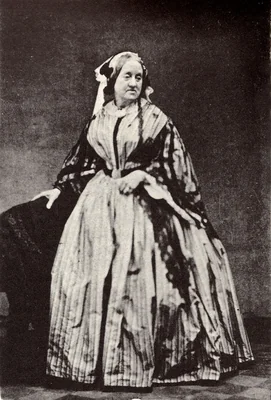
Anna Atkins
Anna Atkins (1799-1865) occupies a foundational position in the history of photography and scientific publishing, achieving immediate and singular significance by creating the first book illustrated solely with photographic images. Active primarily between 1840 and 1851, Atkins’s pioneering work bridged the worlds of natural history and the newly emergent medium, firmly establishing the camera’s potential for systematic documentation.
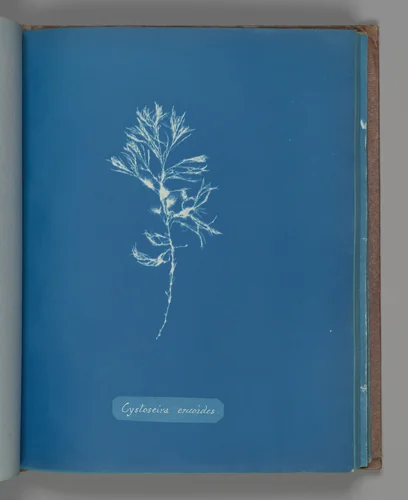
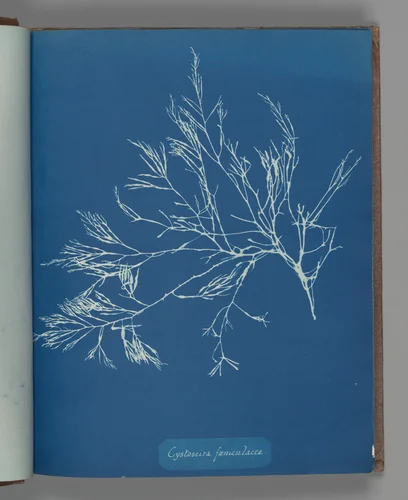
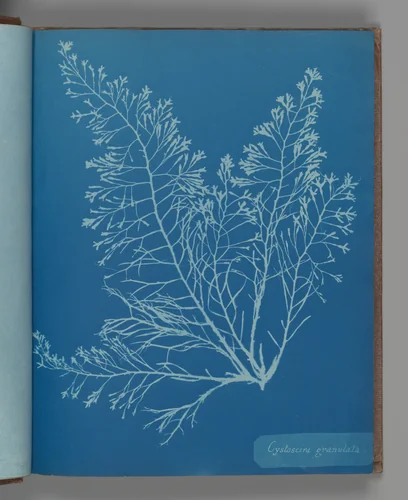
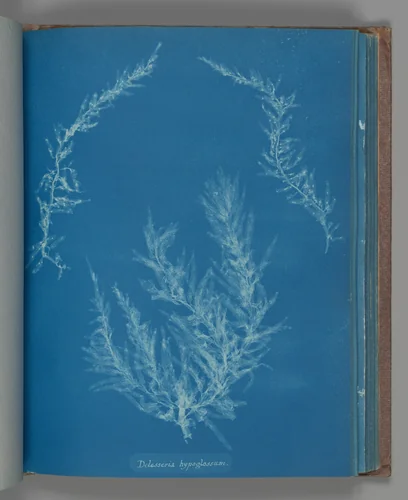
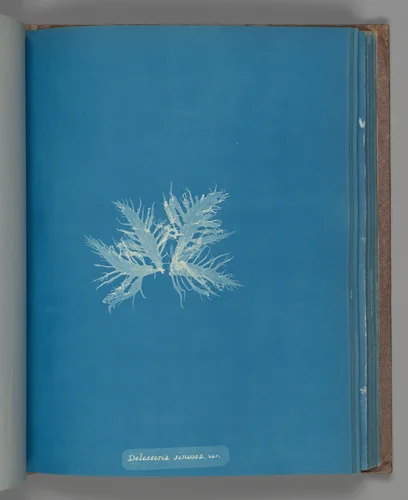
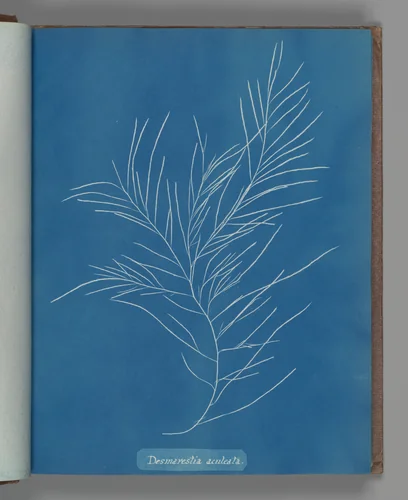
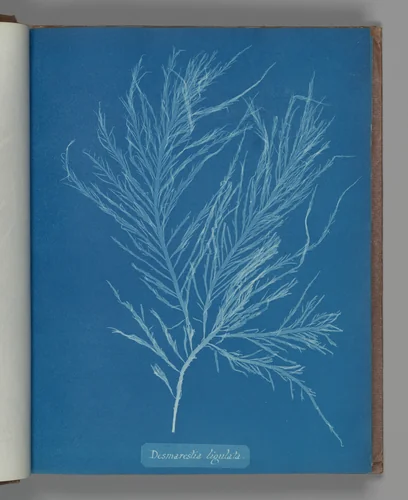
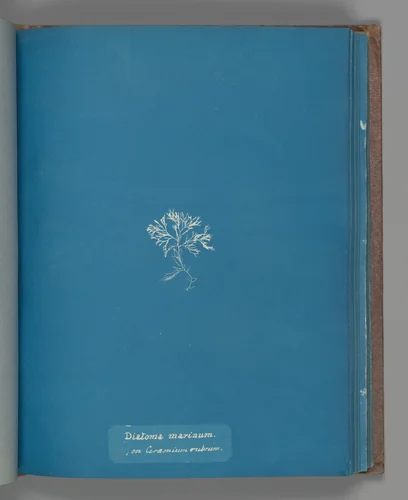
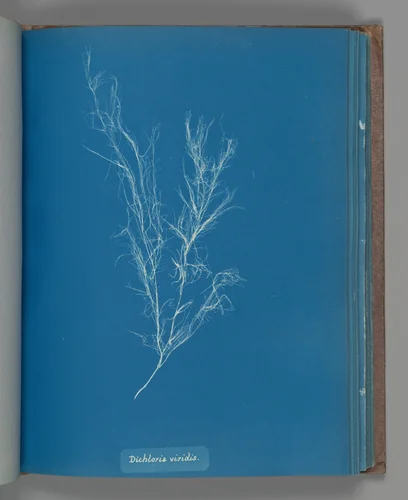
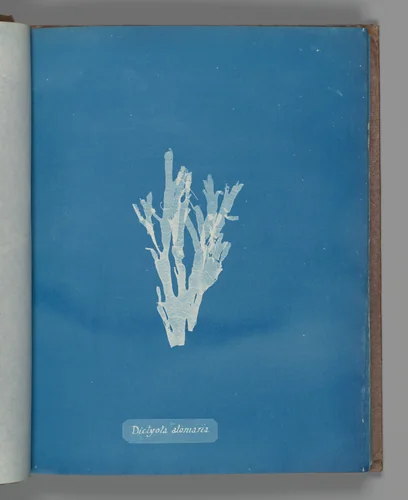
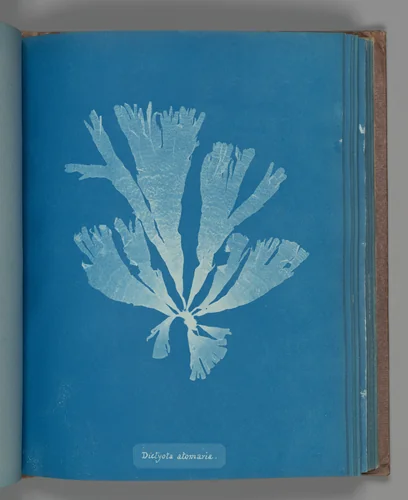
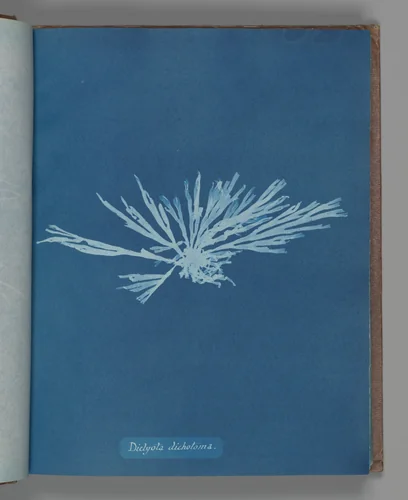
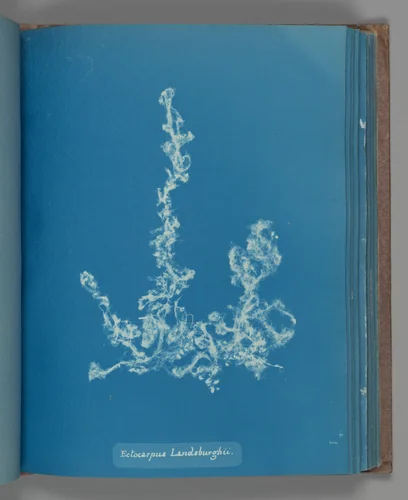
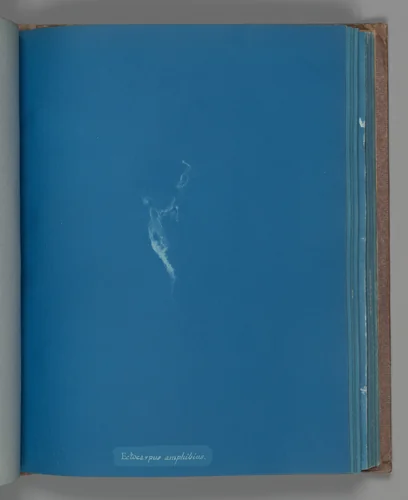
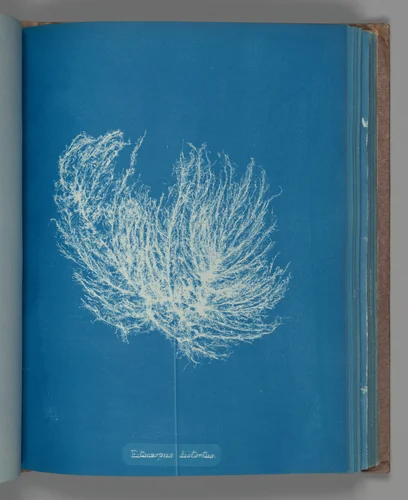
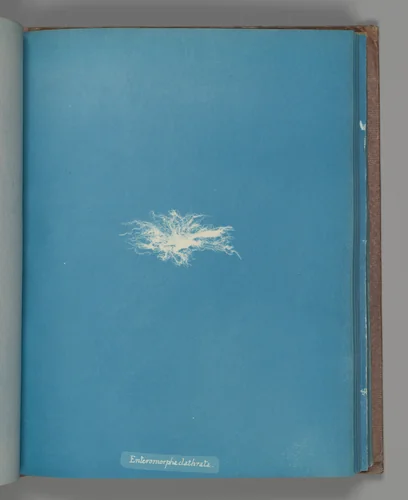
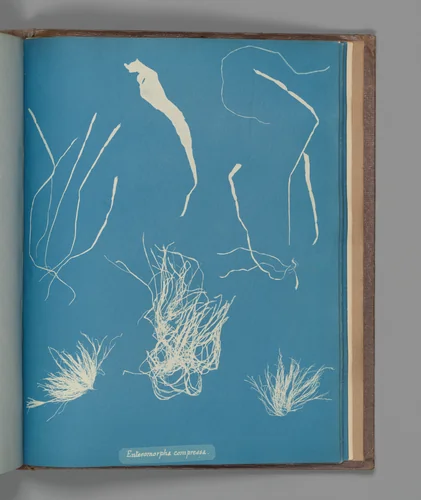
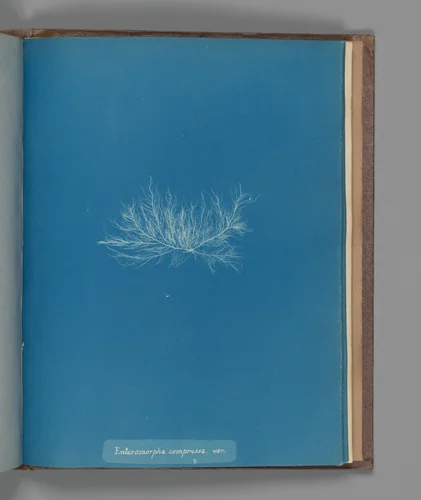
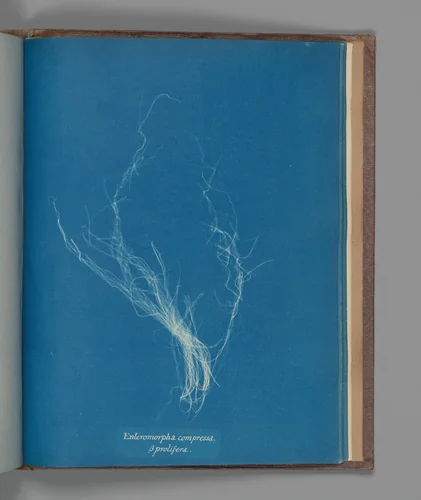
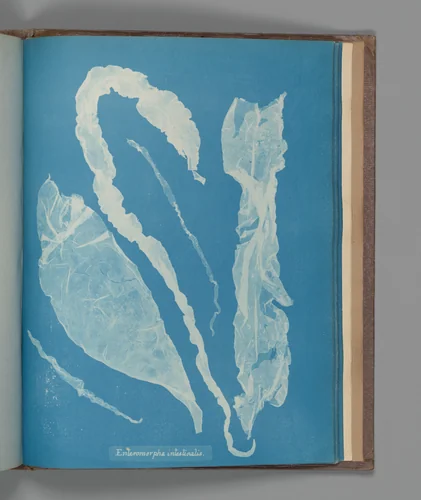
Her monumental project, Photographs of British Algae: Cyanotype Impressions, began publication in 1843. This undertaking utilized the cyanotype process, recently developed by Sir John Herschel, which yielded striking images in a distinctive monochromatic blue. Atkins applied this technology with scientific precision, producing detailed photograms by placing actual botanical specimens directly onto light-sensitive paper. The resulting images, such as Achnanthes longipes. (parasitic.) and plates detailing the genus Bangia, function as both objective scientific data and compelling early examples of abstract photographic composition. These works, including various Specimen of Cyanotype plates documenting ferns and algae, showcase the delicate architecture of marine life with clarity unmatched by traditional illustration techniques of the era.
While she worked largely within privileged scientific circles, Atkins’s legacy is profound. She is frequently recognized as the first woman to create a photograph, a quiet milestone that highlights her profound contribution to the arts during the medium's infancy. Unlike many contemporaneous experiments that have faded or remain locked in private collections, a significant portion of Atkins’s output remains accessible, held in major institutions like the Metropolitan Museum of Art and the National Gallery of Art. Today, these museum-quality originals, documenting specimens like Bangia fusco-purpurea, ensure her work is now widely available in the public domain. Her distinct blue aesthetic maintains an enduring appeal, making her celebrated plates readily available as downloadable artwork and high-quality prints. It is often observed that few artists, even today, manage to merge scientific rigor and aesthetic beauty with such effortless, aquatic grace.
Source: Wikipedia · CC BY-SA 4.0