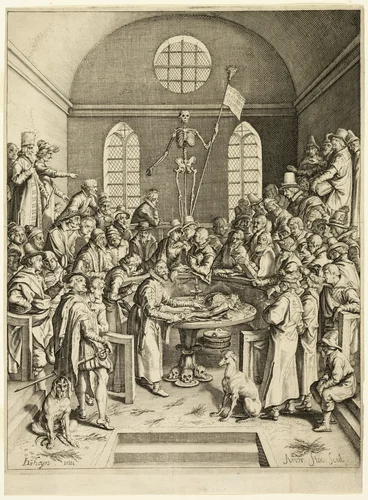
Andries Stock
Andries Stock (Andries Jacobsz Stock) stands as a highly significant figure in the early Golden Age of Dutch graphic arts. Active predominantly in The Hague between 1600 and 1615, his career demonstrates the critical intersection of artistic production and commercial publishing that defined the visual culture of the nascent Dutch Republic. Operating as an engraver, printmaker, publisher, and illustrator, Stock managed the entire chain of production for copperplate prints, a burgeoning medium that satisfied the rapidly growing middle-class demand for affordable, yet complex, imagery.
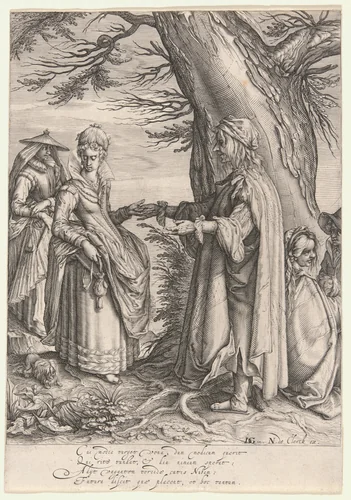
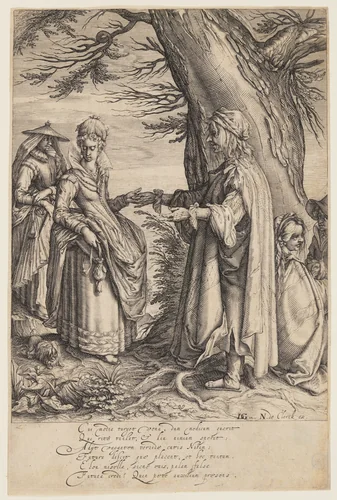
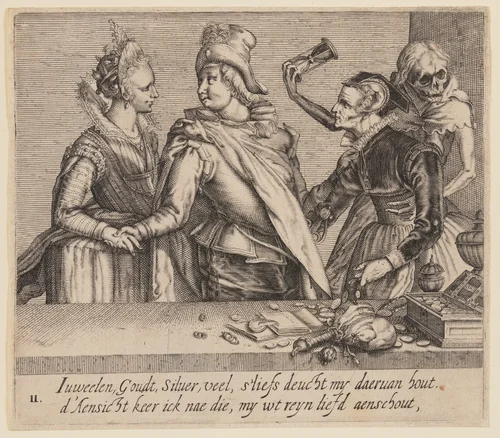
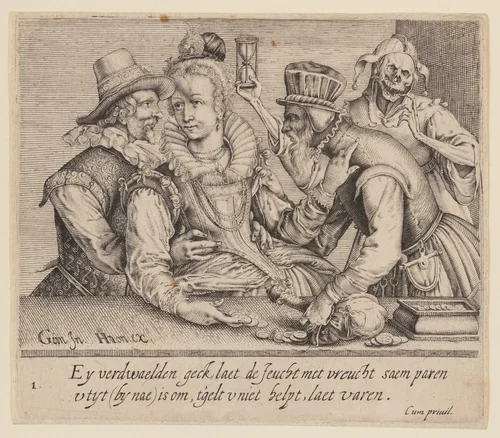
Stock specialized in highly detailed genre scenes that frequently carried a subtle moralizing message or a sharp satirical edge, reflecting the popular didacticism of the era. A persistent theme in his work is deception and human folly, often expressed through scenes of marketplace trickery and misjudged affection. This preoccupation is vividly conveyed in his series Unequal Lovers, which features the corresponding prints A Young Man between a Young Woman and an Old Woman and A Young Woman between a Young Man and an Old Man. The prints offered viewers a witty visual commentary on the consequences of mercenary partnerships, reinforcing communal values through highly dramatic scenarios.
Indeed, Stock seems to have understood that the public appetite for visual sermons was best satisfied when delivered with a generous helping of mild scandal. This astute grasp of market psychology ensured his continued success and relevance throughout his active period in The Hague.
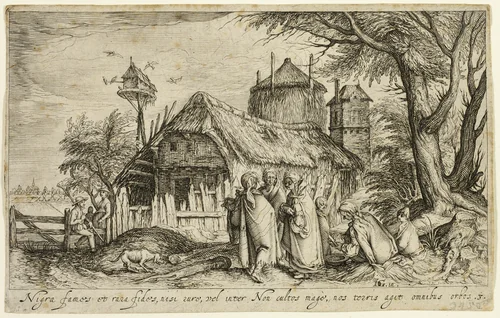
The motif of the charlatan also features prominently, evidenced by multiple depictions of the Fortune-Teller, alongside early topographical views such as Landscape with Gypsy Women Near a Farm Building. Although Stock’s documented period of artistic activity was relatively brief, the enduring quality of his draftsmanship ensures his work resides in major institutional holdings today, including the collections of the Metropolitan Museum of Art and the Art Institute of Chicago. The detailed execution inherent in these 17th-century engravings ensures that the output, including Andries Stock prints, is highly valued for museum-quality display. Moreover, due to their age and historical status, many fine examples have entered the public domain, making downloadable artwork widely accessible for contemporary study and appreciation.
Source: Wikipedia · CC BY-SA 4.0