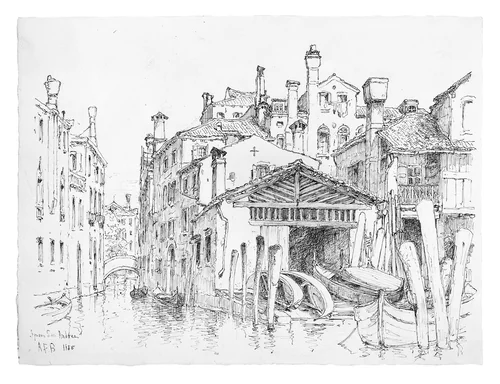
Andrew Fisher Bunner
Andrew Fisher Bunner (1841-1866) was an American painter and draughtsman whose concise, productive career established him as a master of watercolor landscape and marine specialization during the mid-nineteenth century. Operating primarily out of New York City, Bunner developed a highly regarded portfolio that earned institutional recognition early on; examples of his output are held in prestigious national collections, including the Metropolitan Museum of Art and the National Gallery of Art.
While his career was rooted firmly in the American art scene, Bunner’s artistic focus lay across the Atlantic. He specialized broadly in landscape, yet his preserved works reveal a marked preference for capturing the precise architecture and ephemeral atmosphere of foreign environments. His existing body of work confirms a sustained interest in Northern European settings, ranging from the rustic detail of a German Farm Building to the complex canal networks of Venice.
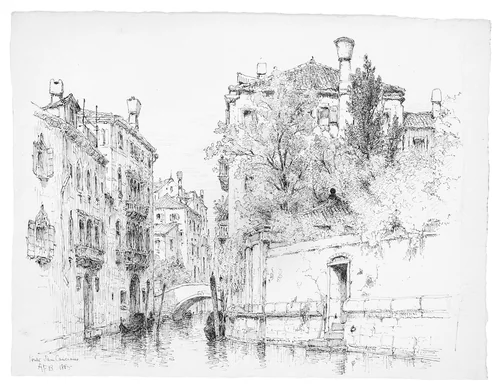
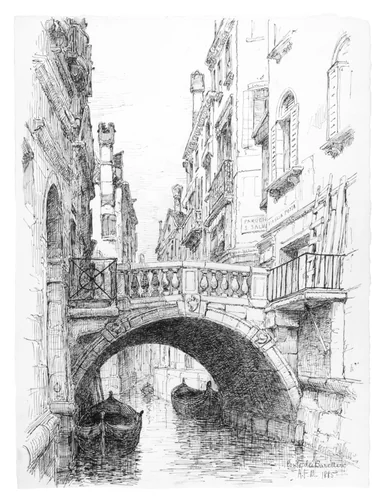
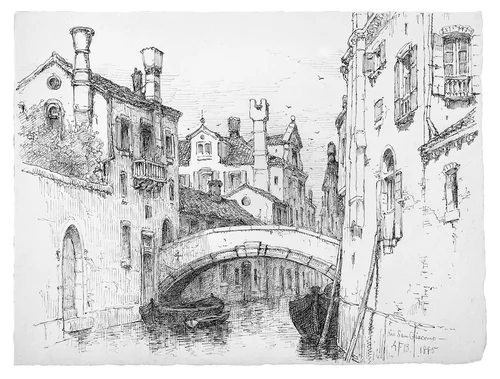
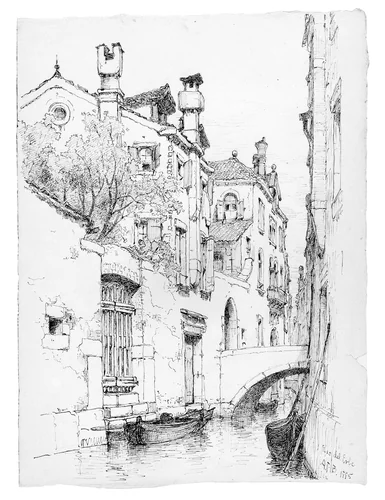
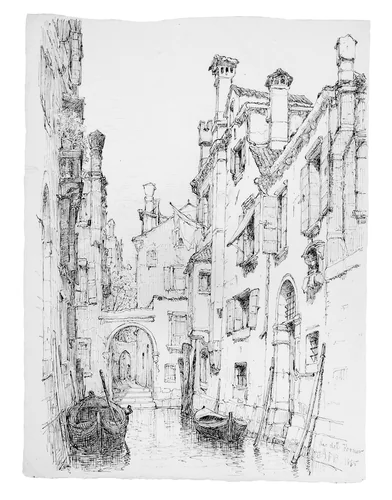
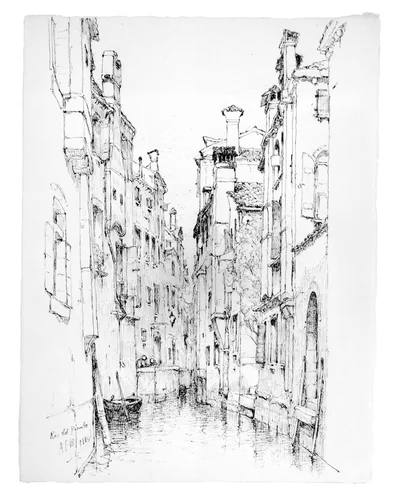
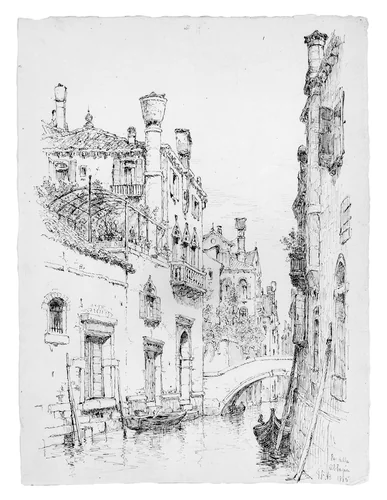
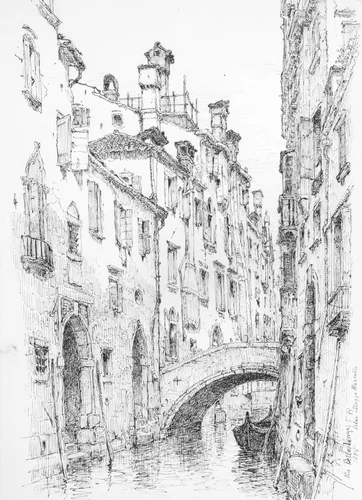
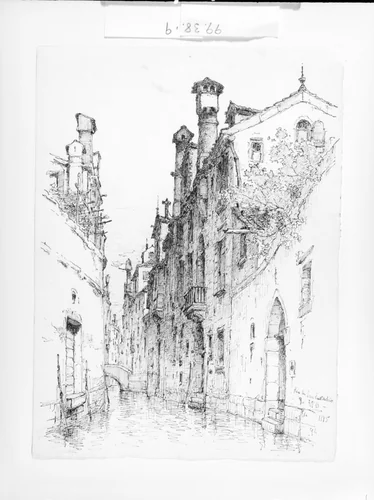
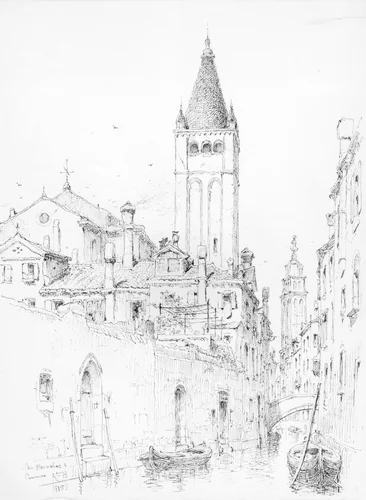
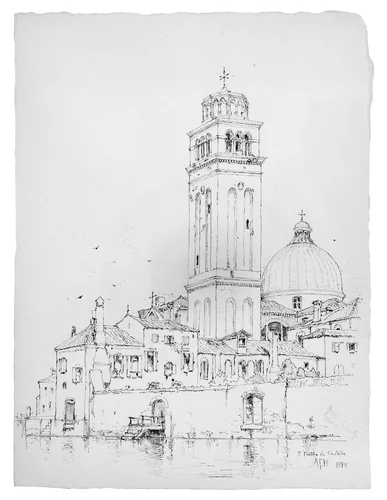
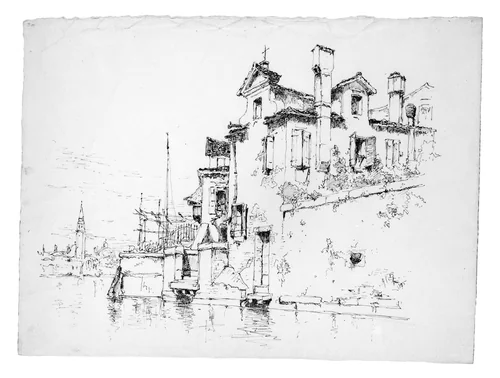
The collection of Venetian views, constituting the majority of his known output, is particularly noteworthy. Pieces such as Campanile San Stefano, Venice, Rio della Fosca and Santa Fosca, Venice, and Rio Ca Pessaro and Rio dei Frari, Venice highlight the artist’s methodical approach to perspective, architectural accuracy, and the careful handling of light on water. Bunner eschewed the heavy theatricality often associated with oil painting, instead maximizing the immediacy and precision afforded by the watercolor medium, lending his topographical studies an exceptional clarity and freshness. His productivity, spanning just twenty-five years, suggests an artist singularly focused on documenting urban and natural environments before his premature death in 1866.
Bunner’s output remains an important benchmark for 19th-century American draughtsmanship engaging with international themes. The visual clarity and historical value of his work persist, ensuring his legacy extends beyond his brief active period. Today, many of the original drawings and high-quality prints, having transitioned into the public domain, are considered museum-quality documentation of mid-century European topography, allowing the refined vision of Andrew Fisher Bunner prints to remain vital for researchers and enthusiasts today.
Source: Wikipedia · CC BY-SA 4.0