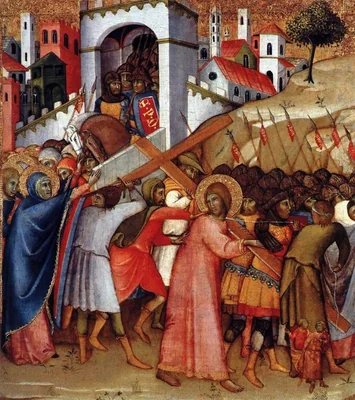
Andrea di Bartolo
Andrea di Bartolo, sometimes documented as Andrea di Bartolo Cini, holds a defining position in the Sienese School, bridging the stylistic continuity of the late Trecento and the emerging sensibilities of the early Quattrocento. Active throughout Siena and its encompassing region between approximately 1389 and 1428, he was a prolific master specializing in devotional subjects, extending his practice beyond panel painting to include the distinct disciplines of illumination and stained glass design.
Di Bartolo’s successful career reflects a deep rootedness in the Sienese tradition, characterized by rich color palettes, refined gold-ground work, and a particular emphasis on narrative grace. Unlike many contemporaries who focused on a single medium, his versatility ensured the wide dissemination of his art. His practice demonstrates the highly adaptable nature required of successful workshops during this era, often producing large altarpieces, smaller panels for private contemplation, and intricate manuscripts.
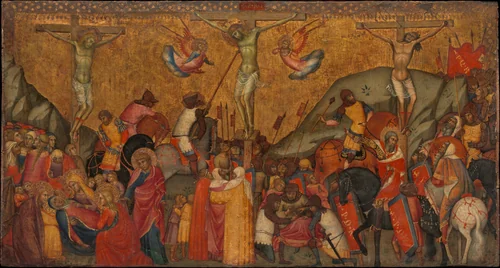
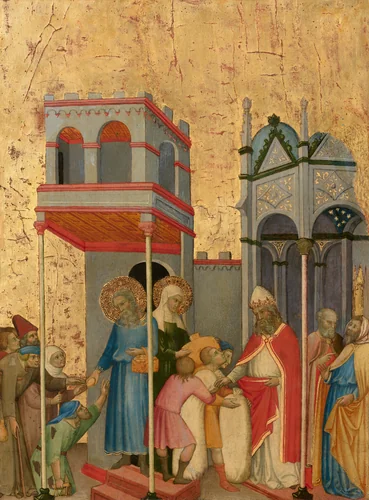
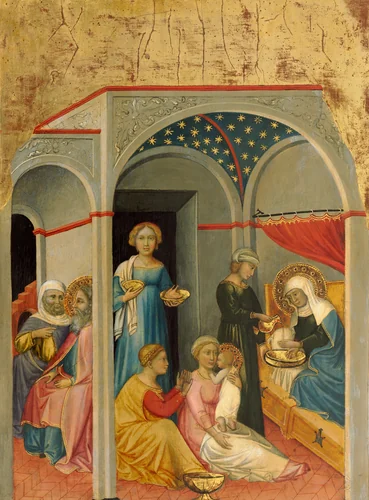
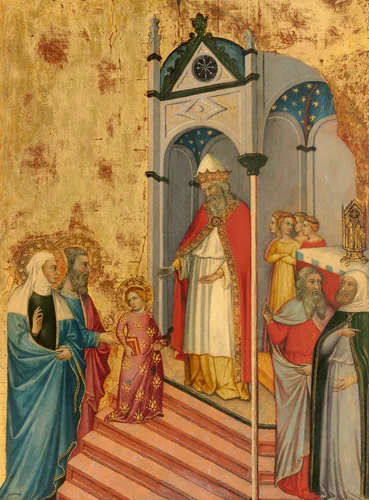
His surviving oeuvre is widely dispersed and includes compelling examples of both dramatic narrative and intimate piety. Panels such as The Crucifixion showcase his command of devotional intensity, while complex diptychs, like the sophisticated double-sided work featuring the Madonna of Humility, The Blessing Christ, Two Angels, and a Donor [obverse] and Christ on the Cross [reverse], illustrate the technical demands of crafting monumental public art. His storytelling ability is evident in scenes dedicated to the life of the Virgin, including Joachim and Anna Giving Food to the Poor and Offerings to the Temple and The Nativity of the Virgin.
The sustained quality and quantity of his output over four decades, despite the lingering socio-economic pressures of the period, suggests Andrea di Bartolo possessed not just exceptional artistic talent but a singular aptitude for the organizational demands of a late Medieval workshop. This blend of artistry and administration allowed him to maintain relevance in a competitive artistic environment. Today, these museum-quality works are found in significant international collections, including the National Gallery of Art and the Metropolitan Museum of Art. Scholars and enthusiasts frequently access high-quality prints and reproductions of these key Andrea di Bartolo paintings for detailed study and conservation review.
Source: Wikipedia · CC BY-SA 4.0
![Christ on the Cross [reverse] by Andrea di Bartolo, painting, 1380-1390](https://img.artbee.org/5fe0ab9b-3507-490d-87b4-f661fedecac4/small.webp)
![Madonna of Humility, The Blessing Christ, Two Angels, and a Donor [obverse] by Andrea di Bartolo, painting, 1380-1390](https://img.artbee.org/e871097c-acdb-495b-8e3b-0b106e46f005/small.webp)