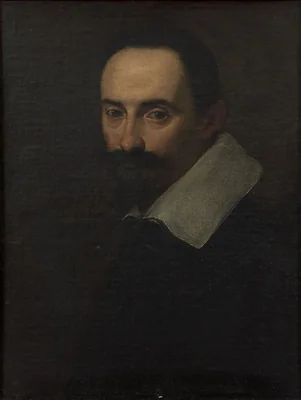
Andrea Boscoli
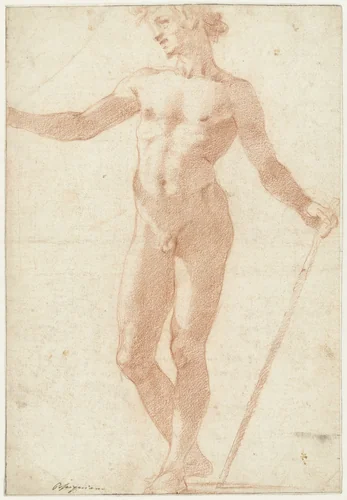
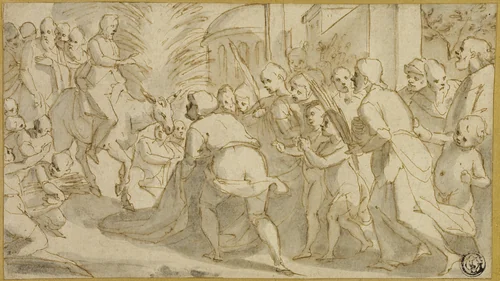
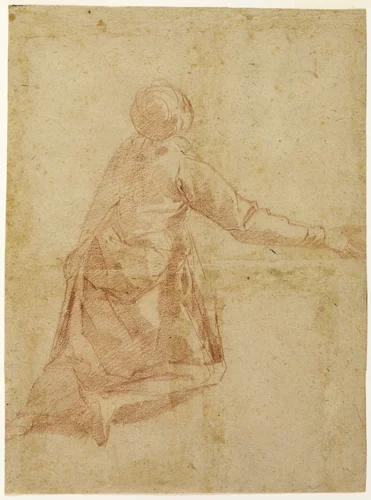
Andrea Boscoli (active 1560-1598) secured his place in the history of Italian art primarily through his meticulous output as a draftsman during the late Renaissance. While records documenting his original Andrea Boscoli paintings are scarce, the survival of approximately fifteen graphic works provides crucial insight into the stylistic and technical demands placed upon artists operating between the High Renaissance and the Mannerist period. His surviving corpus, safeguarded today in major international collections including the Rijksmuseum, the Metropolitan Museum of Art, and the National Gallery of Art, confirms his significance as a highly skilled interpretive artist.
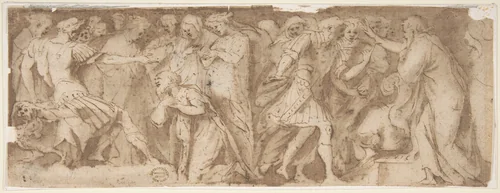
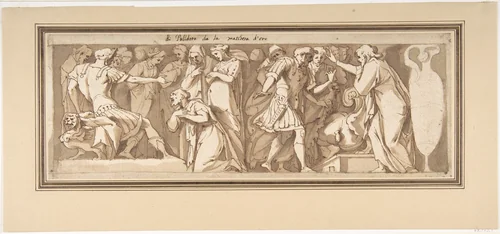
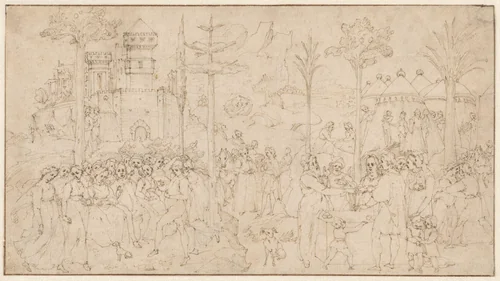
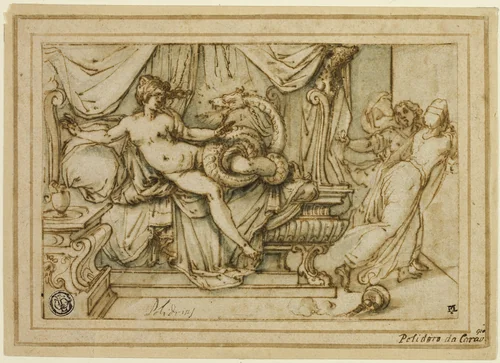
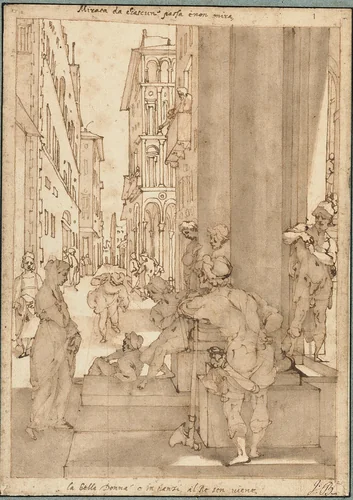
Boscoli’s active period spanned nearly four decades, characterized by a versatile engagement with classical and religious narratives. A significant aspect of his work involved reinterpreting the complex compositions of earlier masters. This is powerfully demonstrated in sheets such as Scenes from Ancient History, after Polidoro da Caravaggio, a testament to his ability to translate large-scale Roman decoration into detailed, functional studies. These works suggest an artist deeply engaged in the academic study of form, perspective, and classical motifs, skills essential for success in the sophisticated patronage systems of Florence and Rome.
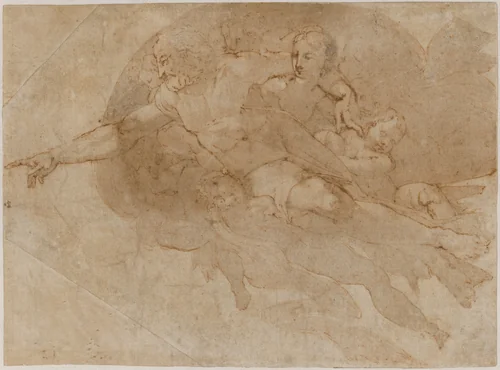
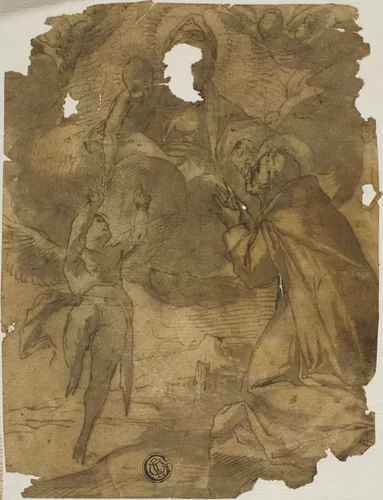
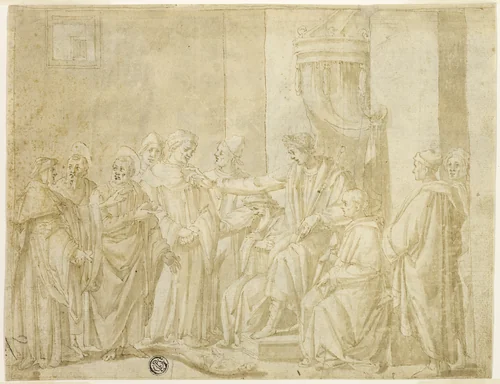
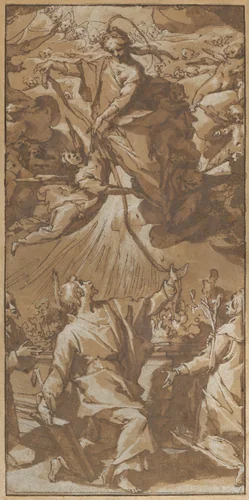
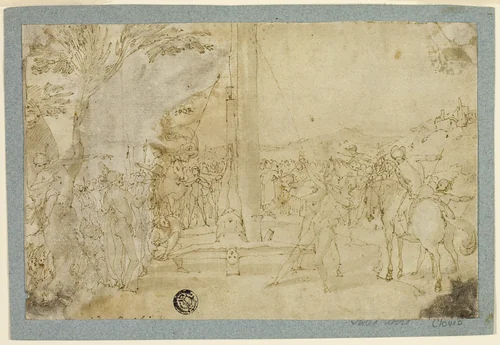
His thematic range extended from the didactic to the devotional. Works like God the Father in Glory reveal his capacity for designing monumental religious subjects, while the complexity of multi-figure works is showcased in the comprehensive double-sided sheet: Saints Peter and Paul Disputing with Simon Magus before Nero (recto); Five Scenes from the Story of Moses (verso). This kind of material efficiency, using the front and back of a sheet for entirely unrelated compositions, is typical of artists concerned with managing costs and lends him the subtle air of a practical classicist.
Boscoli’s legacy endures through these detailed studies, which offer unparalleled access to Renaissance artistic methodology. For scholars and enthusiasts alike, these high-quality drawings, now frequently entering the public domain, are widely available as museum-quality downloadable artwork, allowing for close examination of his subtle technique and masterful draftsmanship.
Source: Wikipedia · CC BY-SA 4.0