Ammi Phillips
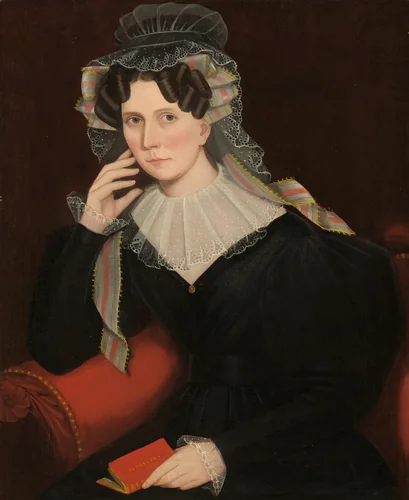
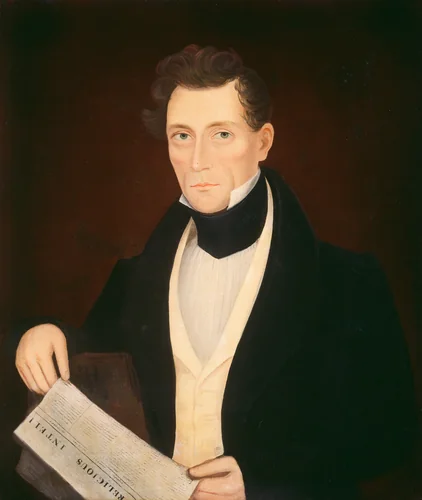
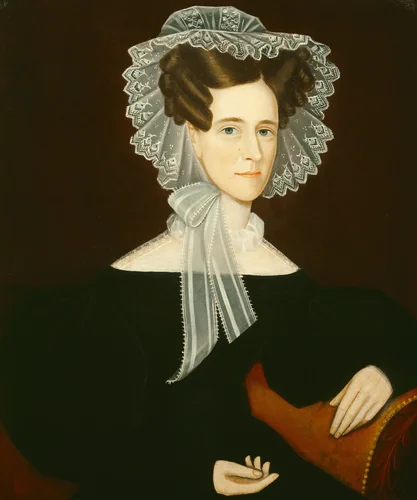
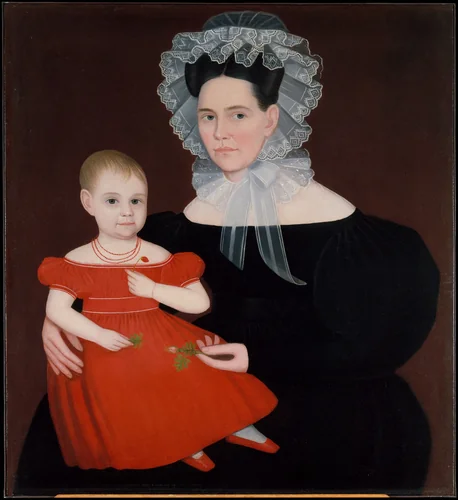
Ammi Phillips (1788-1865) stands as one of the most prolific and distinctive American itinerant portrait painters of the early nineteenth century. Active primarily between the mid-1810s and the 1860s, Phillips traveled a broad circuit across rural New York, Connecticut, and Massachusetts, meeting the burgeoning demand for painted likenesses among the rising middling class. His extensive body of work chronicles a specific, formative era in American social history, providing visual documentation of families and individuals across several states.
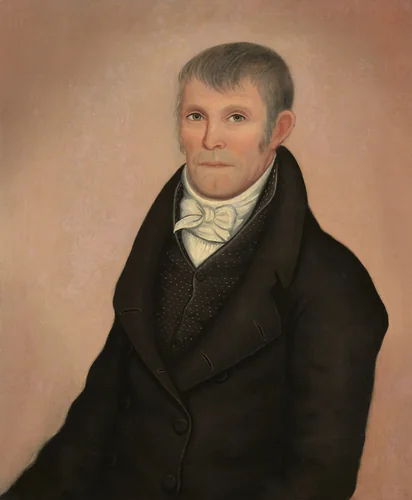
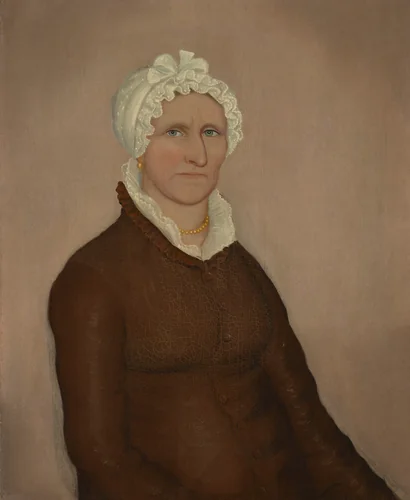
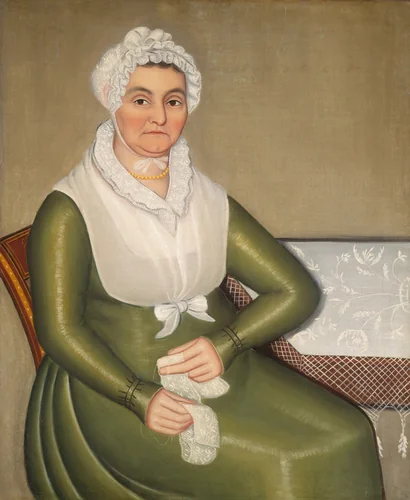
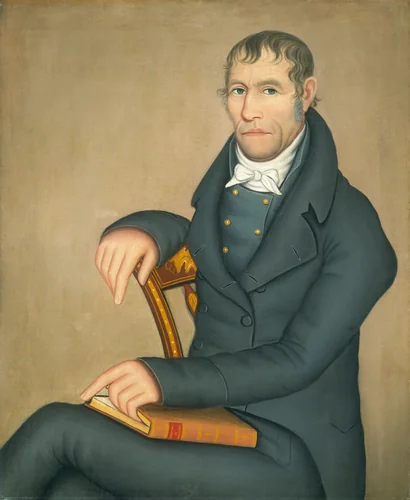
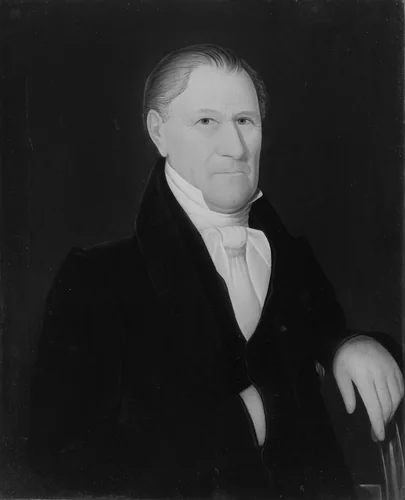
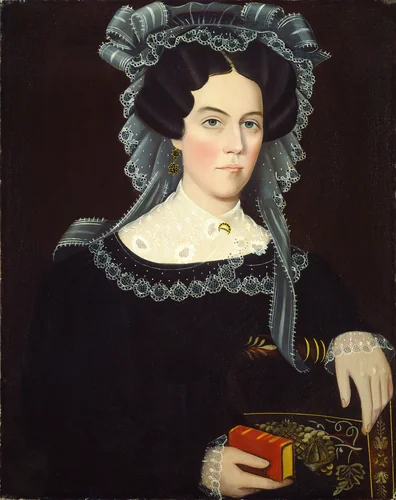
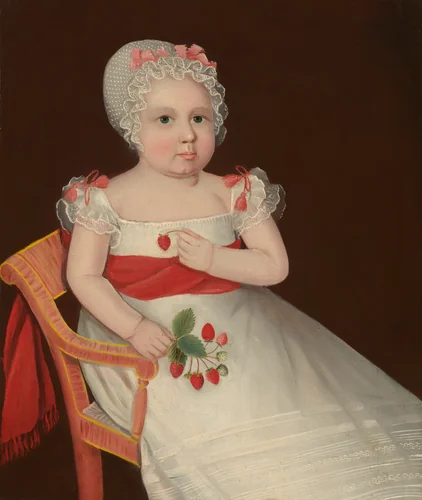
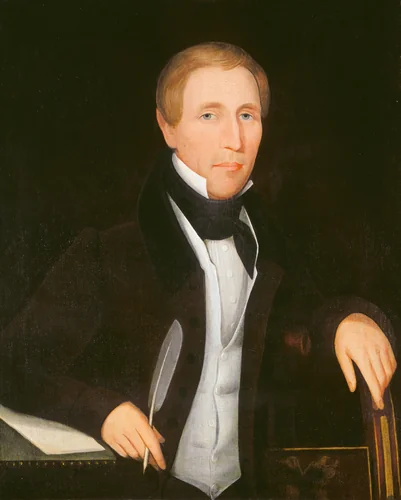
Phillips’s massive oeuvre resists neat academic categorization. Scholars continue to debate whether his portraits should be definitively classed as folk art, primitive art, or provincial art. This lack of consensus points to the inherent enigmatic quality of his style, which combined precise observation of the sitter’s face with a stark, often flattened compositional approach. His portraits frequently utilize deep, jewel-toned color palettes and bold, clearly defined outlines, delivering a visual intensity that is immediately recognizable.
Phillips made efficiency an artistic virtue, producing an astonishing output given the constraints of travel and patronage. He is attributed with creating well over eight hundred paintings across five decades. Only a small fraction of these portraits, however, bear his signature, suggesting a pragmatic, rather than formal, approach to personal branding that favored sheer productivity over certification.
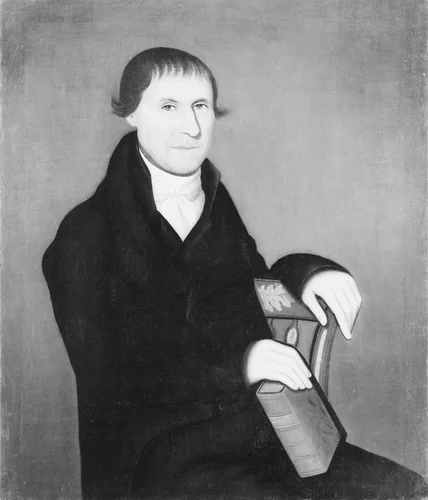
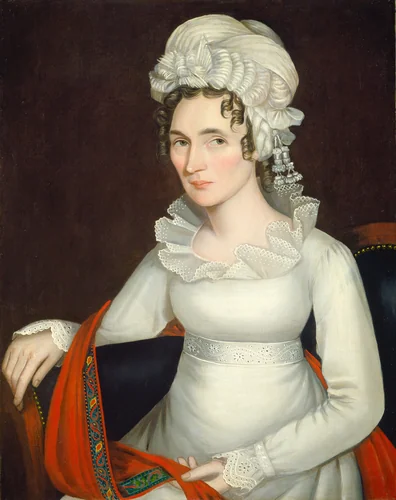
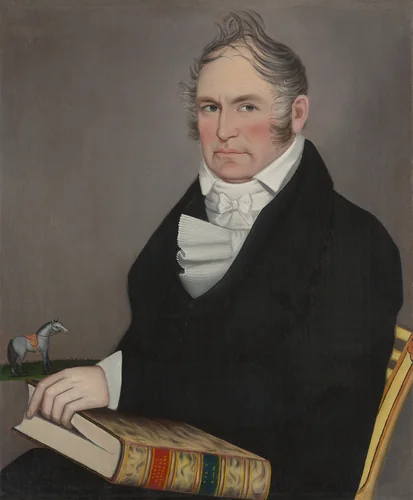
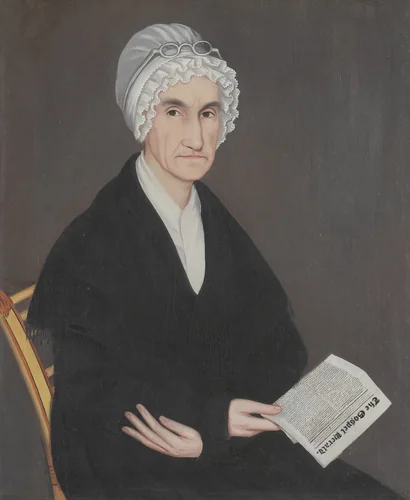
The scale of his surviving work ensures Phillips’s enduring legacy within the canon of early American portraiture. Key works, including Portrait of a Gentleman, Portrait of a Lady, and the complementary pair Alsa Slade and Joseph Slade, demonstrate the characteristic intensity of his gaze and masterful simplification of form. These compelling Ammi Phillips paintings are now held in major institutions, including the Metropolitan Museum of Art and the National Gallery of Art, ensuring their museum-quality preservation. Today, many of his portraits are entering the public domain, making high-quality prints and downloadable artwork accessible for study and appreciation worldwide.
Source: Wikipedia · CC BY-SA 4.0