Amir Khusrau
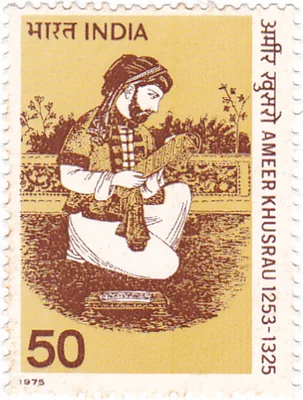
Abu'l Hasan Yamīn ud-Dīn Khusrau, known universally as Amir Khusrau, stands as a foundational figure of the Delhi Sultanate period. While he was active during the 13th and early 14th centuries as an Indo-Persian Sufi poet, musician, and scholar, his influence was so profound that it continued to shape cultural production for centuries after his death in 1325. Khusrau’s true significance in the visual arts is derived not from his own hand, but from the relentless demand for illustrated editions of his literary works, most notably his Khamsa (Quintet).
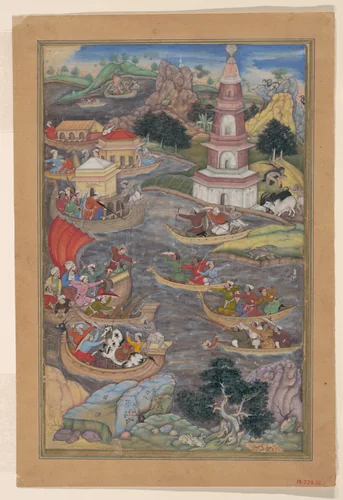
This sustained literary prestige spurred the commission of lavishly illuminated manuscripts across the Indian subcontinent and Persia. Eleven such volumes containing Amir Khusrau's texts have been documented, actively illustrated and circulated between 1425 and 1600, a remarkable testament to his enduring philosophical and narrative appeal. These commissioned Khamsa are invaluable documents of shifting stylistic trends, ranging from early Sultanate styles to refined Mughal court sensibilities.
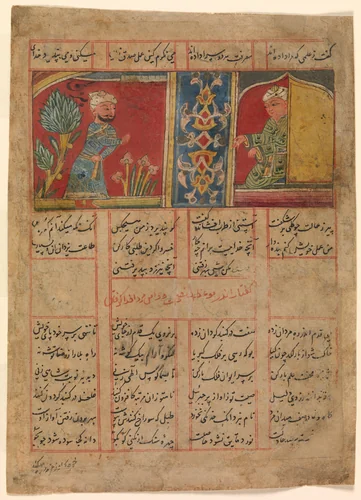
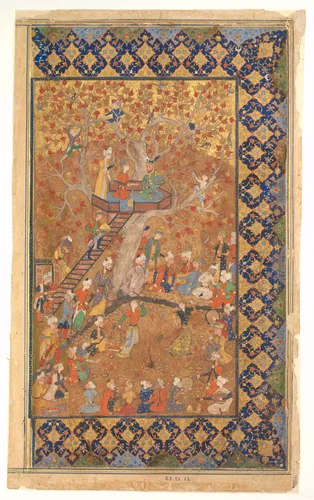
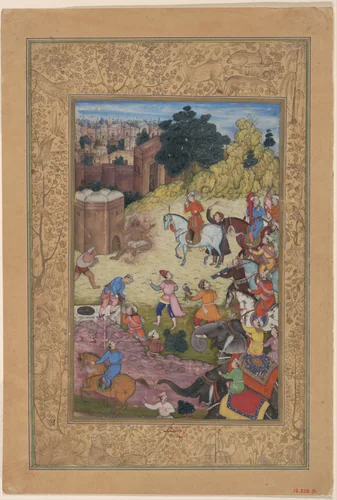
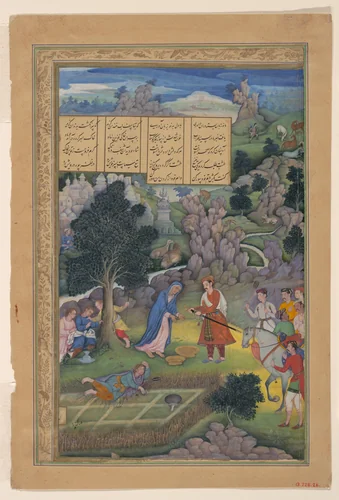
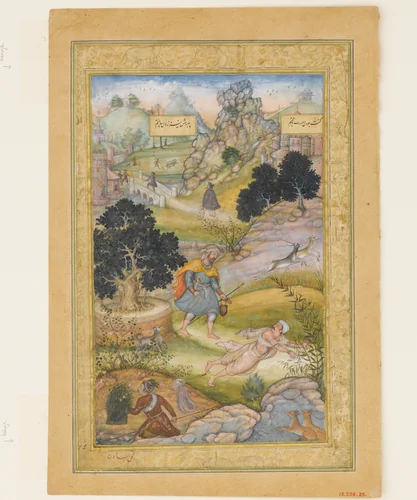
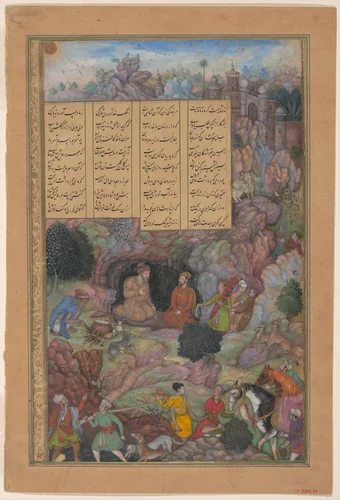
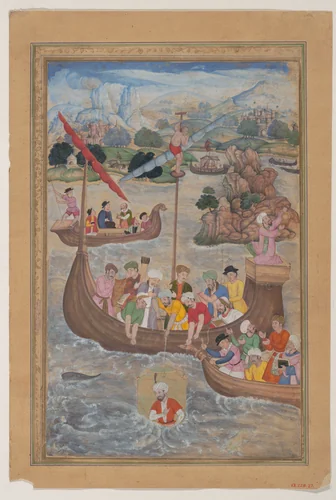
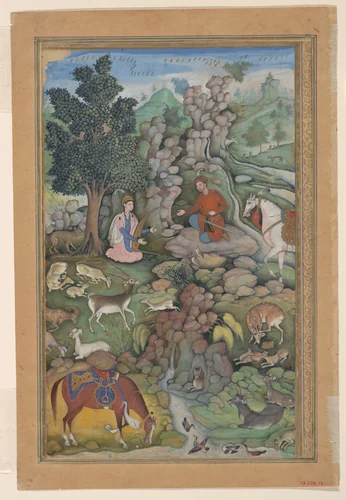
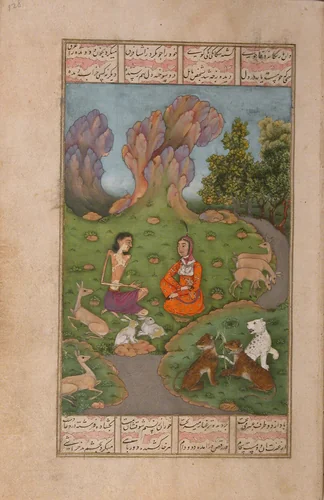
The miniature paintings that accompany Khusrau’s poetic cycles often present rich, complex narratives drawn from his stories, requiring the artists to masterfully balance grand historical settings with intimate human emotion. Examples include the regal resolution found in A King Offers to Make Amends to a Bereaved Mother, and the surprising theological parity explored in A Muslim Pilgrim Learns a Lesson in Piety from a Brahman. The works also reflect the full spectrum of human experience, from spiritual contemplation, as seen in Khizr Comes to the Ascetic's Cell, to outright earthly desire, vividly captured in A Bathhouse Keeper is Consumed by Passion for his Beloved.
These museum-quality illustrations, held in prestigious international collections such as the Metropolitan Museum of Art, showcase the exquisite detail and vibrant palette characteristic of 15th and 16th-century Persianate painting traditions. It is perhaps a sign of Khusrau's intellectual breadth that a revered Sufi mystic could inspire such detailed renderings of both spiritual pilgrimage and intense human passion. Today, the continued cultural importance of these illustrations means that images derived from the manuscripts are increasingly available as downloadable artwork, accessible to the public domain as free art prints globally.
Source: Wikipedia · CC BY-SA 4.0