Alvin Langdon Coburn
Alvin Langdon Coburn (1882–1966) was an American photographer who rapidly became a foundational figure in early 20th-century art, central to the movement that sought to establish photography as a fine art equal to painting. He was a key proponent of Pictorialism, having been invited by Alfred Stieglitz to join the influential Photo-Secession group in 1903. Coburn’s technical mastery and keen eye for composition quickly elevated him within the artistic elite, leading to prolific work featured prominently in Stieglitz's groundbreaking journal Camera Work.
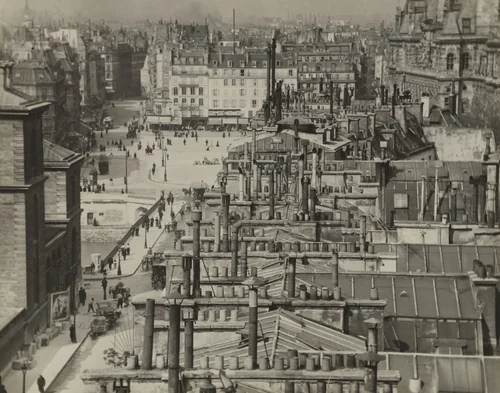
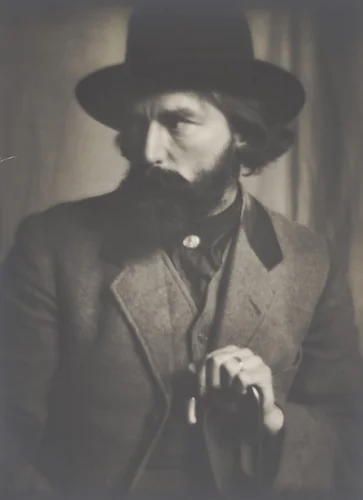
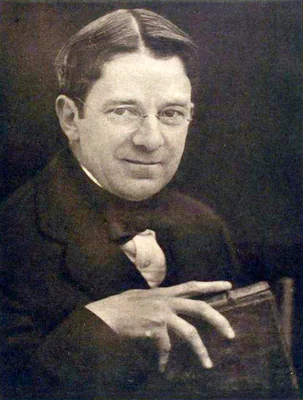
Coburn’s activity between 1901 and 1912 established his reputation as both a masterful portraitist—as demonstrated by his elegant Portrait of Edward Steichen—and an evocative urban chronicler. His unique contribution to photographic modernism was his radical engagement with perspective. Coburn is widely recognized as the first major photographer to fully embrace and exploit the graphic potential of elevated viewpoints. By moving his camera away from the conventional eye-level, often shooting from skyscrapers or bridges, he transformed familiar cityscapes into striking, abstracting patterns. This shift in perspective reveals an interest in structural form and dynamic geometry that dramatically anticipated later modernist developments.
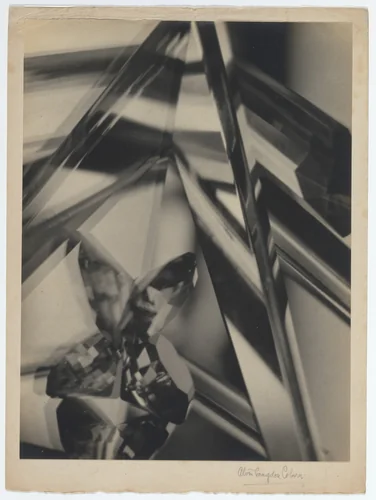
Though highly skilled in the soft focus and atmospheric aesthetics of Pictorialism, Coburn was fundamentally an innovator who refused to remain static. Late in his career, he moved beyond representation entirely, creating some of the earliest completely abstract photographs. Inspired by European avant-garde movements, he developed the Vortographs starting around 1917. These dazzling, fragmented geometric compositions, achieved through the use of a specially constructed kaleidoscope of three mirrors, confirm Coburn not merely as a master craftsman, but as a bold pioneer of formal abstraction.
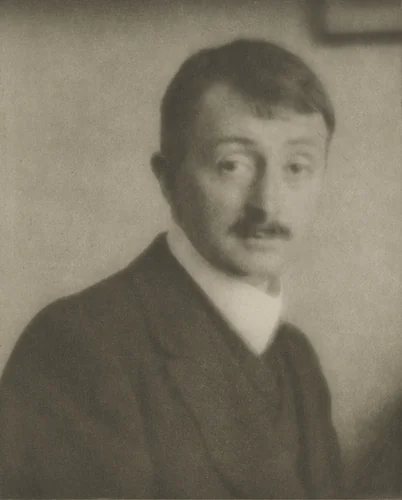
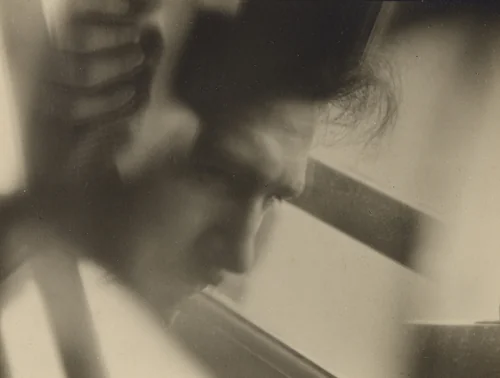
Coburn’s willingness to experiment, juxtaposing his delicate, moody portraits like Rebecca with aggressively abstract studies, underscores his enduring relevance. Many of Coburn’s most significant images, including his self-portraits and the study A Canal in Rotterdam, are held in prestigious collections such as the Museum of Modern Art and the National Gallery of Art. Because of their age and historical importance, these works are frequently in the public domain, allowing for the widespread production of museum-quality prints and downloadable artwork, cementing his status as one of photography’s most essential transitional figures.
Source: Wikipedia · CC BY-SA 4.0