Alvan Fisher
Alvan Fisher (1792-1863) occupies a significant place in the historical trajectory of American art, recognized primarily as a pioneering figure in both landscape and genre painting. Active across the early decades of the nineteenth century, Fisher was instrumental in establishing market acceptance for subjects beyond traditional portraiture, paving the way for the later emergence of codified American art movements. His significance is underscored by the presence of his work in leading institutions, including the Metropolitan Museum of Art, the National Gallery of Art, and the Art Institute of Chicago.
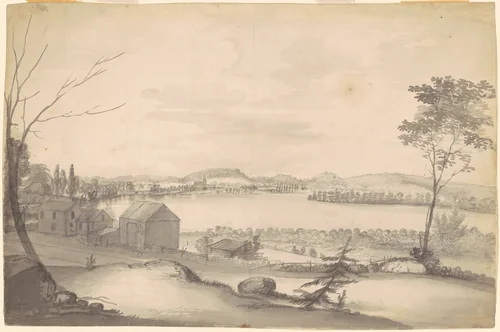
Fisher began his career by studying drawing and painting in Boston, yet quickly turned his attention to the visual possibilities inherent in the domestic landscape and everyday life. His earliest successful compositions demonstrate an acute, though stylized, attention to topography, visible in works like the extant preliminary work, Study for "View of Springfield on the Connecticut River." His methodical approach to composition allowed him to capture scenes that were both deeply familiar and subtly idealized.
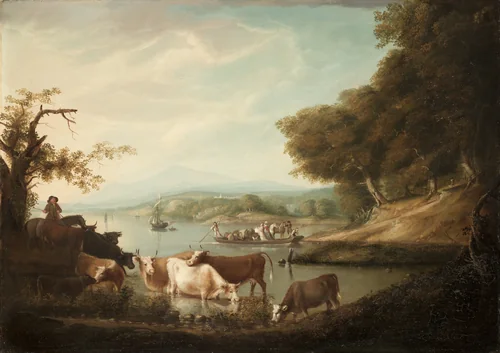
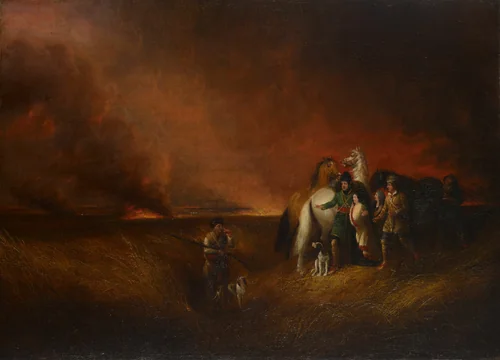
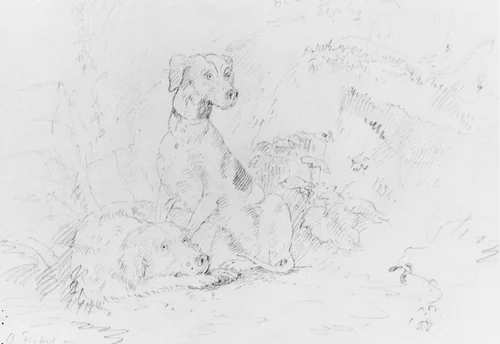
Fisher’s output frequently contrasted the bucolic with the dramatic, a duality that speaks to the diverse demands of the burgeoning American art audience. On one hand, he excelled at serene pastoral views, exemplified by the expansive quietude of A Calm Watering Place--Extensive and Boundless Scene with Cattle. On the other, he was unafraid to tackle scenes of immediate action and risk. It is perhaps an understated observation that an artist capable of rendering the tranquil details of Scene with Dogs (from McGuire Scrapbook) was equally proficient in depicting a terrifying frontier spectacle like The Prairie on Fire. These contrasting subjects solidified his role as a versatile painter catering to different facets of the national identity.
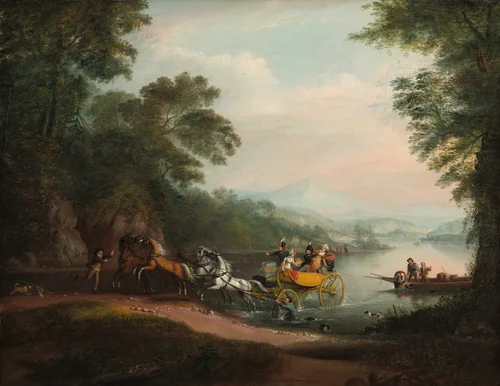
Fisher was also crucial in the development of genre painting, lending narrative weight and occasional subtle humor to quotidian moments, as seen in his depiction of aquatic failure in Mishap at the Ford. This commitment to narrative realism helped shape popular taste for scenes featuring human interaction with the environment. Today, many classic Alvan Fisher paintings are part of the public domain, ensuring that museum-quality examples of his legacy remain accessible; interested patrons can easily find downloadable artwork and high-quality prints for study. His legacy is one of technical proficiency and stylistic innovation, linking the decorative traditions of the eighteenth century with the full flowering of American landscape painting that followed.
Source: Wikipedia · CC BY-SA 4.0