Alphonse J. Liébert
Alphonse J. Liébert was a photographer known for his focused activity during a brief but pivotal historical period, 1870-1871. His output centered exclusively on the meticulous documentation of the destruction left in the wake of the Franco-Prussian War and the subsequent conflicts of the Paris Commune.
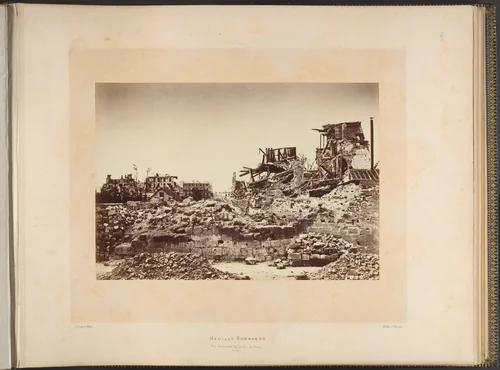
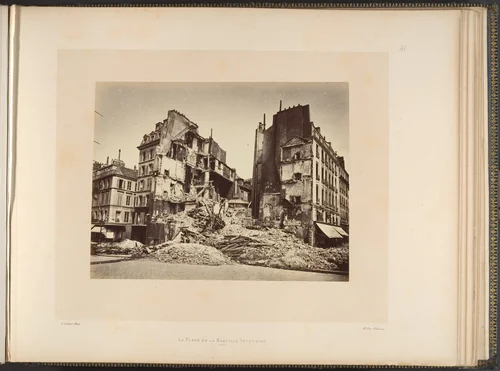
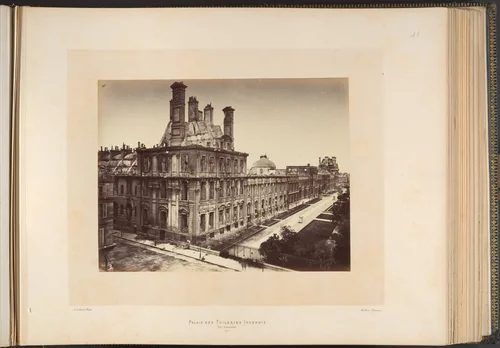
Liébert is recognized principally for his monumental publication, Les Ruines de Paris et de ses Environs 1870-1871: Cent Photographies. This two-volume work, featuring text by Alfred d'Aunay, provided a comprehensive visual record of the devastating damage inflicted upon Parisian architecture and infrastructure. This collection of one hundred photographs stands as an essential primary source for the study of the city during this turbulent time.
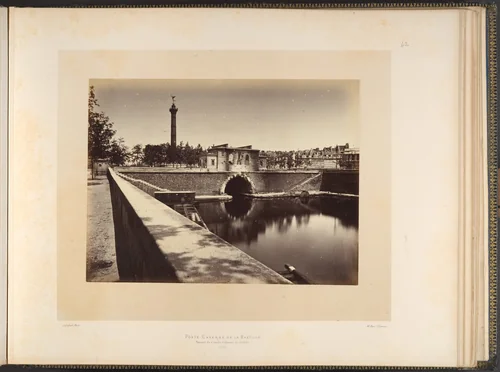
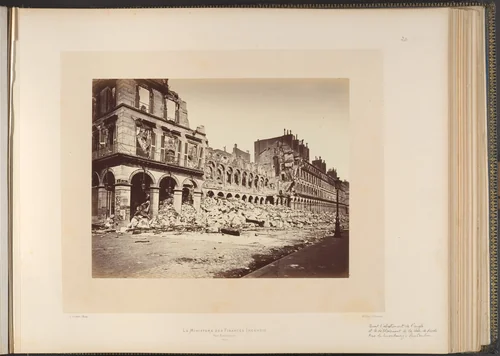
Five works by Liébert are represented in museum collections, including the Metropolitan Museum of Art. These specific images capture the extensive structural damage in high detail. Notable photographs include Barracks Post, Place de la Bastille; Canal Tunnel and July Column, Finance Ministry, Burned. Exterior View, and Neuilly Bombarded. General View of the rue de Chezy.
His meticulous documentation has ensured that these historic images, frequently circulated today as high-quality prints, remain important visual evidence. Works by Alphonse J. Liébert are often cited by researchers, and many of his photographs are now entering the public domain.
Source: Wikipedia · CC BY-SA 4.0