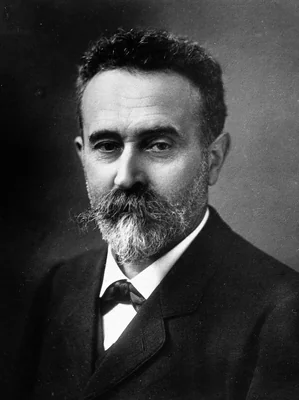
Alphonse Bertillon
Alphonse Bertillon (1853-1914) occupies a unique and foundational position in the history of photography, merging rigorous scientific methodology with forensic documentation. Trained as a French police officer and biometrics researcher, Bertillon is credited with applying the anthropological technique of anthropometry, the systematic measurement of the human body, directly to law enforcement. This innovative system, developed primarily during the 1880s, created a definitive means of identification based on precise physical metrics.
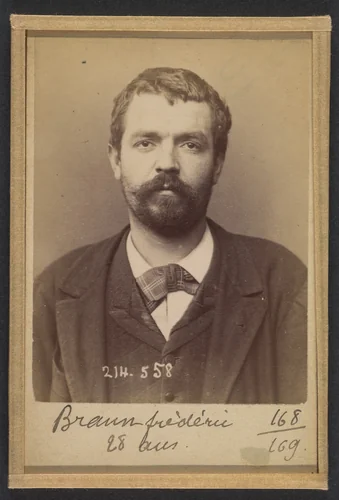
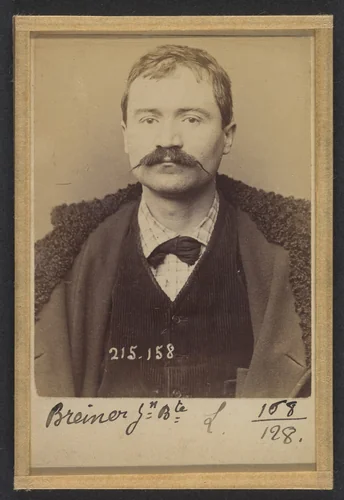
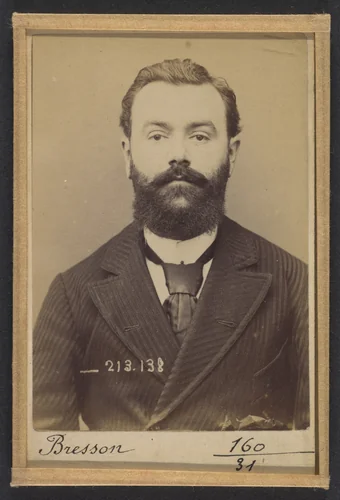
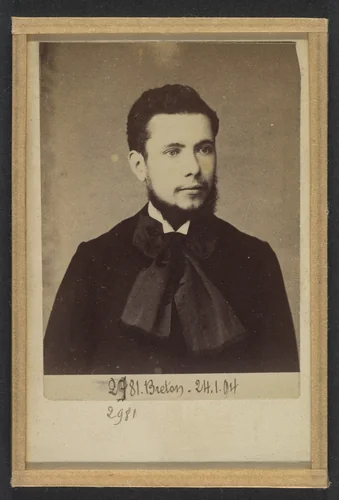
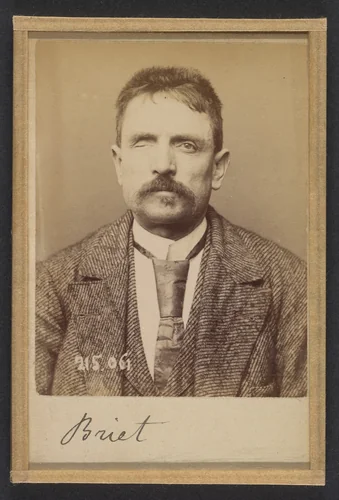
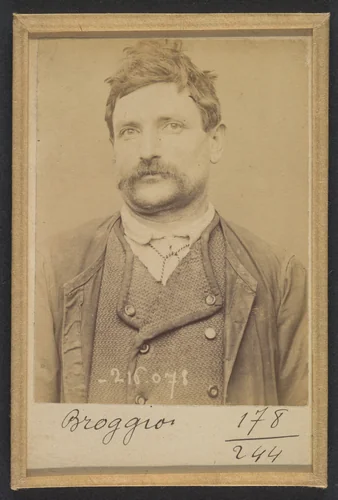
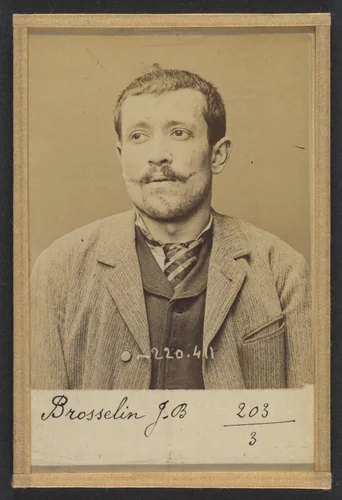
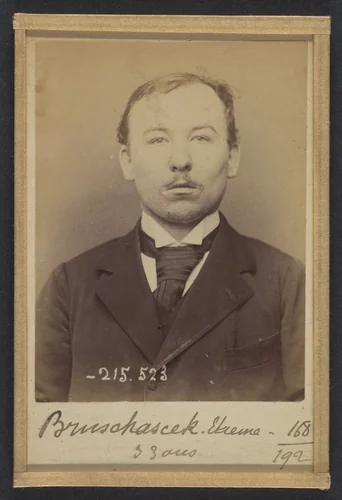
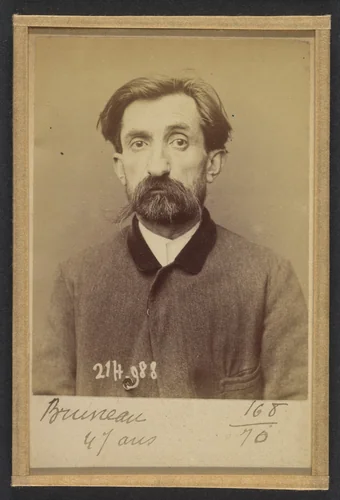
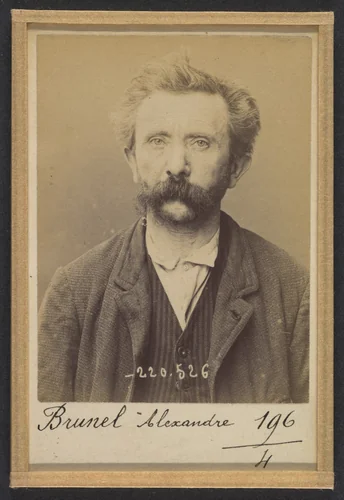
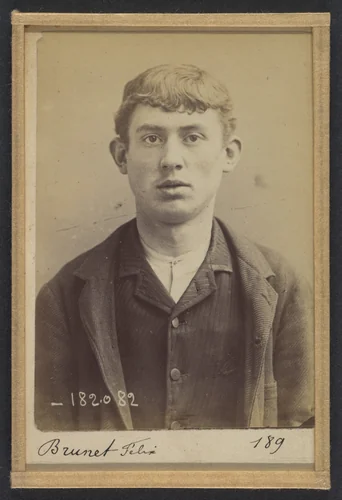
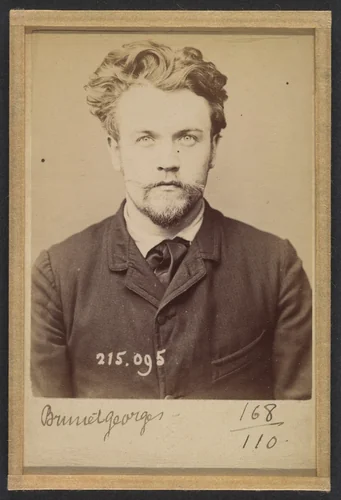
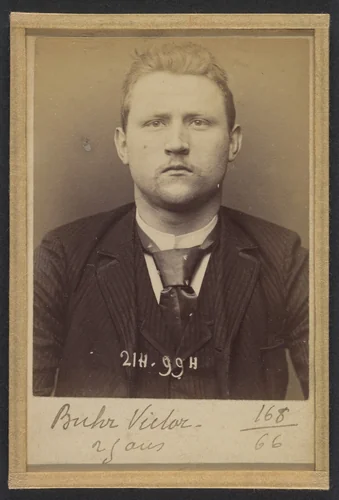
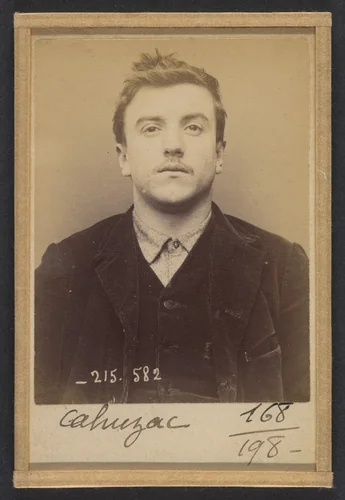
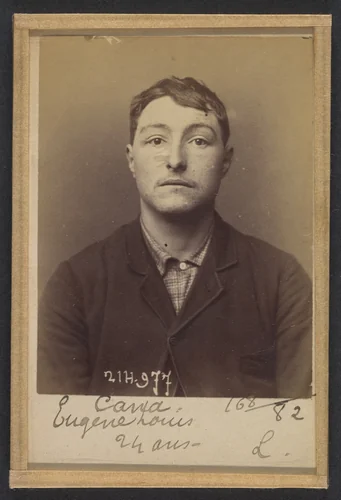
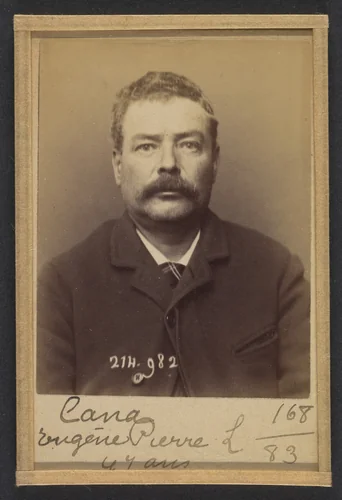
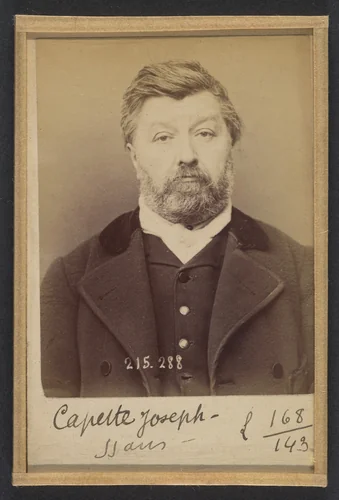
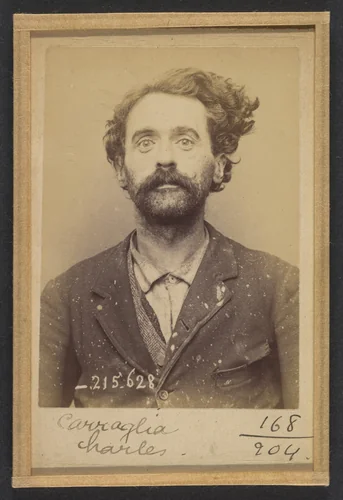
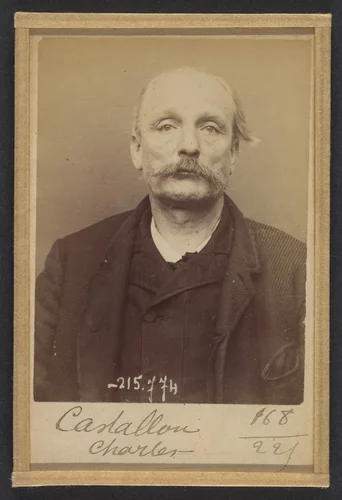
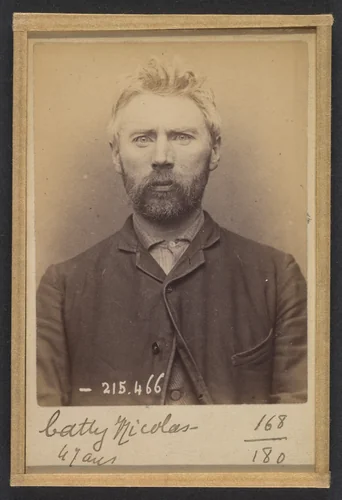
Bertillon’s most enduring contribution, however, was the profound standardization of the photographic record. Unlike earlier, casual attempts at police photography, his method demanded strict adherence to technical consistency: uniform lighting, fixed scale, and required frontal and profile views. This systematic approach transformed the photographic subject from a descriptive portrait into quantifiable, repeatable data. His objective, almost clinical, execution is evident in surviving plates like the two-part study of Mathieu. Gustave and the precisely cataloged record of Renard. Pierre, Alfred. 46 ans, né à Flain (Haute-Saône) le 27/4/46. This standardized visual grammar established the very foundation for the modern mugshot.
Though initially intended purely for administrative classification, Bertillon's photographic output has transcended its original bureaucratic purpose. His images, characterized by stark objectivity and chilling clarity, are now recognized as essential documents of late 19th-century social history and technological innovation, securing their inclusion in major institutional collections, including the Museum of Modern Art and the Metropolitan Museum of Art. These seminal works, which document the birth of the forensic image, are frequently released into the public domain, ensuring access to high-quality prints and downloadable artwork for researchers worldwide.
Ironically, the very system Bertillon devised to strip away subjectivity and personality from his subjects succeeded in creating a new, compelling form of portraiture. His pursuit of empirical data, which necessitated recording odd human details such as the notation accompanying the subject Mathieu. Gustave. (avec une barbe postiche) [with a false beard], inadvertently captures a momentary, human vulnerability amidst the procedural coldness. Bertillon proved that even the most determinedly objective measurement system could, through its unflinching focus, achieve museum-quality status.
Source: Wikipedia · CC BY-SA 4.0