Ali Shir Nava'i
Nizām-al-Din ʿAli-Shir Herawī, known globally as Ali Shir Nava'i, was a definitive polymath and intellectual pillar of the late Timurid dynasty. Serving as a high-ranking statesman in Herat, he simultaneously distinguished himself as the preeminent poet, writer, and linguist defining Chagatai literature. A figure of immense cultural authority, Nava’i was also a dedicated Hanafi Maturidi mystic and is historically recognized as a painter. His foundational influence permeated not only court politics and intellectual discourse but also the production of fine arts. His vast literary output, particularly his renowned Divan (Collected Works), established the narrative framework for generations of luxuriously illuminated manuscripts.
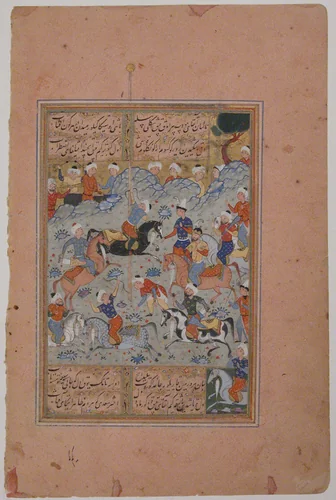
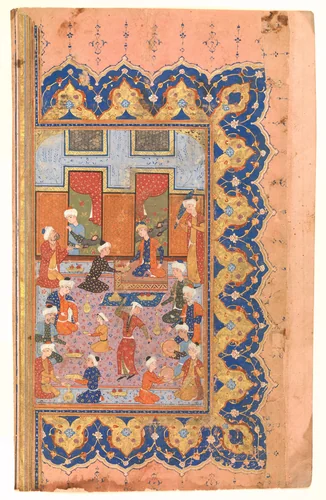
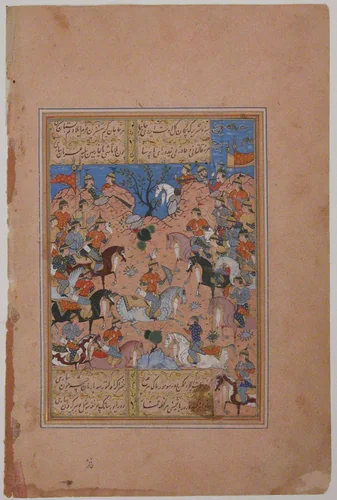
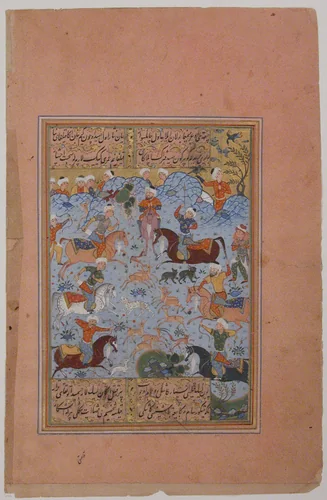
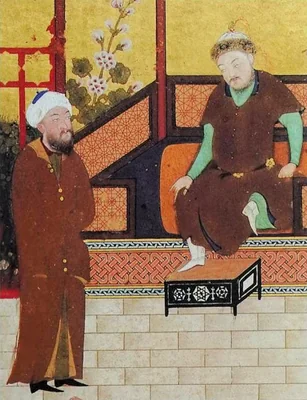
These illustrated works, representing a visual tradition active throughout the 16th century and exemplified by six known surviving manuscripts, provide a meticulous pictorial record of Central Asian aristocratic life. Works such as A Contest of Skill in Archery on Horseback and A Tournament at Arms capture the stylized excitement and formality of martial events, utilizing composition and saturated color to emphasize action and status. Other folios turn toward the interior world of the court. A Scene of Conviviality at Court details the refined social dynamics of the elite, while the folio Hunting Scene highlights the recreational pursuits necessary for a well-rounded nobleman.
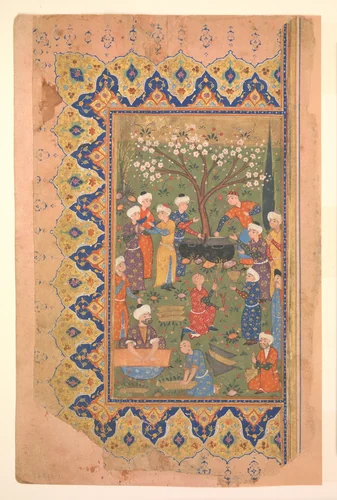
These exquisite Ali Shir Nava'i paintings are celebrated for their meticulous draftsmanship and narrative clarity. The artworks, dating from periods like the mid-1550s manuscript production, are now preserved in major institutional collections, including the Metropolitan Museum of Art. The folio Preparation For a Noon-Day Meal illustrates the enduring fascination with Nava’i’s world, confirming that even the most highly refined figures of the Timurid court occasionally paused for lunch.
The manuscripts associated with Nava'i’s Divan remain essential primary sources for understanding later Safavid and Mughal artistic trajectories. Fortunately for scholars and enthusiasts alike, many of these historical documents now fall into the public domain, enabling accessibility. They are frequently made available as downloadable artwork, ensuring that museum-quality, high-quality prints continue the legacy of this masterful Timurid cultural figure.
Source: Wikipedia · CC BY-SA 4.0