Alfred Stevens
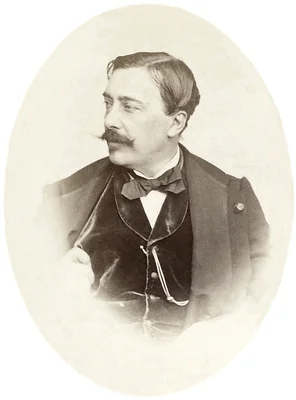
The name Alfred Stevens refers to two distinct but highly regarded Victorian-era artists active during overlapping periods: the British sculptor (1818-1875), who focused on architectural ornamentation and monumental design, and the Belgian painter (1823–1906), who defined the aesthetic of the sophisticated European genre scene. It is the work of the Belgian painter, Alfred Émile Léopold Stevens, that most profoundly shaped the visual documentation of the prosperous Second Empire and Belle Époque.
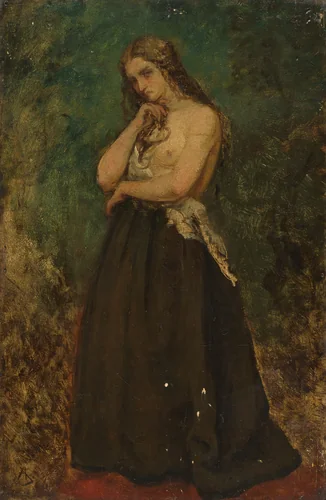
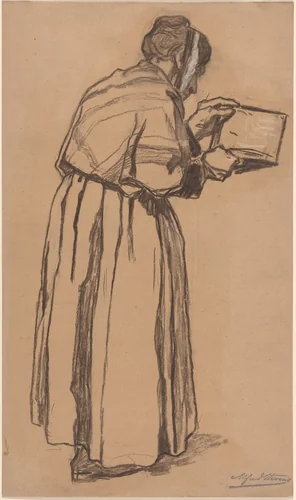
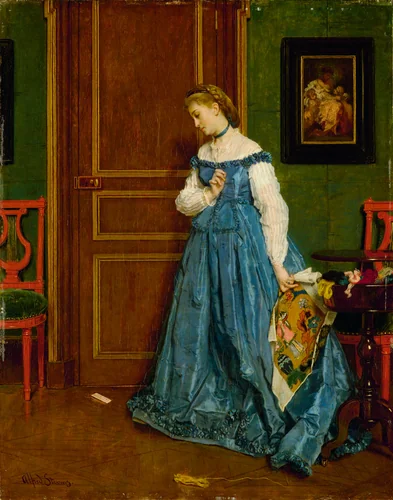
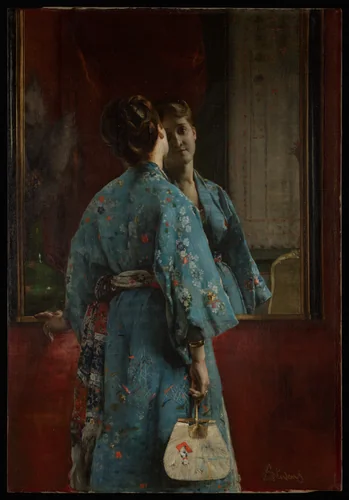
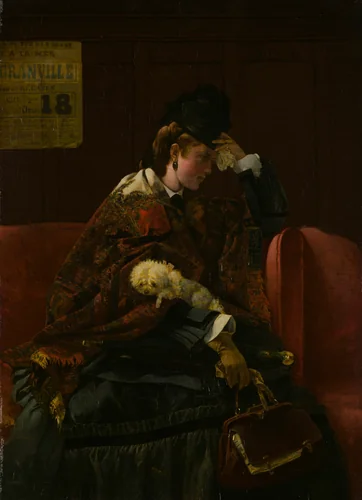
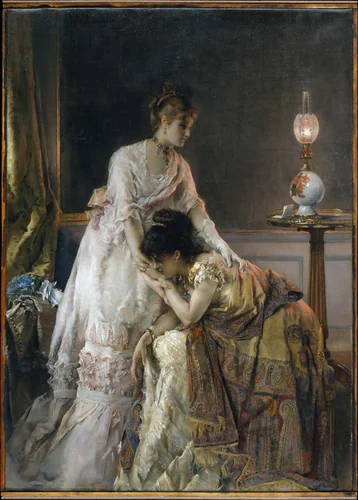
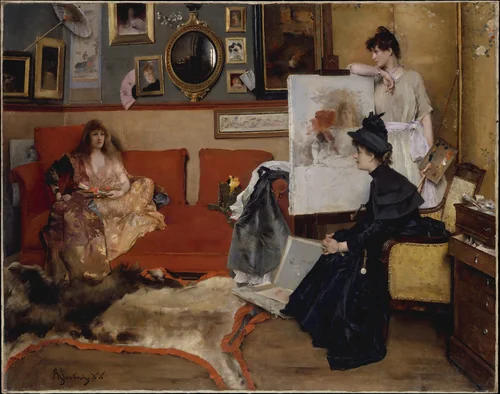
Stevens was instrumental in evolving genre painting, shifting the detailed realism of mid-century painting toward a lighter, more atmospheric approach that shared ground with the emerging Impressionism. He specialized almost exclusively in depicting elegantly dressed women captured within the luxurious intimacy of their domestic settings. His subjects are never overtly narrative; instead, Stevens used subtle gestures and exquisite detail to capture moments of quiet contemplation or veiled societal performance. Works like Woman Reading and Hesitation (Madame Monteaux?) exemplify his remarkable technical skill in rendering texture, from the sheen of silk gowns to the reflection on polished wood, with both photographic accuracy and painterly looseness.
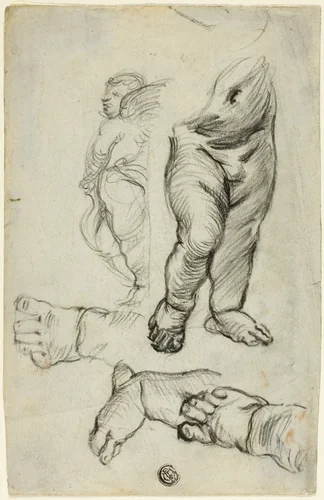
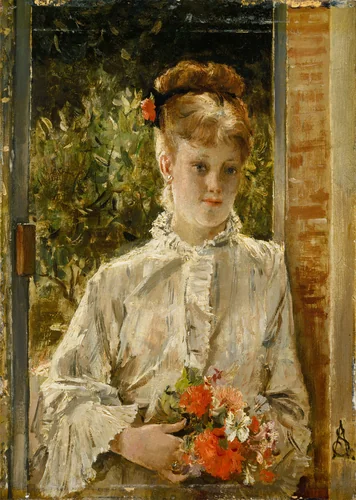
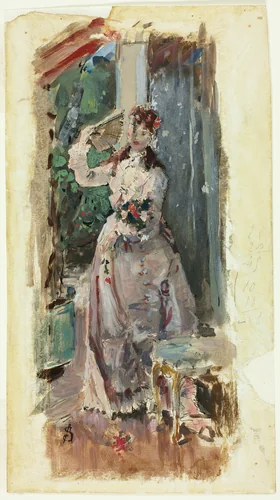
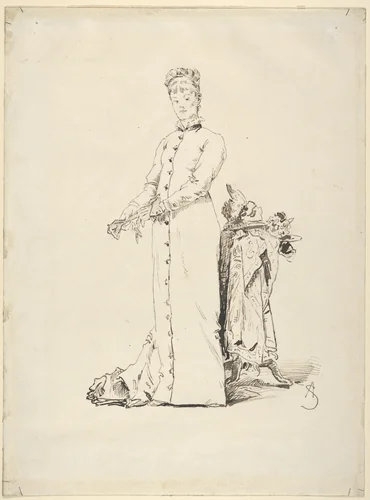
While often categorized alongside the genre masters, Stevens possessed an almost journalistic appreciation for contemporary Parisian fashion. His studies and finished canvases offer a precise documentation of the transient styles and accessories of the 1860s and 1870s, making his body of work uniquely valuable to cultural and fashion historians. This acute attention to detail, evident in pieces such as the detailed preparatory charcoal Study of a Model or the finished oil Young Woman in White Holding a Bouquet, ensured Stevens’ critical and commercial success throughout his career.
Stevens enjoyed significant institutional recognition, securing his legacy in major global collections including the Art Institute of Chicago, the National Gallery of Art, and the Metropolitan Museum of Art. The enduring popularity of Alfred Stevens paintings means that many of his definitive studies, now in the public domain, are widely available as high-quality prints, ensuring the continued appreciation of his refined vision long after the close of the Belle Époque.
Source: Wikipedia · CC BY-SA 4.0