Alfred Johannot
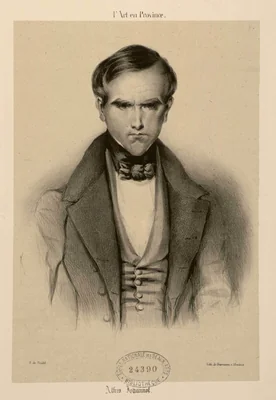
Alfred Johannot (1800-1837) established himself as a key figure in the French Romantic illustration movement, despite his relatively short career. Born in Offenbach, Germany, Johannot belonged to a family of French refugees who had settled there following the Revocation of the Edict of Nantes. This background provided him with a unique cultural perspective, connecting his work both to French traditionalism and to the wider currents of European Romanticism.
Johannot initially specialized as an engraver, a foundation that deeply informed his later painterly style and provided a crucial link between the fine arts and the burgeoning nineteenth-century publishing industry. He transitioned to professional painting around 1831, quickly earning high-profile recognition. His facility with contemporary court and ceremonial themes appealed directly to the ruling class; his Alfred Johannot paintings were actively collected by King Louis Philippe I and notably displayed within the Palace of Versailles. This significant royal patronage afforded him immediate stature, positioning his work within the canonical histories being written during the July Monarchy. His artistic focus gradually shifted toward historical French subjects, often depicting dramatic events and adhering closely to the popular tastes of the period.
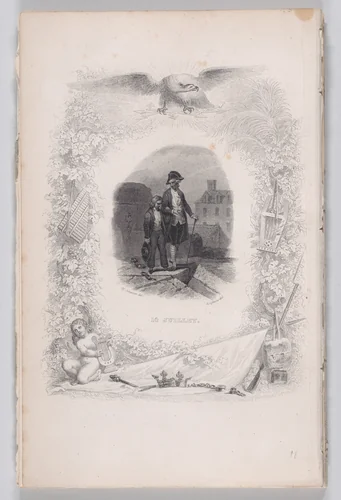
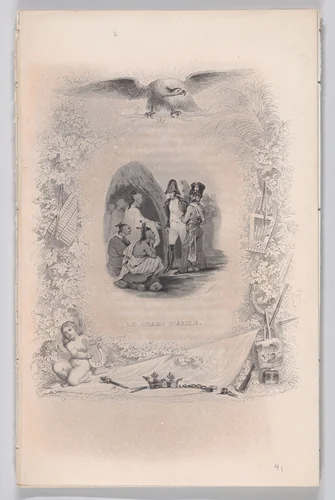
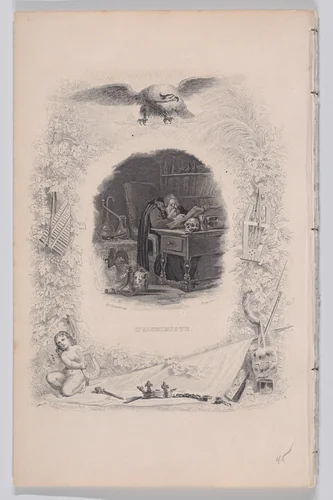
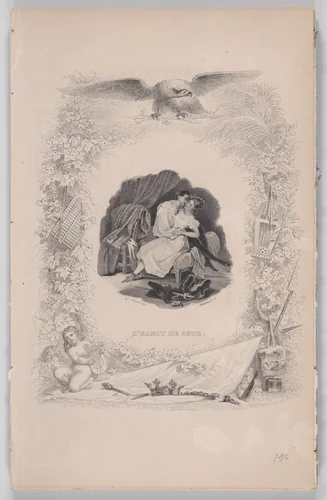
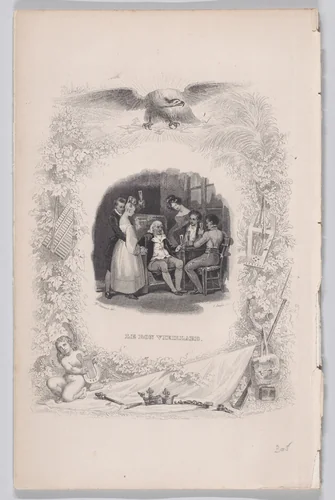
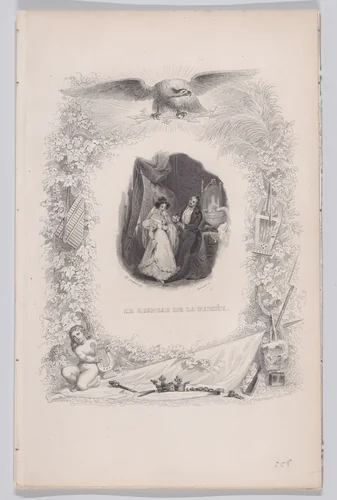
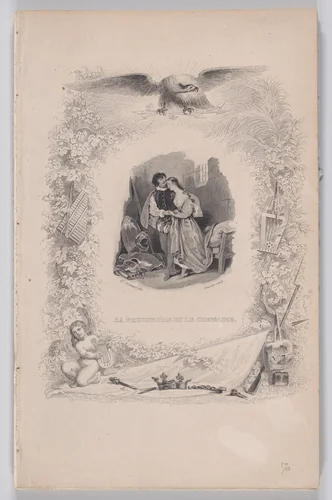
Where Johannot made an undeniably influential impact was in his graphic output and design. He was instrumental in defining the visual presentation of newly illustrated French literature, designing the influential covers and frontispieces for the first French editions of major British writers, including Lord Byron. This effort, which effectively bridged continental and Anglophone literary worlds, showcased a sophisticated mastery of narrative imagery. Examples of this precision are evident in his series of engravings for The Complete Works of Béranger, notably The Alchemist and July Fourteenth.
It is a subtle irony that this German-born French refugee, whose family history was entwined with centuries of faith-based conflict, became the primary visual interpreter for the era’s modern, international literary scene. Johannot died prematurely on 7 December 1837. Today, the detailed craftsmanship of Alfred Johannot prints is widely accessible; owing to their age, many are now in the public domain, providing collectors and scholars access to high-quality prints for study and appreciation.
Source: Wikipedia · CC BY-SA 4.0