Alfred H. Smith
Alfred H. Smith was a significant contributor to the Index of American Design (IAD), a crucial division of the Federal Art Project established during the New Deal era. Active between 1935 and 1936, his role involved the detailed documentation and rendering of American folk and decorative arts, ensuring a robust visual record of material culture that was often overlooked by traditional fine art studies. His complete body of work comprises fifteen meticulously rendered designs, now held in the permanent collection of the National Gallery of Art.
The IAD project was founded on the principle of documenting artifacts ranging from textiles and furniture to ceramics and metalwork, creating a pictorial archive of America’s heritage before it vanished. Smith’s contributions focused primarily on utilitarian and regional objects, capturing the unique styles of crafts people across the country. His works illustrate a deep appreciation for the construction and history of early Americana, particularly evident in pieces documenting the simplicity of Shaker Basket forms and the intricate details of the Pa. German Butter Mold.
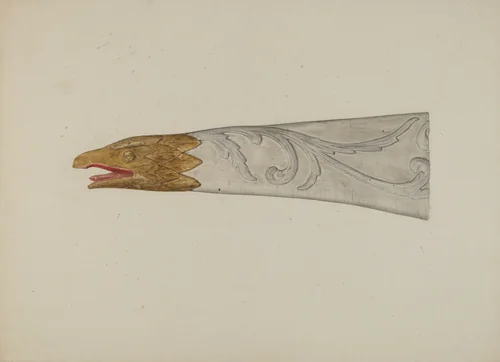
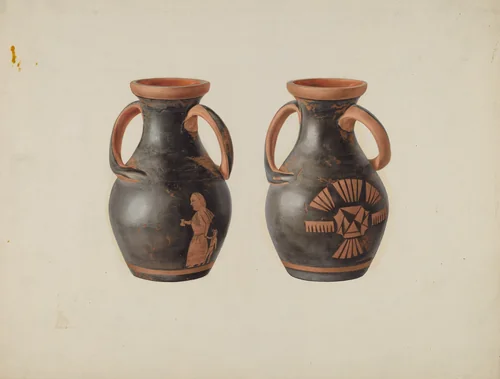
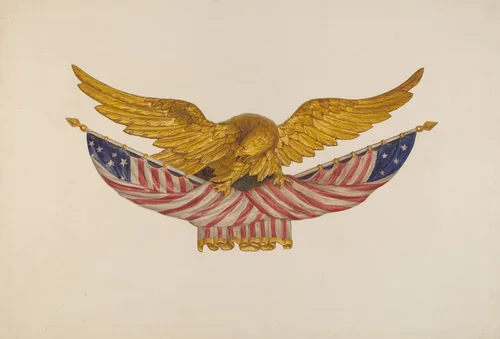
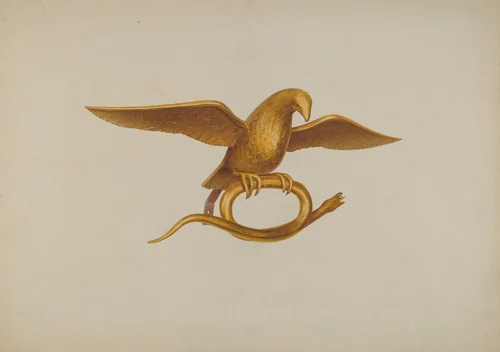
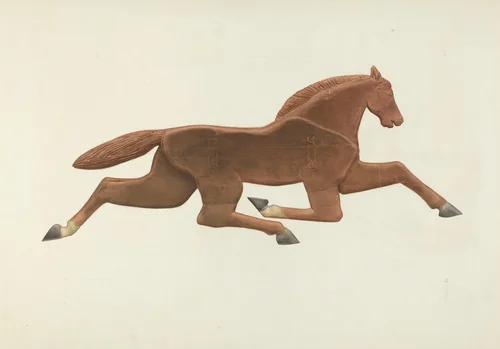
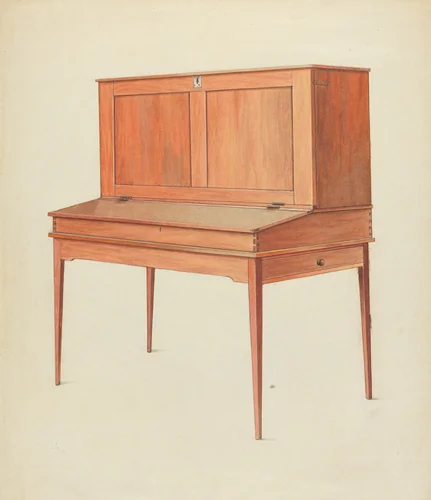
Smith employed precise watercolor and gouache techniques to capture the texture, form, and aged patina of these historic items. The drawings are notable for their archival precision, transforming functional objects, such as the Child’s Rocking Chair and the impressive Blanket Chest, into subjects worthy of sustained artistic scrutiny. These renderings serve as invaluable historical references, offering museum-quality detail for contemporary craftspeople and historians. Because these important historical documents were created under a federal initiative, the Alfred H. Smith prints and related works are available in the public domain, making them easily accessible as downloadable artwork for scholars and enthusiasts worldwide.
The intense focus required to produce these fifteen high-quality design indices suggests a formidable dedication to the execution of craft. This commitment mirrored a professional trajectory often valued during the period; a commitment shared by Smith’s near-namesake, Alfred Holland Smith, the famed railroad executive whose forty-five-year career, beginning as a messenger boy, culminated in him becoming the highest-paid railroad manager of his time—an impressive, if subtly parallel, dedication to detailed, demanding work.