Alfred George Stevens
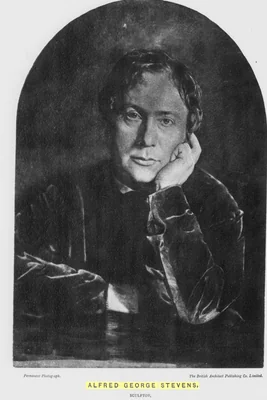
Alfred George Stevens (1817-1875) stands as one of the most intellectually rigorous British sculptors of the nineteenth century, a period often dominated by the demands of public commemorative art. Though his formal output was relatively constrained, his impact is singularly defined by his magnum opus: the monument to the Duke of Wellington, located in St Paul's Cathedral. This work alone establishes him as a master of grand, complex decorative sculpture, integrating architectural scale with refined figurative detail.
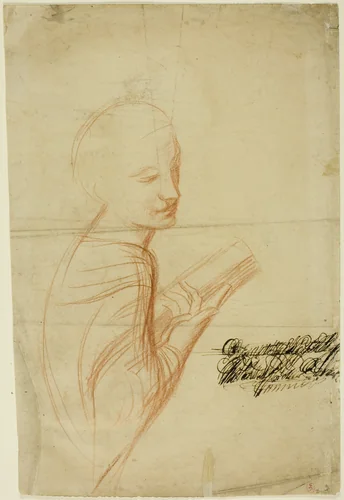
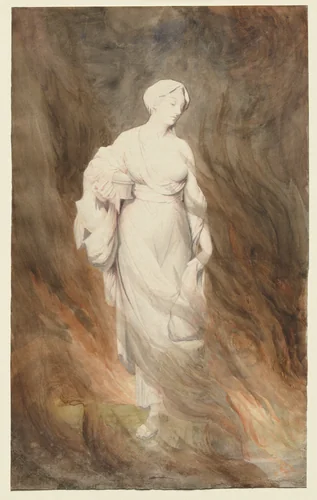
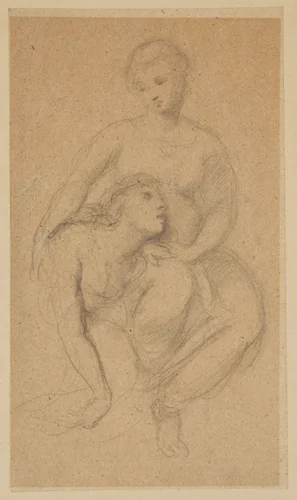
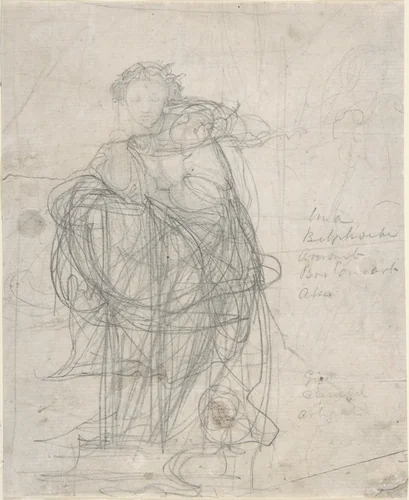
Stevens was notable for his fluency across artistic disciplines, integrating the rigor of Renaissance draftsmanship with the utilitarian requirements of Victorian design. He spent formative years studying in Italy, where he absorbed the classicism of Michelangelo and the Florentine masters, an influence that distanced him from the prevailing tastes of many of his English contemporaries. This dedication to exacting draftsmanship is readily apparent in his surviving preparatory studies and finished drawings, which include the powerful biblical rendering of Lot's Wife and the classically tragic Antigone & Ismene.
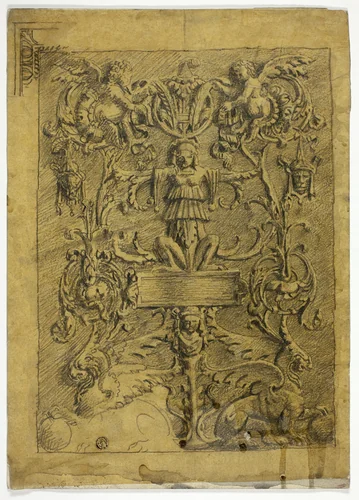
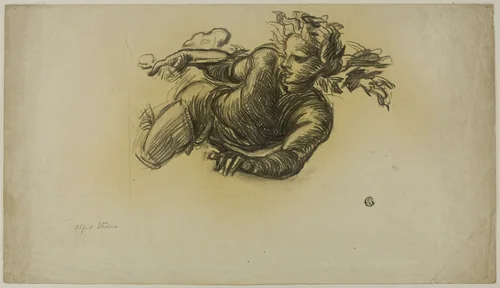
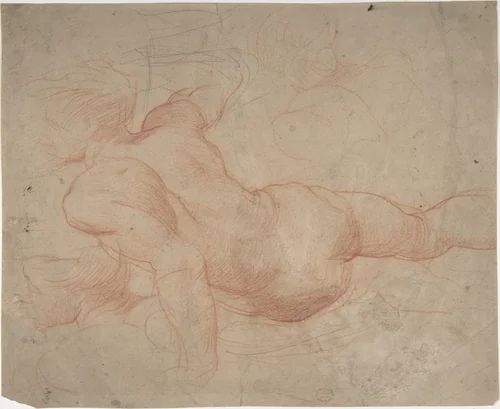
His drawings, now housed in major American collections including the Art Institute of Chicago and the Metropolitan Museum of Art, offer essential insight into his meticulous design philosophy. Pieces like Decorative Design with Putti and Griffins and the dynamic Flying Figure showcase his command of human anatomy and his capacity for highly ornate decorative complexity. It is perhaps a testament to his demanding artistic standards that the Wellington Monument, commissioned early in his career, required him to work almost until his death, spanning nearly twenty years of dedication.
Although Stevens is classified primarily as a sculptor, the availability of his two-dimensional work allows for a broader appreciation of his genius. Many of the artist’s works are now in the public domain, ensuring that downloadable artwork and high-quality prints of his designs are accessible globally. This continued availability ensures that Alfred George Stevens prints remain a critical resource for studying the intersection of fine art and sophisticated applied decoration in 19th-century Britain.
Source: Wikipedia · CC BY-SA 4.0