Alfred Edward Chalon
Alfred Edward Chalon (1780-1860) was a highly regarded British portraitist of Swiss origin, whose career spanned the critical transition period between the late Georgian grandeur and the rise of the Victorian age. Born in the Republic of Geneva, Chalon established his practice in London, where his technical versatility and refined style quickly attracted prominent patronage. A master of both ambitious oil canvases and detailed, expressive drawings, he maintained a dual output, catering to both the demands of academic formality and the growing market for intimate, character-driven likenesses.
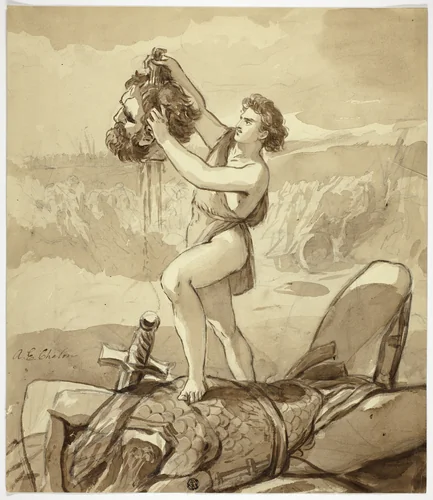
Chalon’s ascent was cemented by his relationship with the monarchy. He was noticed by Queen Victoria early in her reign, securing commissions that placed him firmly among the definitive court artists of the 1830s and 1840s. While he occasionally turned his hand to classical narrative, as demonstrated in the dramatic scale of David and Goliath, his primary impact stemmed from his subtle portrayals of contemporary life and portraiture.
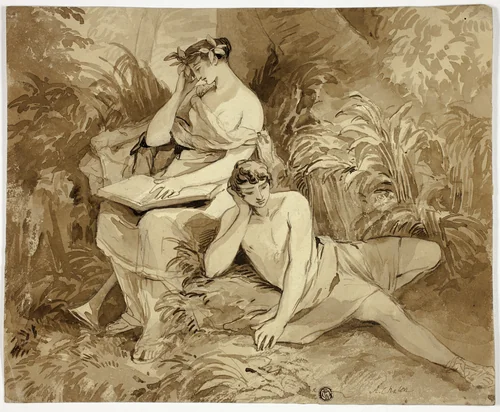
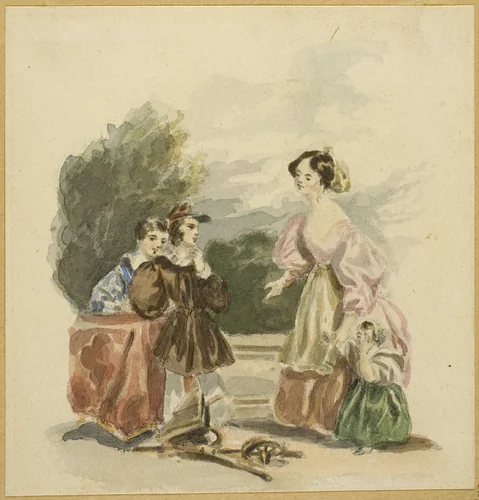
His strength lay in capturing the nuances of psychological mood. In works like Muse and Poet, Chalon balances neoclassical idealized forms with romantic emotion, showcasing his ability to manage complex literary themes. Conversely, pieces focusing on genre scenes, such as The Broken Toy, offer tender glimpses into the domestic sensibilities of the era, elevating private emotion into public art.
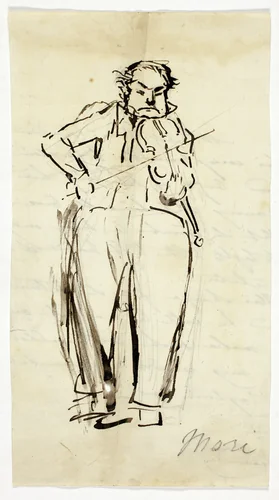
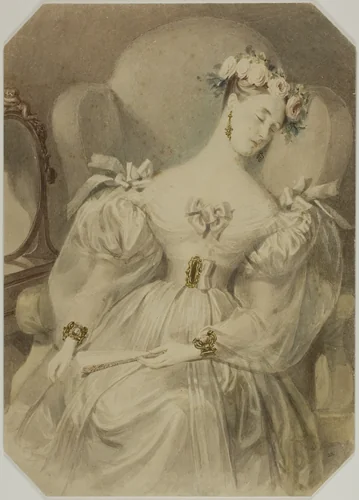
The collection of Alfred Edward Chalon paintings and studies in institutions like the Art Institute of Chicago demonstrates his range, from the technical virtuosity required for a formal composition to the spontaneous sensitivity required for a musician’s portrait, such as Nicolas Mori, Violinist. Chalon possessed a rare talent for depicting moments of unguarded vulnerability, perhaps best exemplified by Woman in Evening Dress Asleep in Armchair, where the strict formality of evening attire contrasts sharply with the exhaustion of the sleeping subject. It is telling that an artist so closely tied to the rigid aristocracy often excelled when the sitter allowed the mask of public life to slip.
Today, the quality and historical accuracy of his work ensure that many of his artistic contributions remain accessible. A significant body of his output is now available as museum-quality resources, often packaged as downloadable artwork for scholars and enthusiasts worldwide. His legacy remains crucial for understanding the visual culture of early Victorian Britain.
Source: Wikipedia · CC BY-SA 4.0