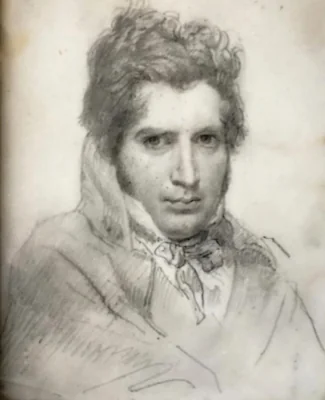
Alexandre-Evariste Fragonard
Alexandre-Évariste Fragonard emerged at the turn of the nineteenth century as one of the most prominent practitioners of the Troubadour style, an artistic movement that romanticized French medieval and Renaissance history through highly sentimental and decorative compositions. Active across a remarkably long period, his practice encompassed painting, drawing, and a substantial output of high-quality prints, securing his position as a critical, if sometimes overlooked, figure in the transition from the ancien régime aesthetics to the rigor of academic historicism.
Fragonard’s unique approach was fundamentally shaped by dual tutelage. He received his initial instruction directly from his father, the celebrated Jean-Honoré Fragonard, acquiring from him a remarkable ease of execution and an instinct for piquant subject matter. Crucially, however, he refined this facility under the severe discipline of Jacques-Louis David. This unusual pedagogical lineage gave Alexandre-Évariste’s work a distinctive character, blending the facility and decorative charm of the Rococo tradition with the structural clarity demanded by Neoclassicism.
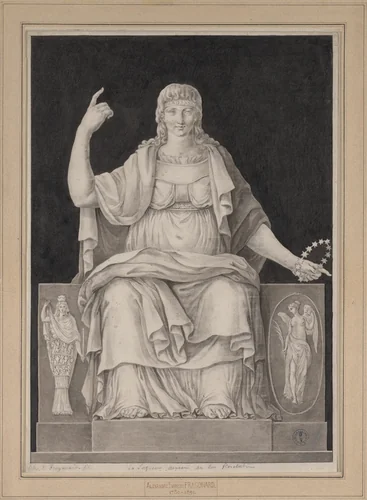
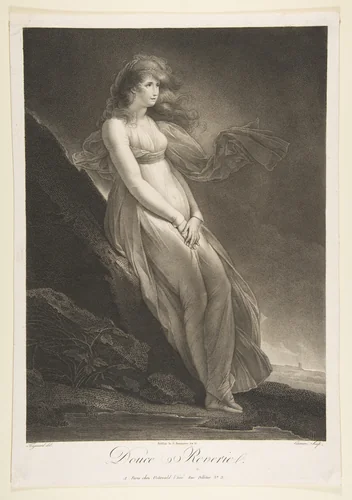
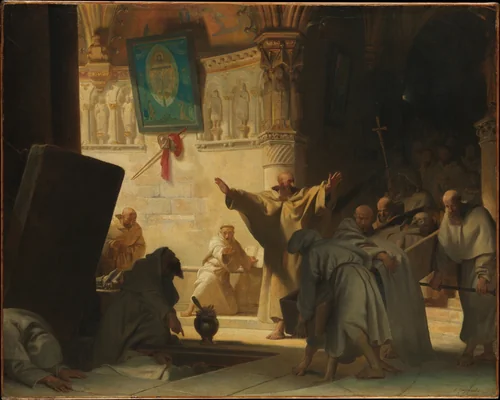
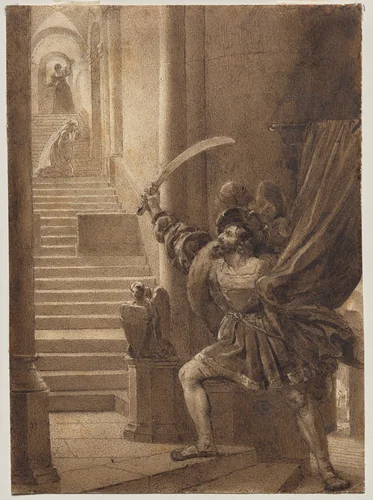
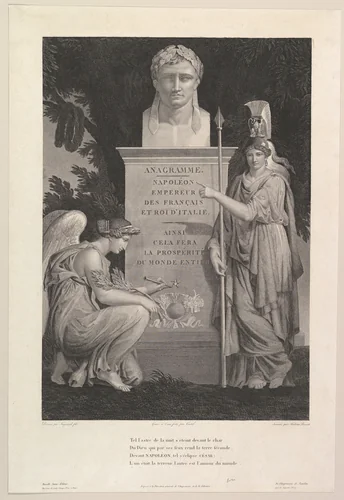
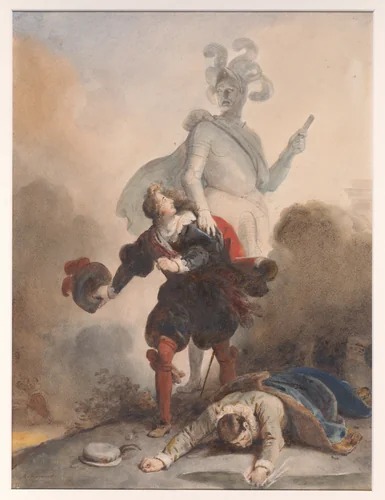
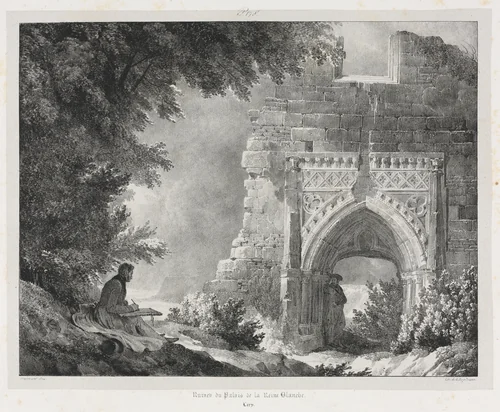
His career flourished during the Napoleonic Empire and the Bourbon Restoration, periods that favored detailed, emotionally engaging historical narratives. Fragonard excelled at this genre, producing memorable compositions such as the striking François I Brandishing a Sword and the evocative devotional study, Dramatic Scene with Monks in a Crypt. He also mastered the delicate allegorical print, evidenced by works like La Sagesse and La Douce Reverie.
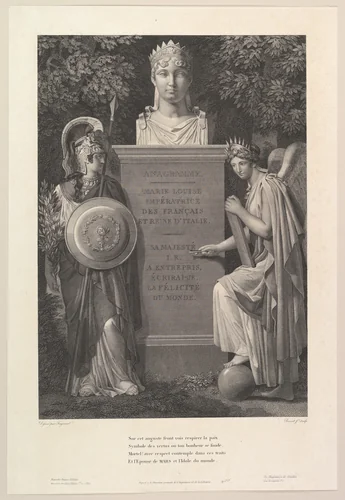
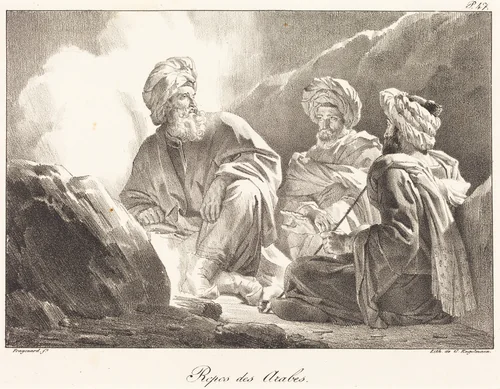
A significant portion of his documented work consists of prints and drawings, which reveal his mastery of line and light. He was adept at capturing the ceremonial mood of the era, visible in his portrait of Marie Louise, Empress of the French. It is a testament to the enduring appeal of his museum-quality work that original Fragonard paintings, drawings, and Alexandre-Evariste Fragonard prints are held in prestigious collections, including the Metropolitan Museum of Art and the National Gallery of Art. Thanks to digitization efforts, many of these compelling works are now frequently made available as downloadable artwork in the public domain, ensuring that this pivotal Troubadour style master receives continued scholarly attention.
Source: Wikipedia · CC BY-SA 4.0