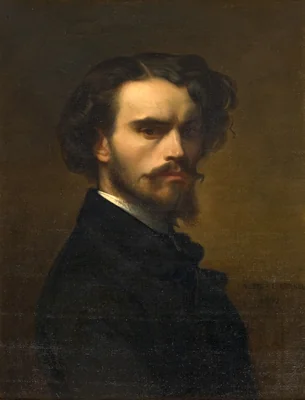
Alexandre Cabanel
Alexandre Cabanel (1823-1889) stood as an undisputed arbiter of taste and technical mastery within the 19th-century French art establishment. Renowned for his historical, religious, and classical compositions, he was a staunch proponent of the Academic style, which prized meticulous drafting, narrative clarity, and a highly refined finish. His status was perhaps best demonstrated by his unique relationship with the imperial court: Cabanel was Napoleon III's preferred painter, placing him alongside Jean-Léon Gérôme and Ernest Meissonier as one of the three most successful artists defining the Second Empire’s visual culture.
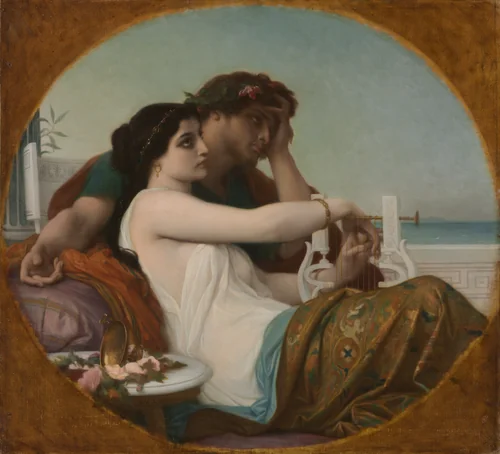
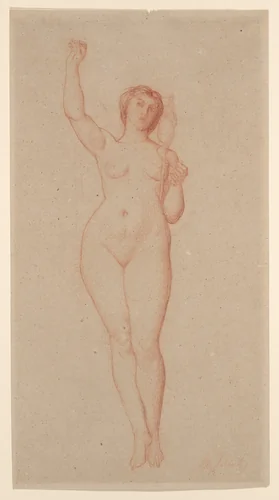
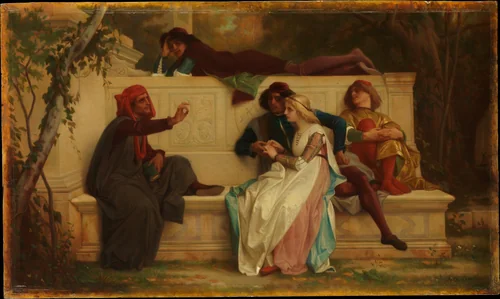
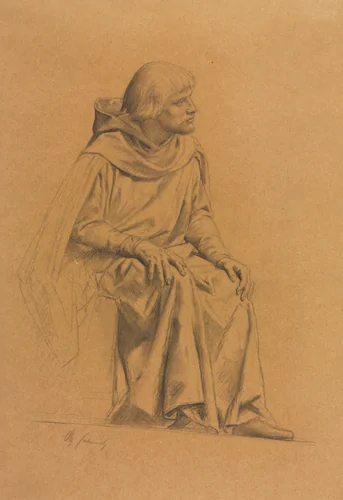
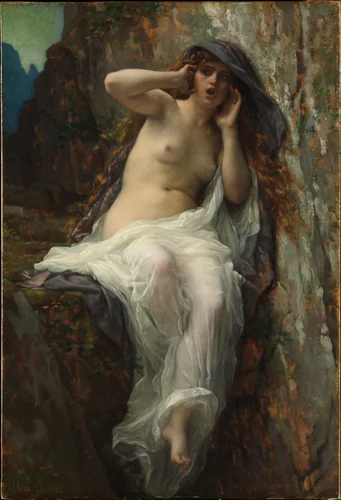
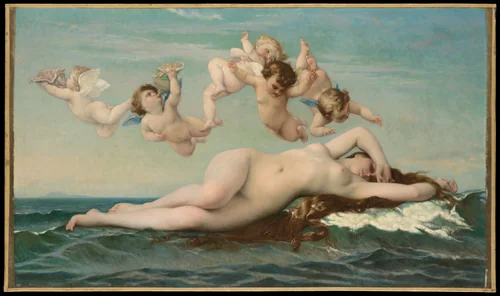
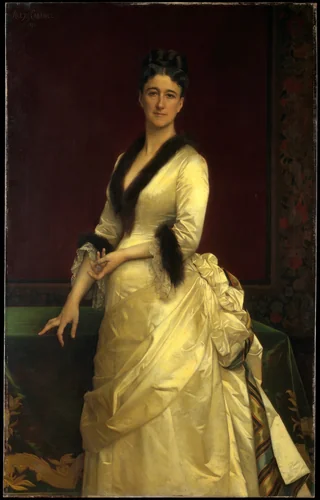
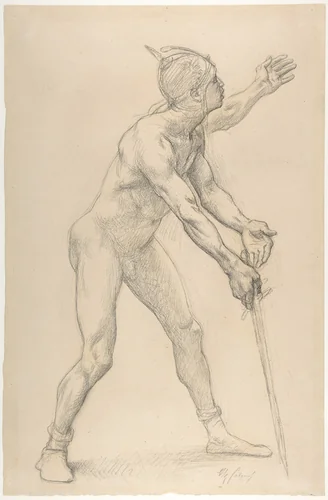
Cabanel’s rigorous training allowed him to move seamlessly between demanding public commissions and highly sought-after private portraiture. His works, often lushly composed, include classical studies such as Echo and complex allegorical and biblical narratives like Aglaida and Boniface. The breadth of his commissions ranged from monumental decorative schemes, evidenced by the detailed Study for "The Hours," Hôtel Pereire, Paris, to deeply historical themes seen in St. Louis pendant la Justice. Though today he is frequently identified with a polished, sensual classicism that secured him immense wealth, Cabanel was equally adept at conveying the intellectual gravity of subjects like the Florentine Poet, demonstrating his commitment to elevating contemporary painting through historical narrative.
As an influential professor, Cabanel helped shape the careers of multiple generations of artists at the École des Beaux-Arts, ensuring the perpetuation of the rigorous Academic tradition well into the Third Republic. While the rise of Impressionism and subsequent avant-garde movements inevitably challenged the primacy of his methodology, the sustained popularity of Alexandre Cabanel paintings continues to draw critical and public interest in major international institutions, including the Metropolitan Museum of Art and the Cleveland Museum of Art. Because of their enduring museum-quality appeal and historical significance, many of his key works are now in the public domain, offering access to high-quality prints and downloadable artwork for study worldwide.
Source: Wikipedia · CC BY-SA 4.0