Alexander Cozens
Alexander Cozens (1717–1780) holds a pivotal position in 18th-century British art, recognized less for prolific Alexander Cozens paintings than for his role as a radical theoretician and drawing master who fundamentally reshaped the approach to landscape composition. Born in Saint Petersburg, Cozens returned to Britain where he established a formidable reputation, dedicating himself to writing influential treatises and teaching methods designed to stimulate the artistic imagination.
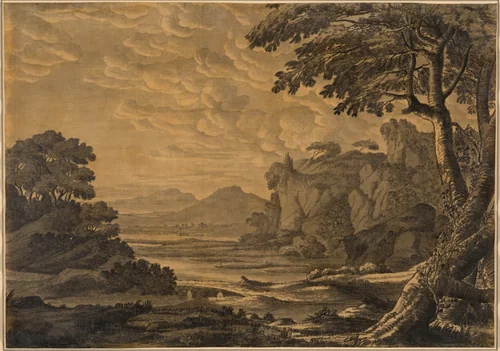
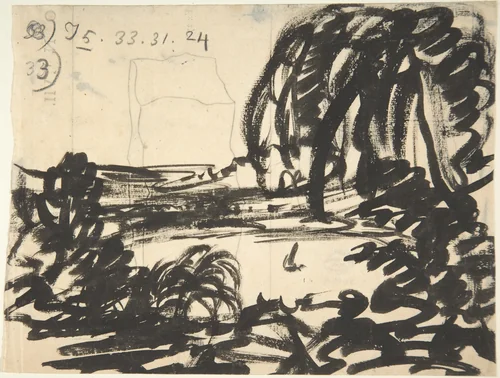
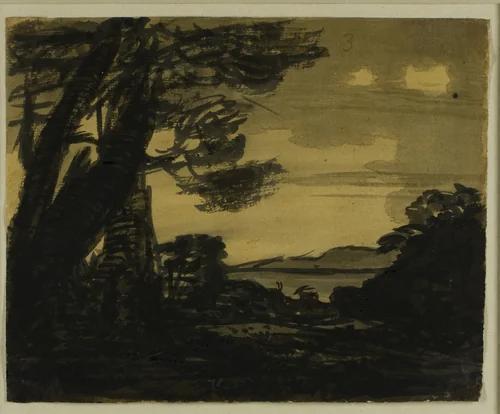
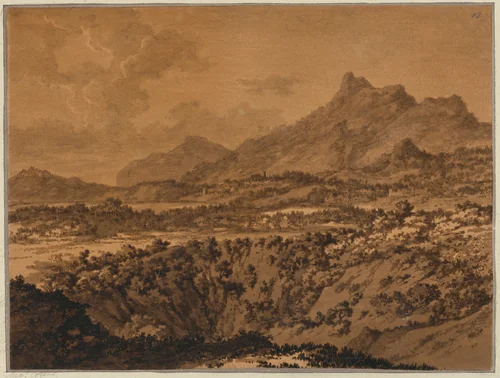
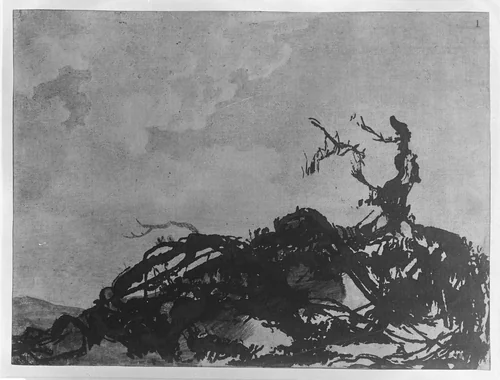
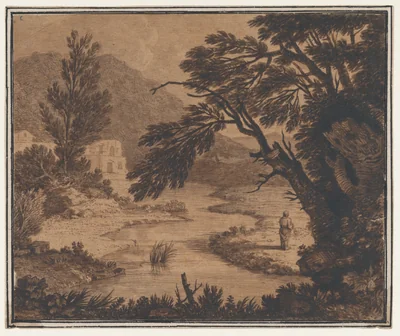
Cozens’ principal innovation was the systematic development of the ‘blot’ method. This counter-intuitive technique required the artist to generate the initial groundwork for a landscape drawing from abstract, randomized ink marks or blots on paper. These chance configurations would then be refined and detailed, transforming the ambiguity of the abstract blot into a resolved, yet highly imaginative, landscape. This process prioritized internal vision over direct topographical observation, effectively freeing the artist from the rigid descriptions typically expected in Georgian landscape art. The resulting compositions, such as A blot-lake with boat, surrounded by trees, reveal an evocative interplay between chance and deliberate design.
This insistence on controlled spontaneity offered the serious landscape student a surprising license for aesthetic messiness, a truly modern sensibility that prefigured aspects of Romanticism. Cozens effectively argued that the greatest landscapes were not merely recorded but conceived.
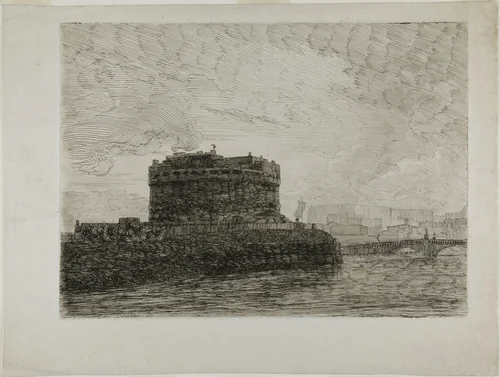
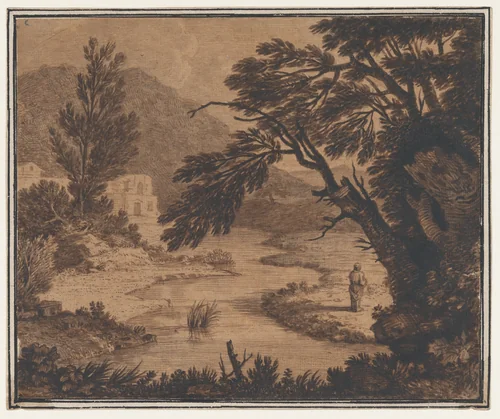
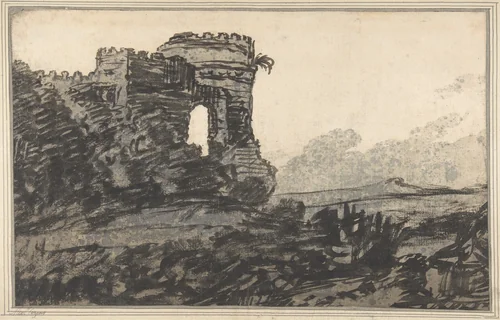
His technical mastery, particularly in the handling of watercolour, is evident in his finished works, including the dramatic architectural view of Castel Sant'Angelo and pastoral studies like Goats on the Edge of a Lake. These works display the controlled light and refined atmosphere that characterized the period's best draughtsmanship.
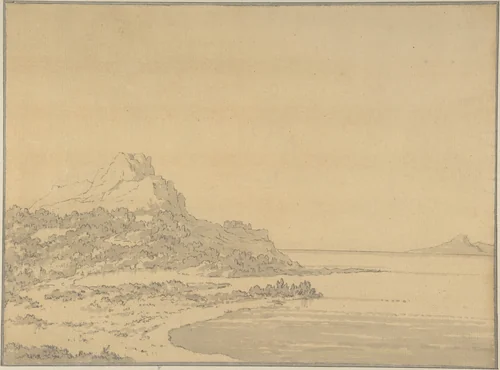
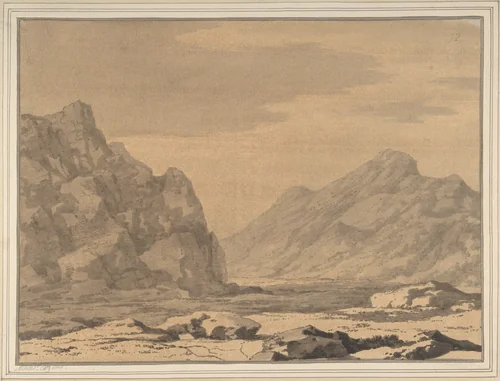
Cozens’ enduring influence lies not only in his own seven known drawings and two prints, but in his lasting theoretical contribution to art instruction. His legacy was continued by his highly celebrated son, John Robert Cozens. Today, the historical importance of Alexander Cozens prints and drawings is affirmed by their inclusion in major international collections, including the Metropolitan Museum of Art and the National Gallery of Art. These museum-quality works, now frequently available as downloadable artwork through public domain initiatives, confirm his significance as an essential figure in the conceptual development of the British landscape tradition.
Source: Wikipedia · CC BY-SA 4.0