Alessandro Tiarini
Alessandro Tiarini (active 1577–1587) stands as a focused, if chronologically concise, exponent of the early Italian Baroque, specifically rooted within the highly influential Bolognese School. While the documented period of his core output spanned barely a decade, the surviving corpus of his work demonstrates a mastery of draftsmanship that earned his inclusion in major institutional holdings. His drawings are collected by preeminent repositories, including the Rijksmuseum and the Metropolitan Museum of Art, affirming his status within the broader study of late sixteenth-century Italian graphic arts.
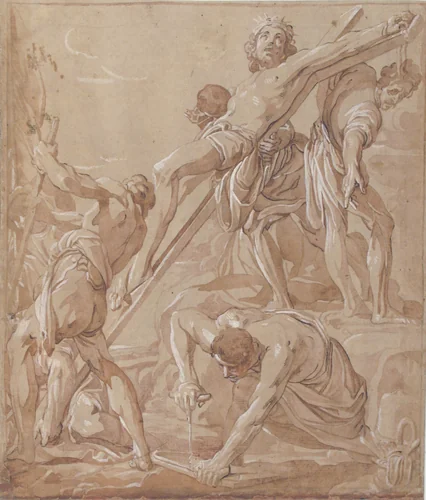
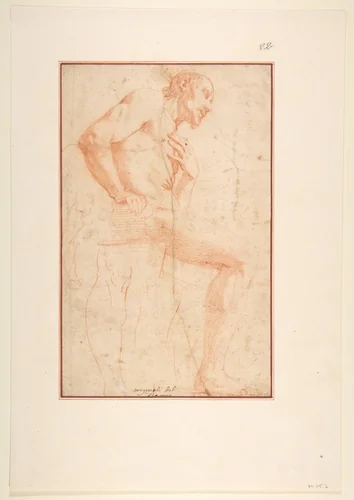
Tiarini’s extant works, particularly his six documented drawings, provide critical insight into the preparatory methods and thematic concerns typical of the period just preceding the full flowering of the seventeenth century. His facility across devotional, allegorical, and academic subjects is evident: the intense chiaroscuro and drama found in the study Elevation of the Cross contrasts sharply with the precise academic rigor necessary for Seated Male Nude Facing Right.
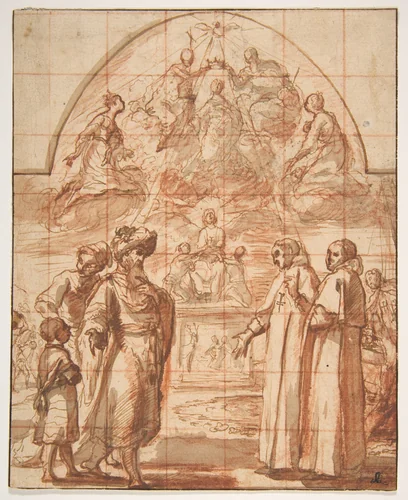
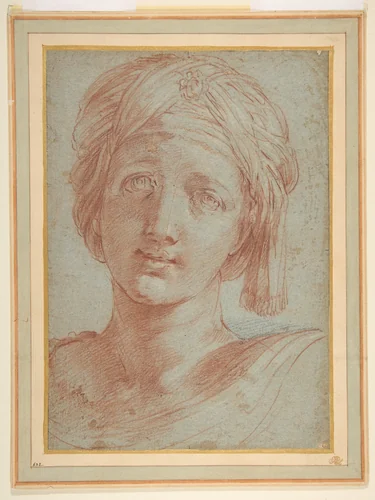
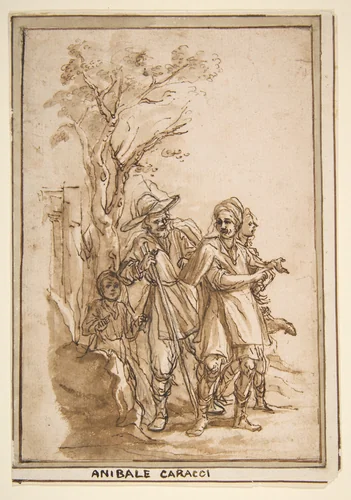
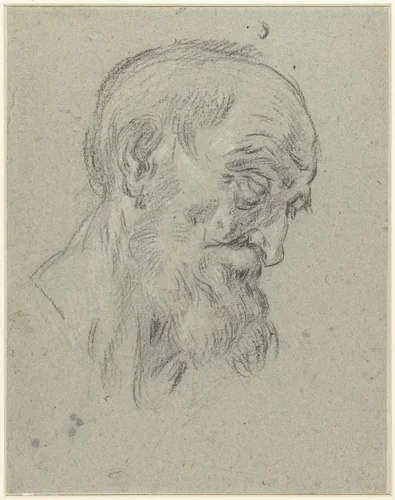
His practice reveals an artist capable of managing complex, multi-figure narrative structures, as shown in Allegory of the Trinitarian Order, while also delivering keenly observed individual portraits. Perhaps the most intriguing of his surviving character studies is Head of a Young Woman Wearing a Turban. The subject’s highly specific, slightly quizzical expression suggests Tiarini was not merely concerned with academic idealization, but with capturing the ephemeral presence and personality of his models—a subtle, humanist thread running through his otherwise Baroque commitments. Similarly, the detailed landscape and figure work of Travelers on a Road confirms his dexterity across multiple genres of drawing.
Although documented records of Alessandro Tiarini paintings are fewer than those detailing his graphic output, his contributions remain vital for understanding the development of the Bolognese movement. The enduring quality of his draftsmanship ensures the continued study of his materials. Fortunately for modern scholars and enthusiasts, a selection of Tiarini’s key graphic works are now frequently in the public domain. This accessibility allows institutions and private collectors alike to acquire museum-quality reproductions, enabling the broader dissemination of Alessandro Tiarini prints and making high-quality prints available for educational purposes worldwide. His short, decade-long burst of known activity secures his place as a highly skilled contributor to the cinquecento tradition.
Source: Wikipedia · CC BY-SA 4.0